
When it comes to choosing bearings for industrial machinery, you need to know the difference between roller and ball bearings. Each serves a specific purpose in various applications, and picking the right one can improve performance and extend the life of your equipment. Let’s look at how ball bearings vs. roller bearings in their applications.
Roller Bearings Handle Heavy Radial Loads, While Ball Bearings Handle Lighter Loads. Speed Is Also A Factor. Ball Bearings Are Ideal For High-Speed Applications Because They Have Less Friction, While Roller Bearings Are Great For Handling Shock And Impact Loading.
In this article, we’ll discuss the differences between roller and ball bearings and how their unique characteristics make them suitable for specific industrial uses. What are the pros and cons of each? How do they work?
What Is The Difference Between A Roller Bearing And A Ball Bearing?
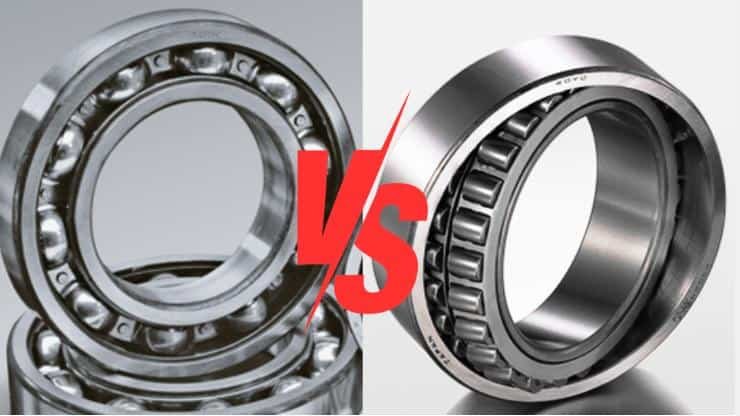
The primary difference between a roller bearing and a ball bearing is the type of rolling element used to facilitate motion. Roller bearings use cylindrical, tapered, or spherical rollers that have a larger contact area with the outer raceway. This larger contact area allows roller bearings to handle heavier radial loads, making them suitable for applications involving significant weight and impact. Ball bearings, on the other hand, use spherical balls as the rolling element. The round shape reduces friction and ensures smooth operation, making them ideal for lighter loads and high-speed applications. However, because they have a smaller contact area, ball bearings cannot handle the same level of radial loads as roller bearings. Furthermore, roller bearings are generally more durable and resistant to fatigue due to the larger surface area that spreads the load across the rolling elements. In contrast, while ball bearings are not as durable under heavy loads, they offer higher precision and are better suited for applications that require both radial and axial load support.In summary, the main difference between the two types of bearings is the rolling element used and the load capacity. Roller bearings are used for heavy-duty applications, while ball bearings are used for high-speed, precision applications.
Why Are Ball Bearings Or Roller Bearings Used To Reduce Friction?
Bearings, in general, are designed to reduce friction between moving parts and provide smooth, efficient rotation in various types of machinery. Both ball and roller bearings use rolling elements to significantly reduce friction compared to sliding contact. Ball bearings consist of an inner and outer race separated by spherical balls. These balls roll freely between the two races, reducing surface contact and, therefore, friction. This design makes them ideal for high-speed applications where low friction is critical, such as in electric motors, aerospace components, and medical devices. Roller bearings, on the other hand, use rollers as the rolling elements instead of balls. The cylindrical shape of these rollers provides a larger contact area with the raceways, allowing them to carry heavier radial loads than ball bearings. However, this also results in slightly higher friction than ball bearings, making them better suited for slower-speed applications such as conveyor systems, construction equipment, and heavy machinery. In summary, ball and roller bearings are both used to reduce friction in rotating equipment, but their unique designs make them ideal for different applications. Ball bearings are preferred for high-speed, precision applications, while roller bearings excel at handling heavy loads and shock.
Roller Bearing vs. Ball Bearing: What’s the Difference ?
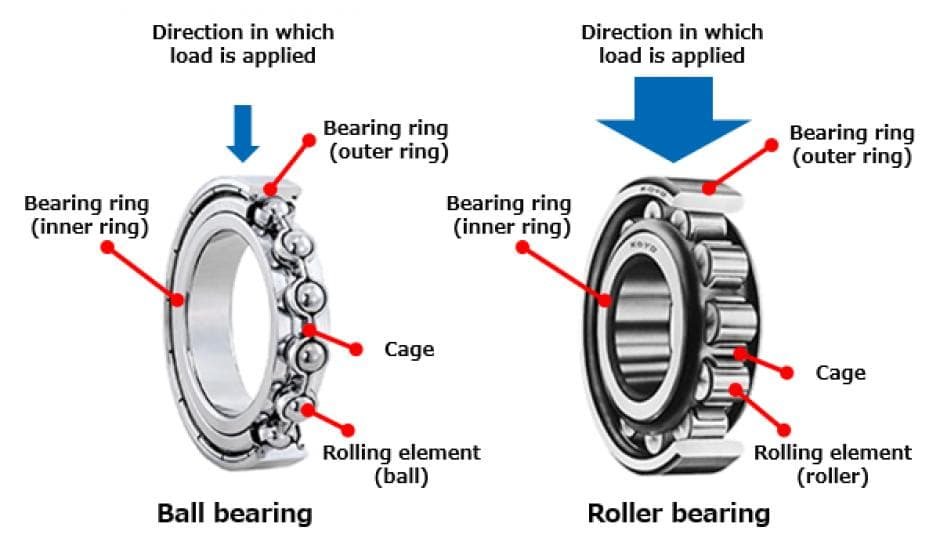
Ball Bearings:
- Structure: Consist of an inner and outer race with spherical balls as the rolling elements between them.
- Function: As the inner race rotates, the balls roll along the raceway, providing smooth, low-friction movement.
- Load Handling: Support both radial (perpendicular to the axis) and axial (parallel to the axis) loads. However, their smaller contact area limits their radial load capacity.
- Applications: Ideal for high-speed, low-load applications such as fans, electric motors, and aerospace equipment.
Roller Bearings:
- Structure: Have an inner and outer race with cylindrical, tapered, or spherical rollers as the rolling elements.
- Function: The rollers roll between the two races as the inner race rotates, providing low-friction movement while supporting heavy loads.
- Load Handling: Primarily designed for heavy radial loads due to the larger contact area, but they can also handle axial loads in certain designs like tapered roller bearings.
- Applications: Suitable for heavy machinery, conveyor systems, and mining equipment.
In summary, both types of bearings reduce friction between moving parts through the use of rolling elements. However, their structural differences dictate their ability to handle loads and the applications for which they are best suited.
What is the advantage of roller bearings?
Roller bearings offer several advantages over ball bearings, primarily due to the shape and size of their rolling elements. Here’s a closer look at those benefits:
- Load Capacity: The cylindrical or tapered shape of the rollers provides a larger contact area with the raceways, allowing roller bearings to support significantly higher radial loads than ball bearings.
- Shock Resistance: The increased surface contact also makes roller bearings more resistant to shock and impact loads, making them ideal for heavy-duty applications.
- Fatigue Resistance: The even distribution of loads across the rolling elements reduces the risk of premature fatigue, resulting in a longer lifespan in demanding conditions.
- Misalignment Accommodation: Certain roller bearing designs, such as spherical roller bearings, can accommodate misalignment due to shaft deflection or mounting errors, ensuring smooth operation even under challenging conditions.
- Customization: Roller bearings are available in various designs, including cylindrical, tapered, spherical, and needle, offering versatility for different load and speed requirements.
Despite these benefits, roller bearings typically generate more friction than ball bearings, making them less suitable for high-speed applications. However, their superior load capacity and shock resistance make them essential in heavy machinery, mining equipment, and industrial applications.
What Are The Advantages Of Ball Bearings Over Roller Bearings?
Ball bearings are better than roller bearings in many ways, especially for high-speed and precision applications. Here are the main advantages:
- Speed Capability: Ball bearings are perfect for high-speed applications like electric motors, fans, and aerospace equipment because the balls are round and have less friction.
- Precision: Ball bearings are better for precision work because they have less friction and smaller things rolling around in them. They can handle both side loads and end loads with great accuracy.
- Versatility: Ball bearings can handle both side loads and end loads, so they can be used in a wide range of applications from cars to medical devices.
- Lower Friction: Because the balls are smaller and they only touch a small part of the raceways, there is less friction, which means there is less heat and more efficiency.
- Easy Replacement: Ball bearings usually come as an assembly, so they are easy to replace in machinery.
Ball bearings can’t handle as much load as roller bearings, but they are great for high-speed, low-load, and precision applications. You will find them in electric motors, household appliances, and high-speed machinery.
What Is The Application Of Ball Bearings?

Ball bearings are used in a wide variety of applications and industries because they are versatile and can handle high speeds. Here are some industries and examples:
Automotive:
- Wheels: Ball bearings are used in wheel hubs to make sure your wheels spin smoothly and efficiently.
- Transmissions and Gearboxes: Ball bearings help you shift gears smoothly and reduce friction in moving parts.
- Engines: Ball bearings support your crankshaft and camshaft so your engine runs smoothly.
Aerospace:
- Aircraft Engines: Ball bearings give you precision and speed in your jet engines.
- Flight Control Systems: Ball bearings help you move your control surfaces accurately.
- Landing Gear: Ball bearings help your landing wheels rotate smoothly and absorb shock.
Home Appliances:
- Fans: Ball bearings give you smooth, quiet operation in your ceiling fans and exhaust fans.
- Washing Machines: Ball bearings help the drum spin with low friction.
- Refrigerators: Ball bearings support the compressor motor for efficient cooling.
Medical:
- Dental Drills: Ball bearings give you high-speed, low-noise operation for precise dental work.
- Diagnostic Equipment: Ball bearings give you smooth, accurate movement in imaging and diagnostic machines.
Industrial:
- Electric Motors: Ball bearings give you high-speed, low-friction operation in industrial motors.
- Pumps: Ball bearings help you move fluids efficiently in centrifugal and reciprocating pumps.
In summary, you need ball bearings in industries that require high speed, precision, and versatility, from automotive to aerospace and home appliances.
What Is The Application Of Roller Bearings?
Roller bearings are used when you have heavy loads. They are tough and reliable in harsh conditions. Here are some places you find them:
Heavy Machinery:
- Mining Equipment: Conveyor belts, crushers, and vibrating screens all use roller bearings under heavy loads and shock loads.
- Construction Machinery: Excavators, loaders, and bulldozers all use roller bearings to move smoothly.
Power Generation:
- Hydroelectric Turbines: Roller bearings make sure the turbine shaft rotates smoothly and efficiently under heavy loads.
- Wind Turbines: Roller bearings support the rotor shaft and make sure the wind turbine keeps turning in variable wind conditions.
Paper Industry:
- Paper Mills: High-speed rotating equipment uses roller bearings under heavy loads to keep things running and reduce downtime and maintenance.
Steel Manufacturing:
- Rolling Mills: Roller bearings make sure the equipment that shapes steel keeps running and can handle the loads.
Agriculture:
- Tractors and Combines: Drive shafts and rotating equipment on tractors and combines use roller bearings because they are tough.
Railways:
- Locomotives and Railcars: Roller bearings keep the wheels rolling and support the loads on locomotives and railcars at high speeds.
Pulp and Paper Manufacturing:
- Paper Rollers: Paper rollers use roller bearings because they go fast and have a lot of weight on them.
Medical Equipment:
- MRI Machines and CT Scanners: These machines use roller bearings to move the rotating parts smoothly and precisely.
In summary, you need roller bearings when you have big loads, and you need them to be tough. You will find them in power generation, mining, agriculture, and industrial machinery.
Why Are Roller Bearings Called Anti-Friction Bearings?

Roller bearings are called anti-friction bearings because they reduce friction a lot compared to plain bearings. Here’s why:
- Rolling Elements Reduce Friction: The cylindrical, tapered, or spherical rollers roll between the inner and outer races, turning sliding friction into rolling friction. Rolling friction is a lot less than sliding friction, so things move smoother and easier.
- More Efficiency: Less friction means machines work more efficiently, use less energy, and make less heat.
- Last Longer: Less friction means less wear and tear on the surfaces, so the bearings last longer and you don’t have to fix them as much.
- Shock Resistance: Roller bearings spread the load out more because they have more surface contact. That means they can handle shocks and impacts without a big increase in friction.
- Carry More Load: Rollers have more surface contact than balls, so they carry more load. That means they can handle heavy loads sideways and still have low friction.
In summary, roller bearings are called anti-friction bearings because they use rollers to reduce friction between moving parts, so things move easier, work better, and last longer.
Conclusion
Knowing how ball bearings vs. roller bearings is key to selecting the right bearing for your application. Each has its own advantages, with ball bearings being great for high-speed, precision applications and roller bearings being the choice for heavy loads and shock resistance. By thinking through what you need, you can make your equipment perform better and last longer.
Are you going to think about roller bearings or ball bearings first for your next project?
Contact our expert today to find the perfect bearing solution for your application!
