
Today’s cars are equipped with advanced safety features; a crucial one among them is the ABS or Anti Lock Braking System. Central to the effectiveness of this system is the ABS wheel bearing. This innovative component is vital in preventing the wheels from locking up during sudden braking, ensuring you can steer safely in emergencies.
Understanding how does ABS wheel bearing work sheds light on its importance in enhancing your vehicle’s safety and handling capabilities. Let’s explore the mechanics behind this essential feature and its impact on driving safety.
What is ABS Wheel Bearing?

An ABS wheel bearing is a part of your car’s wheel system that helps the wheels spin smoothly while also working with the ABS (Anti-lock Braking System) to prevent the brakes from locking up during an emergency stop.
This bearing is special because it has built-in sensors that monitor the speed of each wheel. When you hit the brakes hard, these sensors send information to the ABS to ensure the car can still steer properly while slowing down quickly.
Without a working ABS wheel bearing, your car’s ABS might not work right, which could make it harder to control your car if you need to stop fast.
Causes of ABS Wheel Bearing Problem

ABS wheel bearing problems can come from two main issues: electrical and mechanical.
Electrical Faults
Electrical faults involve problems with the sensor’s wiring or connections. This can happen if wires get cut, connections loosen, or insulation wears away, leading to short circuits or breaks in the circuit.
These issues mess up the electrical signals the sensor is supposed to send, which can cause the ABS to act up because it’s not getting accurate information.
Mechanical Faults
Mechanical faults involve physical damage or interference with the sensor or its related parts. If the sensor is hit and damaged, covered in dirt or debris, or the ABS ring (a part it reads to measure wheel speed) is broken or rusty, it won’t be able to measure how fast the wheel is turning correctly.
This can cause the ABS system to malfunction, as it relies on precise speed readings from each wheel to work properly.
Symptoms of Bad ABS Wheel Bearing
When the ABS wheel bearing in your car starts having problems, it can show up in a few different ways. Here’s what you might notice:
ABS Light Turns On
One of the first signs you’ll see is the ABS warning light on your dashboard lighting up. This light is your car’s way of telling you something’s not right with the ABS bearing.
Brakes Locking Up
The whole point of ABS is to stop your brakes from locking up when you slam on them. If you notice your brakes locking up and your car skidding when you brake hard, it could mean your ABS wheel bearing isn’t working right.
Unstable Braking
If braking feels uneven or unstable, and it seems like your car is not stopping as smoothly as it should, a faulty ABS wheel bearing could be the culprit.
Less Traction Control
Many cars use ABS wheel bearings for the traction control system, too. If your ABS wheel bearing is bad, your car’s traction control might not work well, especially in slippery conditions.
Increased Stopping Distance
When the ABS wheel bearing isn’t sending the right information, your car’s braking efficiency can decrease. This means you might find it takes longer to stop than it used to.
Do I Need a Bearing with an ABS?
When you’re changing a wheel bearing on a car with ABS, it’s really important to think about how the ABS fits in and what your car specifically needs.
You need to figure out where the ABS sensors are if your car has ABS, and what kind of ABS tone ring it uses to pick the right bearing.
Looking under your car for wires and wheel speed sensors and checking out diagrams of your car can help a lot in making a good choice.
By spending some time learning about your car’s ABS system, you can ensure that you replace the bearing the right way. This will keep your ABS working properly and keep your car safe.
Do Wheel Bearings Affect ABS?
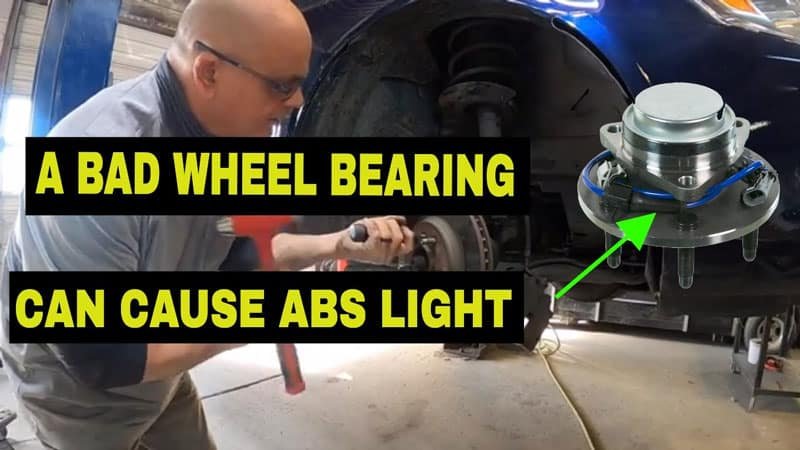
Yes, wheel bearings can affect ABS. If a wheel bearing is bad, it can mess up the signals that go to the ABS. This can cause the ABS light to turn on and might cause the ABS not to work properly. So, keeping wheel bearings in good shape is important for the ABS to work right.
How Does ABS Wheel Bearing Work?

The ABS wheel bearing works by using a sensor to keep track of how fast each wheel is spinning. Each wheel has its own sensor, which is placed near a special ring that moves with the wheel.
Depending on the car, this ring can have magnets inside it or metal teeth. As the wheel turns, the ring passes by the sensor, which then creates electrical signals. The speed of the wheel changes how often these signals are made.
These signals go to the ABS control module, which is like the brain of the system. It uses this information for the Antilock Braking System (ABS) and other safety features in the car. The main job of the ABS is to stop the wheels from locking up when you brake hard. If the ABS sees that a wheel is slowing down too fast, like it’s going to lock up, it reduces the brake force on that wheel. This helps you keep control of the car and avoid skidding.
If something goes wrong with the ABS wheel bearing, like it gets dirty or breaks, the ABS won’t work right. This can make the car less safe to drive because the ABS and other systems that need the sensor’s information won’t work properly. You might see warning lights on your dashboard if there’s a problem.
The Bottom Line
Understanding how does ABS wheel bearing work is key to appreciating the advanced safety features in modern vehicles. This small but mighty component plays a crucial role in preventing your car’s wheels from locking up during sudden stops, helping you maintain control and steer clear of potential accidents.
Keeping an eye out for signs of a bad ABS bearing can help you address issues early, keeping this important safety system in top shape. So, next time you hit the brakes and feel that quick, controlled stop, you’ll know the ABS wheel bearing is working hard behind the scenes to keep you safe on the road.
Still Got questions? Our expert team is just a click away! Dive deeper into solutions tailored for you. Reach out now and unlock the answers you’ve been searching for!
References
https://alliedautoonline.com.au/blogs/news/do-i-need-a-bearing-with-an-abs-sensor
https://holsteinparts.com/3-reasons-abs-light-turns/
https://www.samarins.com/glossary/abs-sensor.html
https://medium.com/@carservices960/four-symptoms-of-a-faulty-abs-wheel-speed-sensor-c54a0b9b748d

2人评论了“How Does ABS Wheel Bearing Work?”
Hi,
Car: 2012 Infiniti G37 Sport Sedan (6MT)
I replaced the wheel bearing assembly with non OE Made In China.
When I’m driving I can feel like loosing control of the car if I steer quick to right and left. The handling don’t feel right versus before I change to bearing. The car is equipped with new Potenza Sport Summer Tires.
Any help is appreciated.
Hi,
Thank you for reaching out.
The handling instability you’re experiencing—especially the sensation of losing control during quick left-right steering inputs—could very well be related to the non-OE wheel bearing assembly you installed. Aftermarket wheel bearings, particularly lower-quality or non-OEM units, may have:
Excessive internal play or improper tolerances, which can introduce subtle but noticeable looseness in the suspension geometry.
Inconsistent hub runout, affecting wheel alignment and tire contact with the road.
Poor sealing or lubrication, leading to premature wear or inconsistent performance.
Even though your new Potenza Sport Summer tires are high-performance, they can actually amplify any underlying mechanical issues because they offer more grip and responsiveness than standard tires—making irregularities in suspension or steering components more perceptible.