
Introduction — why bearings matter as drones rise
Drones and unmanned aerial vehicles (UAVs) have shifted from hobbyist gadgets to mission-critical tools used in mapping, inspection, agriculture, delivery, cinematography, and public safety. This rapid expansion has pushed designers to squeeze every bit of performance and reliability out of aircraft components. Bearings — small, often overlooked mechanical parts — play an outsized role in how a drone performs. They affect motor efficiency and heat, gimbal stability and image clarity, the durability of rotor hubs, and even the total flight time. Picking the right bearing is a practical design decision that influences payload capacity, maintenance cycles, and operating costs.
UAV and drone market context (brief)
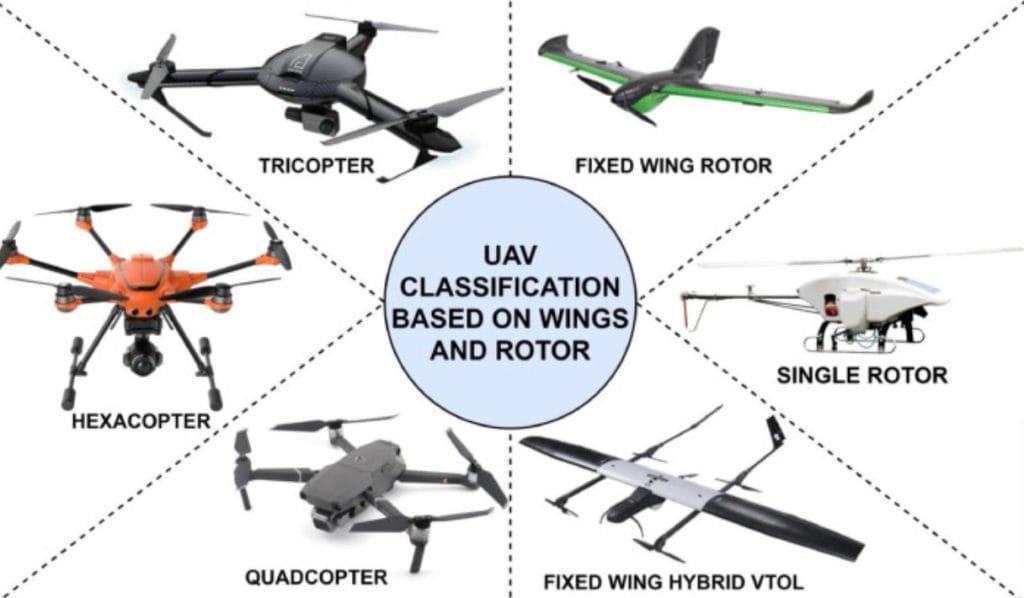
As commercial and industrial uses grow, manufacturers and system integrators optimize weight, efficiency, and reliability. That trend favors precision miniature bearings, hybrid ceramic solutions, and sealed bearings that keep contaminants out. Engineers increasingly treat bearings as part of the power and control system: a low-friction bearing reduces motor draw and extends flight time, while a high-precision gimbal bearing reduces vibration and delivers cleaner video with less active correction. In short, bearing selection is both a mechanical and an electronic systems choice.
What bearings are used in drones — which drones use which bearings?
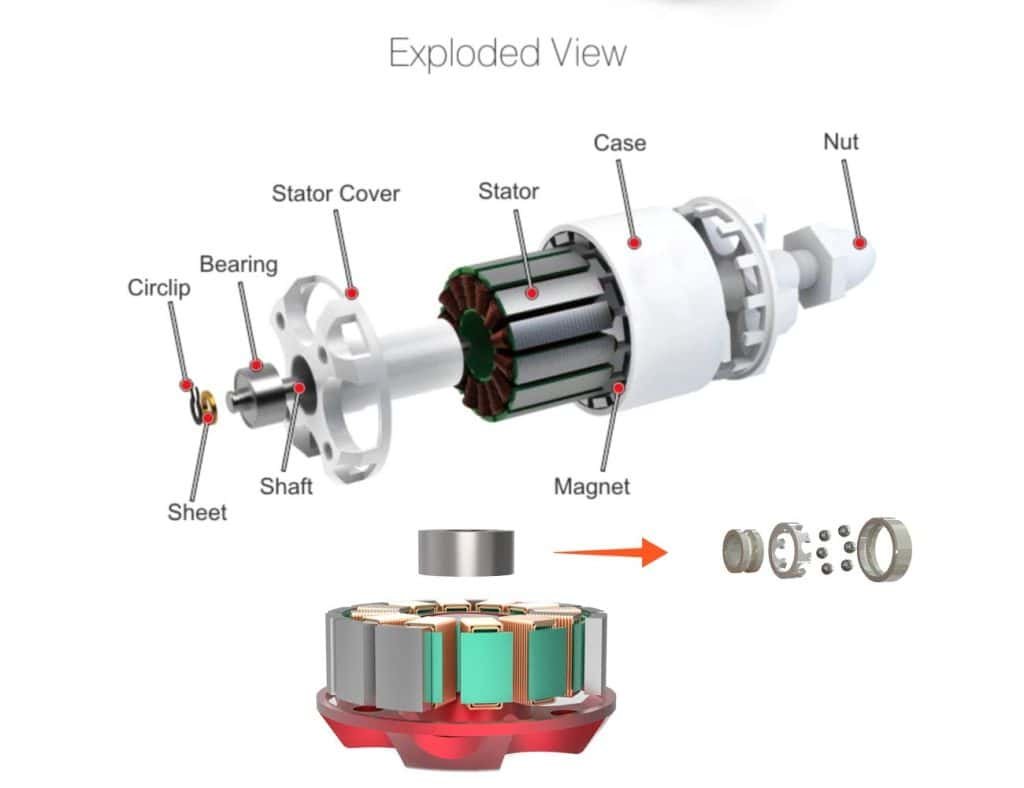
Bearings appear in nearly every mechanical subsystem of a drone. Here’s how different bearing families map to common drone types:
• Brushless motor bearings (deep-groove miniature ball bearings): Used in virtually all multirotor drones from small racing quads to professional camera drones. These bearings must handle high RPM, withstand radial loads, and operate with low friction to maximize battery life.
• Gimbal and camera bearings (miniature, thin-section bearings): Precision bearings in gimbals reduce friction and runout, enabling smooth stabilization for video. Prosumer and professional cinematography drones put extra emphasis on these 2 or 3 axis Gimbal pod .
• Rotor hubs and control linkages (angular-contact, tapered, or roller bearings): Larger VTOL platforms, tilt-rotor UAVs, and helicopter-style drones employ bearings that handle higher combined axial and radial loads.
• Actuators and servo linkages (small ball bearings or bushings): Control surfaces, retractable landing gear, and tilt mechanisms use small bearings or plain bushings depending on load and maintenance priorities.
• Landing gear and payload mounts (heavier roller or tapered bearings, or robust bushings): Delivery drones and heavy-lift platforms require shock-resistant solutions capable of withstanding repeated impacts and high static loads.
Every drone class — from sub-250 g micro quads to multi-kg industrial craft — will use the right bearing family for its mission profile. Proper selection requires balancing speed, load, weight, and environmental exposure.
Role of bearings in drones & UAVs — what they actually do
Bearings are compact mechanical elements that perform critical functions:
Reduce friction and save power: Low-torque bearings diminish motor losses. Lower friction means less battery drain and longer flight time — a top priority for every UAV application.
Improve stability and reduce vibration: High-precision bearings minimize radial runout and vibration transmitted to IMUs and cameras, which reduces correction burden on flight control systems and improves image quality.
Support axial and radial loads: Propellers and rotor hubs create axial and radial forces. Bearings designed for these forces preserve alignment, preventing wobble and control issues.
Increase reliability and lifetime: Bearings made from better materials or with superior lubrication strategies resist wear and temperature effects, decreasing downtime and maintenance.
Enable compact, lightweight design: Thin-section and miniature bearings let designers reduce mass without sacrificing stiffness — yielding higher payload capability or longer endurance.
Because bearings affect mechanical, electrical, and control domains, their influence is broader than their physical size suggests.
Types of bearings used in drones and UAVs
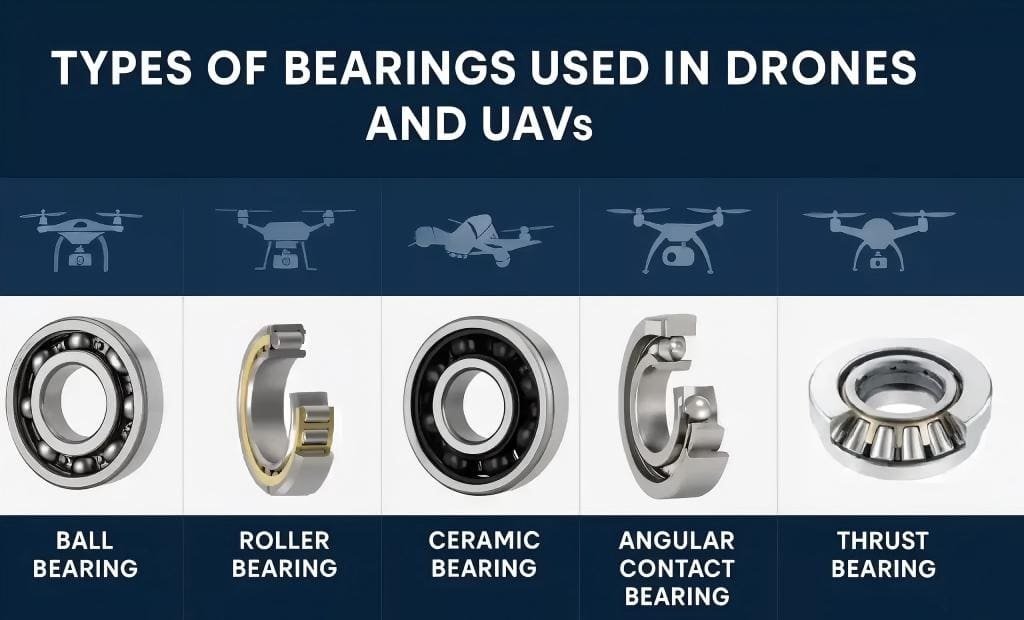
Below is a practical breakdown of common bearing types and why designers pick them:
Deep-groove ball bearings
Where used: Brushless motors, small rotating linkages.
Why: Simple, robust, handle radial loads and some axial load. Available in shielded/sealed variants to keep contaminants out.
Shielded / sealed miniature bearings (e.g., ZZ, 2RS types)
Where used: Outdoor motors and gimbals where dust, moisture or grease retention matter.
Why: Seals or shields keep lubricant in and contaminants out — vital for reliability in the field.
Hybrid ceramic bearings (ceramic balls + steel races)
Where used: High-performance motors and precision gimbals.
Why: Ceramic balls are lighter and harder, run cooler at high RPM, and resist corrosion — reducing friction and fatigue in demanding applications.
Angular-contact ball bearings
Where used: Rotor hubs and interfaces with significant axial load.
Why: Designed to handle combined axial and radial loads with enhanced stiffness and positional accuracy.
Tapered roller and spherical roller bearings
Where used: Heavy-lift UAV hubs, landing gear, and anywhere high impact or misalignment is expected.
Why: Built for high loads and shock tolerance; chosen when durability trumps minimal weight.
Plain bearings / bushings
Where used: Simple pivots, some landing gear joints, and damped linkages.
Why: Low-cost, tolerant to contamination and shock; good for low-speed, high-load joints.
Bearing materials & lubrication — design tradeoffs
Materials and lubrication choices are as important as geometry:
- Chrome steel (standard): Economical and suitable for most motors.
- Stainless steel: Offers better corrosion resistance for marine, coastal, or inspection drones operating in humid or salty conditions.
- Hybrid ceramic (silicon nitride balls): Excellent for high-speed, high-precision applications where lower thermal expansion, lower friction, and longer life are desired.
Lubrication: For motor bearings, low-torque greases are typical; sealed bearings are usually “lubed for life.” In racing or specialized high-efficiency use, some technicians remove grease and use light oils to minimize drag (at the expense of lifetime and contamination tolerance). For outdoor industrial drones, sealed bearings with appropriate grease are the safer, lower-maintenance choice.
Drone bearing size chart — common sizes and typical uses
| Application | Typical bearing sizes (ID × OD × Width mm) | Typical use notes |
| Micro & mini brushless motors (micro drones, micro FPV) | 3 × 8 × 2.5 ; 4 × 9 × 4 | Very small motors used in sub-250 g drones and small cameras |
| Hobby/FPV motors (racing quads, 5-inch quads) | 5 × 11 × 4 ; 8 × 16 × 5 | 5×11×4 and 8×16×5 are extremely common in hobby brushless outrunners |
| Prosumer camera drone motors | 8 × 16 × 5 ; 10 × 19 × 5 | Slightly larger motors to support more torque and payload |
| Gimbal axis miniature bearings | ID 2–8 mm; OD and width per design | Very low-friction precision bearings; sizes vary by gimbal model |
| Larger multirotor hubs / small VTOL | 17 × 40 × 12 (6203) ; 20 × 47 × 14 (6204) | Standard deep-groove series used for heavier components |
| Heavy-lift UAV hubs & landing gear | Multiple roller or tapered bearing configurations | Used when shock loading and high static loads are expected |
Important: Bearing dimensions are listed as ID × OD × Width (mm). Always confirm fitment with the motor/gimbal manufacturer or by measuring the shaft and housing. The table below lists commonly encountered sizes and where they’re typically used.
When replacing or upgrading bearings, match ID to shaft diameter, OD to housing fit, and width to the available axial space. Tolerances and fits (e.g., press fit vs slip fit) matter for longevity and alignment.
Common failure modes and diagnostic tips
Understanding common failures helps you choose the right bearing and maintenance program:
- Contamination: Dirt and moisture accelerate wear. Use sealed bearings or protective housings for dusty or wet environments.
- Lubrication issues: Wrong grease or under/over-lubrication causes heat and wear. Choose lubricants recommended for the application and ambient temperature.
- Overloading and shock: Hard landings or prop strikes can dent races or collapse balls. For shock-prone systems, select roller bearings or designs rated for impact.
- Fatigue from high RPM: Extended operation at very high speeds can cause material fatigue; hybrid ceramics reduce this risk.
- Misalignment and poor installation: Wrong fits or misaligned housings shorten life. Use proper tools and installation methods.
- Health checks: listen for unusual noise, perform smoothness spin checks, monitor motor temperature, and check for lateral play. Replace bearings showing roughness, grinding, or play before they cause motor failure.
Selecting the right bearing for your drone — a quick checklist
- Identify the dominant load (radial, axial, combined).
- Check operating speed and choose bearings rated for those RPMs.
- Consider environment — dust, moisture, salt air → sealed/stainless or corrosion-resistant options.
- Factor weight sensitivity — thin-section and miniature bearings save mass.
- Decide on serviceability — sealed “lubed-for-life” vs open bearings that can be re-lubed.
- Verify fit tolerances and housing design — shaft diameter and housing bore must match recommended fits.
- For mission-critical or high-RPM axes, consider hybrid ceramic bearings.
- Source bearings from reputable suppliers to avoid counterfeit parts.
BYWB Bearing recommendations & how we can help
BYWB Bearing specializes in miniature, precision, and sealed bearings suitable for consumer, prosumer, and industrial UAVs. Our typical services for drone OEMs and integrators include:
Part selection support: Recommend direct-fit bearings for specific motor or gimbal models.
Custom thin-section solutions: Help with design when weight is critical.
Corrosion-resistant bearings: Options for inspection and marine-use drones.
Hybrid ceramic upgrades: For high-RPM, long-endurance motors and precision gimbals.
Technical support & datasheets: Assistance matching bearing tolerances, lubrication, and expected life to your UAV use case.
If you provide shaft diameter, housing bore, and operating conditions (RPM, expected loads, environment), BYWB’s engineering team can suggest optimal bearings and share life-expectancy estimates.
Practical tips for maintenance and field servicing
Keep a small bearing kit with common sizes used in your drone fleet (e.g., 5×11×4, 8×16×5).
Replace bearings after any hard impact or if you detect noise or roughness during spin checks.
For long deployments, choose sealed bearings with appropriate grease to minimize maintenance.
Maintain a log of bearing replacements and flight hours — small data sets predict life and help plan spares.
Conclusion
Bearings are small components with big influence. In drones and UAVs they affect flight time, reliability, video quality, and overall system costs. The right choice — from deep-groove miniature bearings in a racing motor to hybrid ceramic bearings in a high-end gimbal — depends on load, speed, weight constraints, and the operating environment. Investing in well-chosen bearings and a sensible maintenance program reduces downtime and increases mission success.
For help selecting bearings for a specific motor, gimbal or UAV platform, BYWB Bearing can recommend parts, supply samples, and provide technical guidance tailored to your application. Tell us your shaft diameters and expected operating profiles and we’ll match the best bearing solution for your drone.
