
Bearings play a critical role in the smooth and efficient operation of automobiles. From the engine to the wheels, multiple types of bearings are used to reduce friction, support loads, and enhance performance. Understanding the different types of bearings, their applications, and quality grades is essential for automotive professionals and enthusiasts alike. In this comprehensive guide, we explore the various bearings used in cars, their importance, how they work, and how to replace them.
How Many Bearings Are in a Car?

A modern vehicle contains numerous bearings, each serving a specific function. On average, a car can have over 100 bearings, depending on its design and complexity. These bearings are found in key components such as the engine, wheels, transmission, steering system, and more.
How many Bearings in a Car:
Wheel Bearings: 4 bearings (front and rear wheels,each of two units)
Transmission Bearings: 12-20 bearings
Engine Bearings: 10-20 bearings
Steering Bearings: 4-8 bearings
Suspension Bearings: 8-16 bearings
Other Bearings (AC compressor, alternator, turbocharge, etc.): 10-30 bearings
Types of Bearings Used in Automobiles and How They Work
1. Wheel Bearings
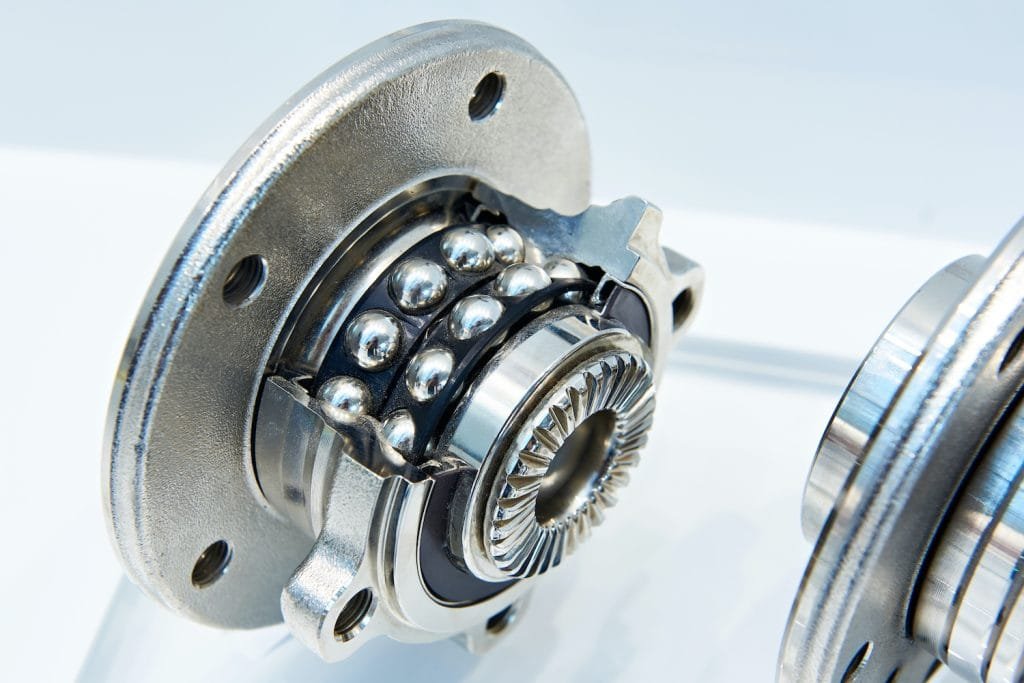
Wheel bearings support the vehicle’s weight and enable smooth wheel rotation. These bearings are designed to handle high radial and axial loads and come in different types:
Ball Bearings: Common in passenger vehicles for smooth rotation.
Tapered Roller Bearings: Used in trucks and SUVs for heavy duty handling.
Wheel Hub kits : Integrated units with sensors for ABS and traction control.
How wheel bearing Works?
Wheel bearings use rolling elements (balls or rollers) between an inner and outer ring to minimize friction and allow free movement of the wheel.
How to Replace a Wheel Bearing
Over time, wheel bearings wear out and need replacement. Symptoms of a failing bearing include grinding noises, uneven tire wear, and wheel wobbling.
Steps for Replacement:
1.Lift the Vehicle: Secure the car on jack stands and remove the wheel.
2.Remove the Brake Assembly: Detach the caliper and rotor to access the bearing hub.
3.Unbolt the Hub Assembly: Depending on the vehicle, the wheel bearing may be part of a hub assembly or separate.
4.Press Out the Old Bearing: Use a bearing press to remove the worn bearing.
5.Install the New Bearing: Press the new bearing into place and reassemble the hub.
6.Reinstall Components: Secure the brake assembly and wheel.
7.Test for Smooth Rotation: Spin the wheel by hand and check for noise or resistance.
2. Engine Bearings

Engine bearings facilitate the movement of the crankshaft and camshaft while reducing wear.
Main Bearings: Support the crankshaft and withstand high rotational forces.
Rod Bearings: Connect the piston rods to the crankshaft.
Camshaft Bearings: Ensure smooth camshaft rotation for valve timing.
How Engine Bearing Work:
Engine bearings create a thin oil film between moving metal surfaces to reduce wear and friction.
How Engine Bearing Replacement:
- Drain the oil and remove the oil pan.
- Unbolt the main or rod bearings.
3.Install new bearings with proper lubrication.
4.Reassemble and refill with fresh oil.
3. Transmission Bearings
These bearings minimize friction within the gearbox and support smooth gear changes.
Ball Bearings: Used in manual and automatic transmissions.
Needle Roller Bearings: Provide compact support with high load capacity.
Tapered Roller Bearings: Handle thrust and radial loads in differential gears.
How Transmission Bearings Work:
They reduce friction between moving parts inside the gearbox, ensuring smooth gear transitions and reducing energy loss.
How Transmission Bearings Replacement:
1.Remove the transmission from the vehicle.
2.Open the gearbox casing and locate the damaged bearing.
3.Replace with a new bearing and reassemble the transmission.
4.Reinstall the transmission and refill with new fluid.
4. Steering Bearings
Steering bearings enable smooth and precise control of the vehicle.
Thrust Bearings: Reduce friction in the steering column.
Angular Contact Bearings: Provide stability in rack-and-pinion systems.
How Steering Bearings Work:
These bearings support the steering mechanism by allowing smooth and precise movement of the steering column and rack.
How Steering Bearings Replacement:
1.Disconnect the steering column from the rack.
2.Remove the damaged bearing and install a new one.
3.Reassemble the system and test for smooth steering.
5. Suspension Bearings
Suspension bearings help in shock absorption and vehicle stability.
Strut Bearings: Found in MacPherson struts for better steering response.
Control Arm Bearings: Allow smooth movement of suspension components.
How Suspension Bearings Work:
They allow for controlled movement of suspension components, reducing vibration and enhancing vehicle stability.
How Suspension Bearings Replacement:
1.Lift the vehicle and remove the suspension components.
2.Press out the old bearing and replace it with a new one.
3.Reassemble and test the suspension for smooth movement.
6. Other Automotive Bearings
Alternator Bearings: Ensure smooth rotation of the alternator for power generation.
AC Compressor Bearings: Reduce friction in the air conditioning system.
Turbocharger Bearings: Withstand high-speed rotation and extreme temperatures, mostly used copper.
Importance of High-Quality Bearings in Automobiles
Quality bearings enhance vehicle performance, safety, and durability. Poor-quality bearings can lead to excessive friction, premature wear, and even failure of critical components. Key benefits of using premium-grade bearings include:
Improved Fuel Efficiency: Reduced friction lowers energy loss.
Enhanced Durability: High-grade materials resist wear and tear.
Better Performance: Smooth operation ensures optimal power transmission.
Safety Assurance: Reliable bearings prevent breakdowns and accidents.
Bearing Quality Grades and Standards
Automotive bearings are classified based on precision, load capacity, and durability. The most commonly recognized grades include:
1. ABEC (Annular Bearing Engineering Committee) Grades
ABEC 1-3: Standard quality for general applications.
ABEC 5-7: High precision for performance vehicles.
ABEC 9: Ultra-precision for racing and high-speed applications.
2. ISO (International Organization for Standardization) Grades
ISO P0-P6: Standard to high precision.
ISO P5-P2: Premium precision for high-speed and heavy-duty applications.
3. Material Grades
SAE 52100 Chrome Steel: Common for automotive bearings due to durability.
Ceramic Bearings: Used in high-performance applications for reduced weight and friction.
Stainless Steel Bearings: Corrosion-resistant for harsh environments.
Why Choose BYWB Bearing for Automotive Applications?
BYWB Bearing is committed to providing top-quality bearings designed for superior performance in the automotive industry. Our bearings meet international standards and undergo rigorous quality control to ensure reliability. Key advantages of BYWB Bearing include:
Advanced Manufacturing Technology: Precision engineering for optimal performance.
High-Quality Materials: Use of premium steel and coatings for extended lifespan.
Competitive Pricing: Cost-effective solutions without compromising quality.
Wide Product Range: Bearings for all automotive applications.
Customization Options: Tailored solutions for specific vehicle requirements.
Conclusion
Bearings are essential components in automobiles, ensuring smooth operation, efficiency, and safety. Understanding how they work and how to replace them helps in maintaining optimal vehicle performance.
At BYWB Bearing, we take pride in delivering premium automotive bearings designed to meet the highest industry standards. Visit BYWB Bearing for more information on our solutions.
