
Trying to figure out ball bearing sizes? Knowing them is crucial for making sure the machines you build run smoothly and fast. This guide will show you how to measure them so you can buy the right ones.
To find out how big a ball bearing is, you need three measurements: the outside diameter (OD), the inside diameter (ID), and the width. They’re measured in millimeters (mm) and they’re important because you need to know the size of the bearing to buy the right one. You’ll need a caliper or micrometer to measure them accurately, so your machine runs the way it’s supposed to.
Ready to dive a little deeper into how to measure ball bearings?
What are Bearing Sizes?
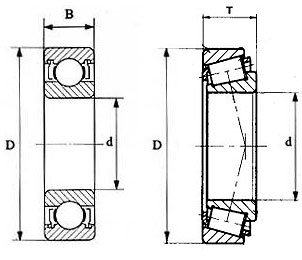
Knowing bearing sizes is important because it helps you pick the right bearing for different machines. The size of a bearing is determined by the inside diameter, the outside diameter, and the width. These measurements are important because they determine how much weight the bearing can handle, how fast it can spin, and how it will work in a machine. Bearings have to fit right in the place where they go to work and not break. Knowing bearing sizes is important for people who buy bearings in business because if you pick the wrong one, your machine won’t work right and you’ll have to buy another one. If you know the common sizes and how to measure them, you can buy the right bearing and make your machine work right.
What is the Most Common Ball Bearing?

The most common bearing that people buy is a deep groove ball bearing. It’s a versatile bearing that can handle weight from the side and weight from up and down. You can use it in all kinds of things, from electric motors to things that move stuff around. Deep groove ball bearings come in different sizes and styles, including ones that are sealed and ones that have a shield on them. They’re made this way so you can use them in different situations and they’ll work right. People like deep groove ball bearings because they work well, they don’t break, and they don’t cost too much money. If you understand what deep groove ball bearings are and how they work, it will help you pick the right one for what you’re trying to do. Then, your machine will work right and you won’t have to buy another bearing.
How is a Bearing Measured?
To measure a bearing correctly, you need to know three things: the inside diameter (ID), the outside diameter (OD), and the width. To measure these things, you can use a caliper or a micrometer, which are tools that will give you a good measurement. The inside diameter, or bore, is how big the shaft is that the bearing will fit on. The outside diameter is important because you have to make sure the bearing fits in the hole it goes into. The width is important because it tells you how much weight the bearing can handle and how it’s going to sit in the machine. You have to measure a bearing right so you don’t have any problems. If you buy the wrong bearing, your machine won’t work right. That’s why it’s important for people who buy bearings to know how to measure them.
How Do You Measure 3 Figure Bearings?
Measuring three-digit bearings is a little different because you have to know how to read the numbers. The numbers tell you what the bearing is. They tell you the series, the bore size, and other things about the bearing. To measure a three-digit bearing, you have to know what the numbers mean. You also have to use a micrometer or caliper to measure the inside diameter, the outside diameter, and the width of the bearing according to the numbers. It’s important to know what the numbers mean and to measure a three-digit bearing right if you want your machine to work right.
Where are Bearings Measured In?
The place where you measure bearings can affect the measurements you get. You want to measure bearings in a place where it’s the same temperature and humidity all the time. This is because when bearings get hot or cold, they get bigger or smaller and that changes their measurements. You also want to measure bearings in a clean place where there’s no dust because dust will mess up your measurements and scratch the bearing. You also want to make sure you hold the bearing right when you measure it so you don’t squeeze it too hard and mess up your measurements. If you understand these things, you can measure bearings right.
What Tool is Used to Measure Ball Bearings?

The most common tools people use to measure bearings are calipers and micrometers. Calipers are good for measuring the inside diameter, outside diameter, and width of a bearing. They’re not perfect, but they’re close enough. If you need to measure a bearing more accurately, especially if you’re an engineer or you work in a machine shop, you need to use a micrometer. Micrometers measure things to the thousandth of a millimeter. They’re more accurate than calipers, and they’re important if you need to measure bearings really accurately. You need to know what these tools can do and what they can’t do so you can measure bearings right. If you don’t measure a bearing right, your machine won’t work right.
How Do You Read the Size of a Bearing?
If you want to know the size of a bearing, you need to know the numeric and alphanumeric codes that manufacturers use to tell you the dimensions and specifications of a bearing. The size of a bearing is usually given as the inner diameter, the outer diameter, and the width, in millimeters. After those dimensions, you might see some letters and numbers that tell you the type of bearing, the material the cage is made from, the clearance, and some special modifications. If you’re a B2B buyer, you need to know how to read these codes to make sure you get the right bearing for your application. If you know the common bearing size notations and specifications, you can use that information to help you select the right bearing to meet your machine’s operating requirements.
How Precise are Ball Bearings?
The precision of a bearing is important because it affects how well the bearing performs and how long it lasts in your application. High-precision bearings are made to very tight tolerances so they can perform well under specific operating conditions. Precision affects a bearing’s speed, load capacity, and noise level, among other things. If you’re a B2B buyer, it’s important to select bearings with the right precision level to meet your specific application requirements. High-precision bearings are especially important in applications where you need to run at high speed and minimize vibration, such as in aerospace and medical equipment. Understanding the precision classes and selecting bearings accordingly can help you get better performance from your machinery.
What is the Best Grade of Ball Bearings?
The best grade of a bearing to use in your application depends on the requirements of your machine and the conditions in which it operates. Bearings are graded based on their precision, the quality of the materials they’re made from, and how long they’re expected to last. The higher the grade, the better the bearing will perform and the longer it will last. If you’re a B2B buyer, you need to consider things like how much load the bearing can handle, how fast it needs to go, and the conditions in which it will operate when you’re selecting a bearing grade. You may need a higher-grade bearing if you’re going to run at high speeds, carry heavy loads, or operate in a corrosive environment so you can be sure your bearings will perform and last. Understanding the grading system and the needs of your machine will help you make better decisions and get better performance and value from your bearings.
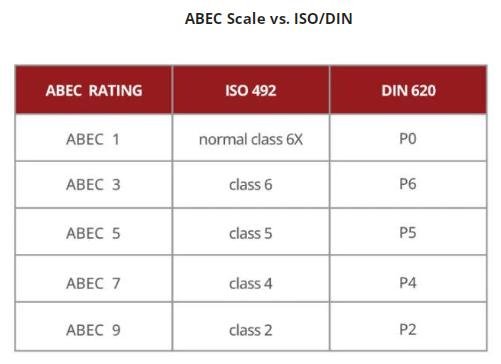
ABEC Rating: The “Annular Bearing Manufacturers Association” has a committee that sets standards for bearing precision called the “Annular Bearing Engineers Committee” – “ABEC”.
Cartridge bearings are the most common bearing type in the cycling industry. A “cartridge bearing” means that the balls, seals, grease, and internal and external races are all built into a single cartridge bearing unit that is usually press fit into the application. ABEC grading considers the precision of the rings (races) that the bearings roll on, but not the precision of the balls. The ABEC scale rates bearing precision on four levels: 1, 3, 5, and 7.
ABEC 1 is the lowest level of bearing that is considered “Precision”. ABEC 1 bearings are specified on three variables:
Bore – The Inside Diameter of the bearing – also measured as the size of the shaft (inner cone) that the bearings revolve around.
Radial Run Out – The roundness of the actual races.
Ring Width Variation – The consistency of the width between the inner and outer bearing rings. The more consistent the ring width around the entire bearing, the smoother the balls can roll between the rings, and the higher the precision.
ABEC 3 bearings are rated on the same three dimensions as ABEC 1, although at tighter tolerances. For example, an ABEC 1 bearing will have .0003mm of Radial Run Out (roundness variation), while an ABEC 3 has only .0002mm of variation.
ABEC 5 bearings not only have tighter tolerances on the three core variables above, but they must also adhere to set standards on additional dimensional items within the bearing as established by ABEC. These additional tolerances provide greater precision and lower rolling resistance. The differences between a Grade 3 and 5 bearing for cycling are noticeable and many companies use Grade 5 for this reason. Grade 7 bearings tighten the tolerances further still.
It is important to note that the ABEC rating system only applies to the tolerances that ABEC sets as standards and does not consider some other important variables that can affect bearing performance and durability. Ball tolerances, materials, grain structure, grease, seals and manufacturing environment are examples of things that are not taken into account by the ABEC ratings.
The Importance of Inner Diameter (ID) in Bearing Size

When it comes to selecting the right bearing size for various applications, one key dimension stands out above the rest: the Inner Diameter (ID). Through years of experience in mechanical engineering and assembly processes, it becomes evident that the ID plays a crucial role in ensuring efficient and effective assembly.
Whether it’s for wheel hubs, shafts, or any other rotating machinery, the inner diameter of the bearing dictates the assembly process directly. Here’s why it’s so pivotal:
Assembly Fit: The inner diameter determines how snugly the bearing fits onto the shaft or within the wheel hub. If the ID is too small, assembly becomes cumbersome, requiring excessive force and potentially damaging the components. Conversely, if the ID is too large, it may lead to loose fittings, causing instability and compromising the functionality of the machinery.
Load Distribution: The ID directly influences the distribution of loads within the bearing. An appropriately sized inner diameter ensures that the load is evenly distributed across the bearing’s surfaces, minimizing wear and tear and prolonging the lifespan of both the bearing and the components it supports.
Operational Efficiency: A well-fitted bearing enhances the overall efficiency of the machinery. By choosing the correct inner diameter, friction and resistance are minimized, reducing energy consumption and optimizing performance.
Axial Alignment: Achieving proper axial alignment is crucial for smooth operation and reduced vibrations. The inner diameter dictates how well the bearing aligns with the shaft or hub, ensuring minimal misalignment and preventing premature failure.
Compatibility: Different applications require specific inner diameters to accommodate varying shaft sizes or hub dimensions. Selecting the appropriate ID ensures compatibility between the bearing and its mating components, facilitating seamless integration into the overall system.
Maintenance and Replacement: When it comes to maintenance or replacement tasks, the inner diameter determines the interchangeability of bearings. Standardized inner diameters simplify the process of sourcing replacements, reducing downtime and maintenance costs.
In conclusion, the inner diameter of a bearing holds paramount importance in the selection process. Its impact reverberates through the entire lifecycle of the machinery, from assembly to operation and maintenance. By prioritizing the correct inner diameter, engineers and maintenance professionals can optimize performance, reliability, and longevity, ultimately contributing to the success of the equipment and the systems it powers.
Take Away
As we wrap up this discussion on reading bearing sizes, it’s clear that having the right knowledge and tools not only makes the job easier but also helps you make your machines more precise. This progression from the basics to more advanced measurement techniques is the foundation for making your machines run better.
What’s the one thing you’re going to do from today’s post? What’s your favorite tip that we missed?
Contact to let us know. Your insights could be the guiding light for others in our industry.
