
Cup And Cone Bearing — why this matters
Cup-and-cone bearings are a classic, serviceable bearing system used across bicycles (hubs, headsets, older bottom brackets) and in many industrial niches. They are a favorite for mechanics who want adjustability and long-term serviceability, and they remain relevant because of their robustness, low-cost maintainability, and the ability to replace individual parts instead of entire cartridges. This guide explains what cup-and-cone bearings are, how they work, their benefits, the role of the cup, why Shimano has historically favored the design, and a practical size chart so you can choose the right replacement balls and sets.
What is a cup and cone bearing?

A cup-and-cone bearing is a loose-ball bearing assembly made from three principal elements:
Cup — the outer race, usually pressed into the hub shell, head tube cup or frame.
Cone — the inner tapered race that screws onto the axle or steerer and mates with the cup.
Balls — loose steel balls that roll between the cup and the cone.
Together they form a simple but precise rolling contact bearing. The cup is fixed in the hub shell or headtube; the cone threads onto an axle or spindle and is adjusted to set the preload and remove play. Because the balls are loose (or held in a simple retainer/cage), the assembly can be disassembled, cleaned, and re-lubricated — a major advantage for long-life serviceable hubs and headsets.
Anatomy and how it works — a deeper look
- Outer race (cup): Pressed into the hub shell or headset cup. The inner surface of the cup is machined to be a raceway for the balls.
- Inner race (cone): A tapered, hardened, and polished cone that threads on to an axle or spindle. The cone forms the inner race for the balls.
- Balls: Typically high-carbon chromium steel in common bicycle sizes. They may be held by a retainer (cage) or be completely loose.
- Axle / spindle / locknuts: The axle provides the mounting point for cones and nuts/locknuts control axial position and preload.
- Working principle: When properly adjusted, the cones compress the balls against the cup with a slight preload so they roll smoothly under radial and axial loads. Proper preload eliminates play without causing excess friction; incorrect adjustment either causes play (under-tight) or premature wear and drag (over-tight). The ability to set preload precisely is a hallmark of the cup-and-cone system.
Benefits of Cup and Cone Bearings

Cup-and-cone systems offer several distinct advantages — reasons they remain common on many bikes and on many Shimano hubs:
- Serviceability and long life
Cup-and-cone bearings can be disassembled, cleaned, inspected for pitting, re-greased, and reassembled with new balls if needed. When well-maintained they often outlast sealed cartridges because worn balls can be replaced and cones reconditioned. This makes them economical for long-term ownership and repair shops. - Adjustability
Precise preload adjustment lets a mechanic dial-in the “sweet spot” where play is eliminated but friction is minimal. That tunability can yield smoother performance and longer bearing life when done correctly. - Repairability and parts availability
Balls, cones and sometimes cone-and-axle kits are widely available and inexpensive compared with replacing an entire cartridge bearing assembly. For legacy frames and vintage bikes, this is often the only practical option. - Tolerance to contamination (if serviced)
A cup-and-cone bearing that’s periodically repacked and cleaned can tolerate environments that would kill a sealed cartridge over time — provided the user services it. For commuters who maintain their hubs, the old-school design is resilient. - Lower cost up front (for some hub models)
For many hub designs, cup-and-cone systems are cheaper to manufacture and, for some markets, cheaper to buy and maintain over the long run. - Caveats: cup-and-cone bearings demand care: correct adjustment, periodic servicing, and replacement of balls or cones when pitted. If maintenance is neglected, sealed cartridge bearings usually survive longer and require less user skill.
What is the purpose of a cup bearing?
The cup acts as the external raceway for the balls. Its purpose and role:
Raceway surface: The cup provides the hardened, smooth surface against which the balls roll. It converts rotating motion into controlled rolling contact between the balls and the cone.
Fixed geometry: Because the cup is pressed into the hub shell or headset cup, it fixes the external geometry of the bearing — so cones and balls can be sized and adjusted to match.
Durability & replacement dynamics: The cup is often the non-replaceable (or less-easily replaced) part in many hub shells — many hub shells have the cup formed as part of the shell. In service, the cone and balls are replaceable; if the cup becomes pitted, the hub shell often must be replaced. That’s why correct lubrication and correct adjustment are essential: worn cups are harder to fix.
Why does Shimano (and many hub makers) still use cup-and-cone?
Shimano and other established hub manufacturers have reasons for continuing to use cup-and-cone in many of their hub lines:
- Proven reliability and long life when serviced
Cup-and-cone hubs have a long history of durability under maintenance regimes. The design can be made extremely durable when cones and cups are machined precisely — and when consumers or shops service them. Refined cones, optimized lubrication and tight tolerances yield excellent longevity. - Serviceability and field repair
Riders and shops in many markets appreciate the ability to service a hub in the field: replace balls, repack grease, or adjust cones. Manufacturers support this with spare cones, balls and tools. For touring and non-disposable-bike cultures, that matters a lot. - Cost / engineering trade-offs
For some hub designs and price points, cup-and-cone remains an efficient solution in terms of manufacturing cost vs performance. Cartridge bearings simplify manufacturing but can be more expensive to replace at the component level. Cup-and-cone provides a balance of cost, adjustability, and durability. - Optimized design for multi-speed/higher load hubs
Engineering can tune cone angle, ball size, seal geometry and grease to make cup-and-cone perform well even under high-mileage conditions. Some designs allow better axial load handling for certain hub architectures than single radial cartridge bearings. - Bottom line: continued use is primarily because cup-and-cone offers a proven, serviceable, and economical solution — especially for riders and markets that value repairability and long life. However, manufacturers also use sealed cartridge bearings in many modern hub and wheel designs where low maintenance and simplified assembly are priorities.
Maintenance: cleaning, inspection, replacement, and adjustment
If you want cup-and-cone bearings to last, maintain them. Here’s a practical service routine:
Basic overhaul checklist
- Remove wheel / headset / crank and disassemble carefully. Keep track of ball counts and orientation.
- Clean all parts: cones, cups, balls and axle with a degreaser. Inspect under good light.
- Inspect cones and cups for pitting, scoring or discoloration. Small scratches can be smoothed by polishing (in limited cases), but pitting generally means replacement (cone and/or hub).
- Replace balls if needed — if more than one ball is pitted, replace the whole set; balls are cheap and wear evenly.
- Grease generously with a quality bearing grease. For hubs, don’t skimp — a smooth, thick coat on balls and cup prolongs life.
- Reassemble and adjust: set cones so there is a slight preload — you should feel a faint “drag” when spinning by hand but no axial play. Lock with locknut and check for free spin and no play.
Adjustment tips
The correct feel is “slight drag but no play.” Over-tightening causes friction and wear; under-tightening causes play and shock loads on fewer balls.
Use cone wrenches; don’t use pliers on cones.
After adjustment, test with quick-release or axle nuts tightened to their final torque — axle compression affects the effective preload. Many hubs need their cones tuned under actual axle clamping conditions.
Materials and quality: what to look for
Balls: 52100 bearing steel is common. Avoid cheap, soft balls. High-quality balls have good surface finish and hardness.
Cones & cups: Hardened and ground steel. Well-machined cones and cups run quieter and last longer.
Lubricant: Use a grease suitable for rolling bearings; some high-end hub techs use heavier grease for longevity in wet climates, lighter grease for low drag in dry climates.
Seals: Some cup-and-cone hubs use labyrinth seals or dust covers to improve life; they won’t make the bearing invincible but help keep grit out. Modern sealed cartridge units may still beat poorly sealed cup-and-cone units if the latter are neglected.
Cup And Cone Bearing Size Chart (practical reference)
Below is a practical chart listing typical ball diameters and usual ball counts for common bicycle cup-and-cone applications. These are typical values; always verify by measuring the existing balls and counting them before ordering replacement balls.
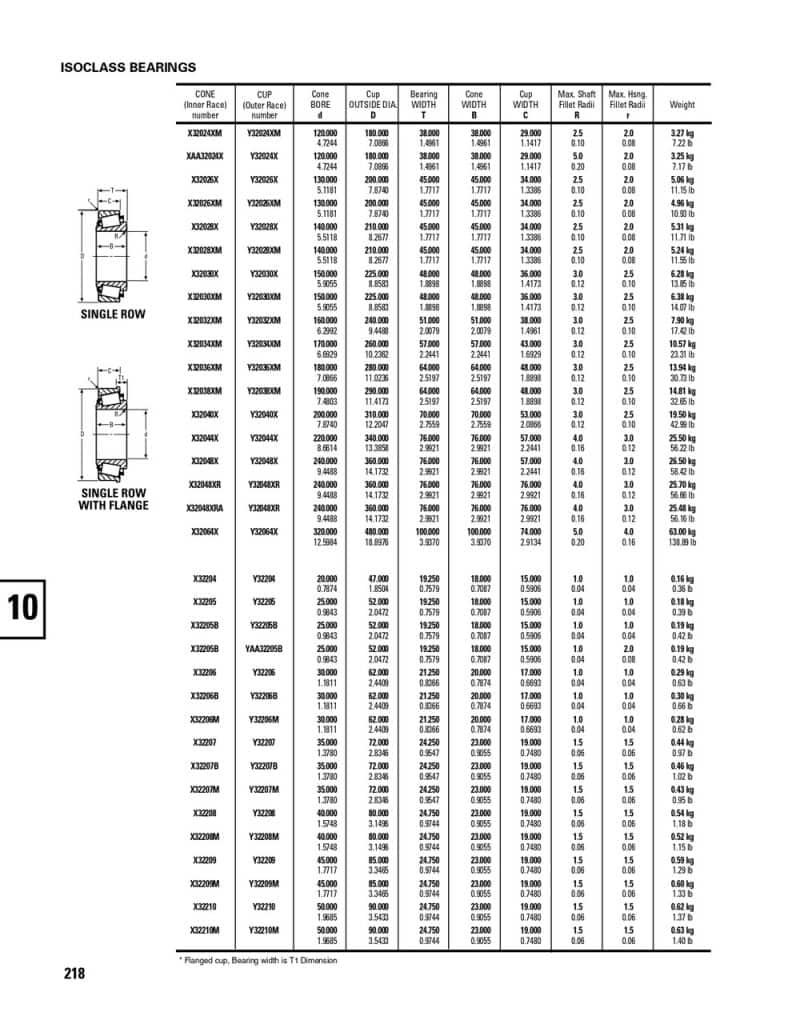
Important: Some hubs and headsets vary. Always measure ball diameter and count per race for exact replacement. The table lists common, widely observed configurations.
How to confirm your size: remove one ball and measure diameter with calipers, or measure the retainer and count the balls. Most shops replace with a matched set and the correct retainer.
Troubleshooting: common problems and fixes
Symptom: Wheel feels gritty or rough when spun.
Likely cause: Contamination or pitting of cups/balls.
Fix: Overhaul — remove, clean, inspect; replace balls; if cups are pitted the hub may need replacement.
Symptom: Wheel has play (side-to-side).
Likely cause: Under-tight cones or worn balls.
Fix: Re-adjust cones to remove axial play while avoiding over-tightening. Replace balls if worn.
Symptom: Overheated axle or excess drag.
Likely cause: Cones too tight or contaminated thick grease.
Fix: Loosen cones slightly, re-grease, check free spin.
Symptom: Intermittent clicking or rough patches.
Likely cause: One or more pitted balls causing localized damage.
Fix: Replace full bearing ball set and inspect cones and cups for surface damage.
When to replace cones/cups: If you find visible pitting, deep scoring, spalling, or flat spots on cones or cups, replacement is required. Cones are often available as spares; cups are usually part of the hub shell and thus mean hub replacement.
Cup-and-cone vs sealed cartridge: which to choose?
Cup-and-cone
Pros: serviceable, adjustable, parts available, potentially longer life if serviced.
Cons: requires skill/maintenance; cups can be terminal if pitted.
Sealed cartridge
Pros: low maintenance, quick replacement, consistent factory tolerance, preferred for modern wheels and riders who don’t want to service bearings.
Cons: replacement requires changing the cartridge; sometimes costlier in long-term parts replacement.
Recommendation: For commuter, touring, and riders who maintain their bikes (or who ride in harsh conditions but get regular service), cup-and-cone remains a great choice. For riders who want “fit-and-forget” simplicity, sealed cartridges make sense. Many wheel manufacturers are also optimizing sealed bearings for easy replacement, so the gap is closing.
Real-world practices for shops and buyers
Stock the common ball sizes: 3/16″ and 1/4″ loose-ball sets and retainers are useful for most hub servicing. Have a few cone replacements for popular hub lines if you service many bikes.
Inspect cups at every overhaul: If cups are pitted, mating cones will wear prematurely if reused. Replace cones first if you see cone damage; replace hubs if cups are badly pitted.
Document ball counts: Always note how many balls are on each race before disassembly. The “full minus one” rule for replacing balls sometimes applies, but best practice is to match the original count.
Use correct tools: Cone wrenches, proper greases, and workbenches make adjustment repeatable and safe. Avoid replacing cones with pliers or hammering cups.
BYWB Bearing perspective — products and support
At BYWB Bearing we know that small parts and correct tolerances matter. Whether you sell replacement loose-ball sets, cone kits, or full hub kits, customers expect clear size charts and reliable parts. If you carry multi-size loose balls, cone sets for popular Shimano models, or measured cone ID/OD specs, include a clear compatibility table for buyers — it saves time and avoids returns.
Practical BYWB checklist for cup-and-cone product pages:
list cone part numbers and compatible hub models,
show ball diameter and count (e.g., 10×3/16″ front hub set),
include cone inner-diameter (ID) and outer-diameter (OD) drawings,
provide a short “how to measure” guide (remove one ball, measure with caliper, count),
offer grease and tool bundles (cone wrench + grease + loose-ball set).
This kind of content provides value to both mechanics and purchasing agents who need exact replacement parts.
Conclusion — is cup-and-cone still worth it?
Yes — cup-and-cone bearings remain highly relevant for riders and mechanics who value serviceability, tuneability, and long-term cost effectiveness. Modern cartridge bearings provide an attractive low-maintenance alternative, but they don’t replace the mechanical advantages of a well-set cup-and-cone when the system is maintained. For many hubs (especially serviceable hub designs), headsets and vintage bikes, cup-and-cone is still the right choice. Proper maintenance — correct adjustment, clean grease, and timely replacement of balls or cones — will make these bearings deliver many trouble-free miles.
