
If you ride a Polaris, Can-Am, Honda, Yamaha or Kawasaki off-road, wheel bearings are not an “if” item on your maintenance list — they are a “when.” Mud, water crossings, pressure washers and plain old mileage will get into the hub eventually, and no seal made by anyone keeps them out forever.
We have been manufacturing wheel bearing kits for the powersports aftermarket since 1999, and we supply brands and distributors across North America. So this guide is written from the factory side of the table: what actually goes into a quality kit, why some kits fail in one season while others last for years, and how to match a kit to your machine without overpaying for a name on the box.
What Comes in an ATV Wheel Bearing Kit?
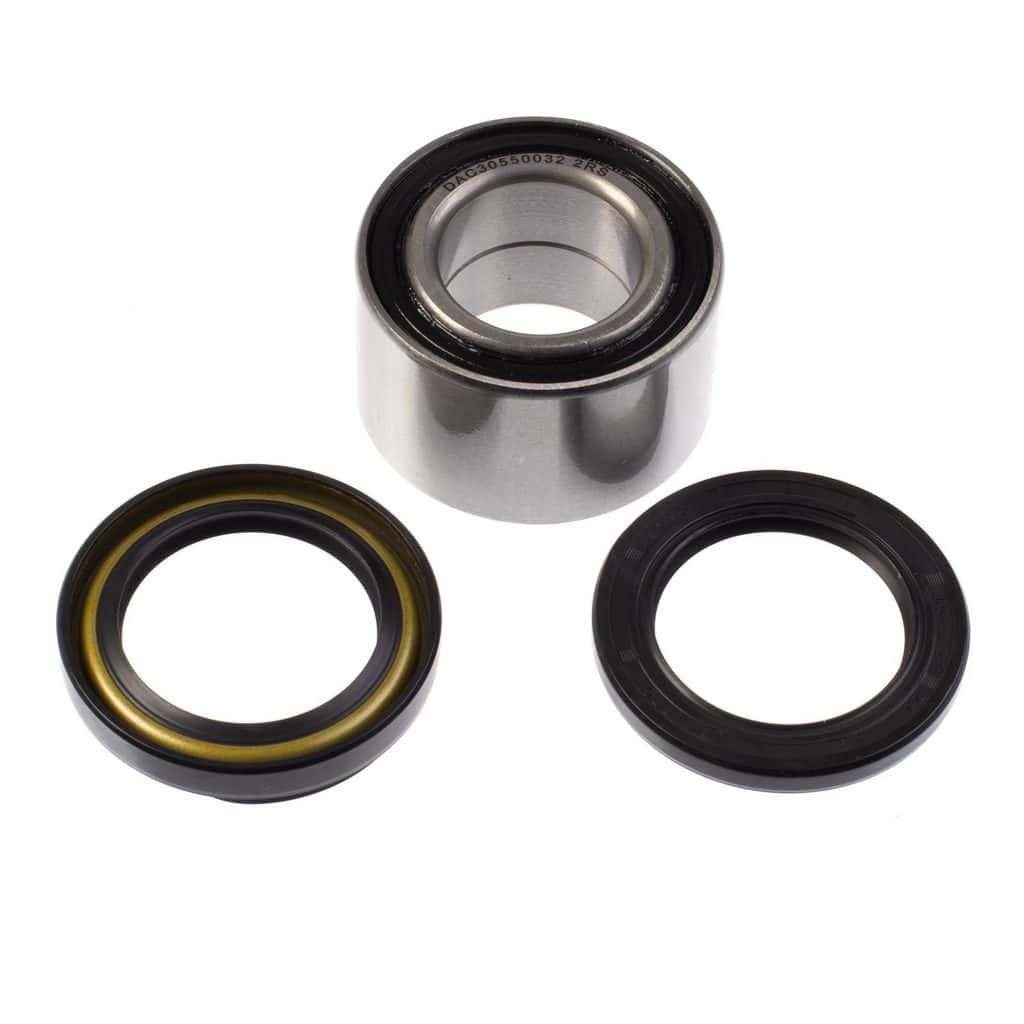
A wheel bearing kit is not just bearings. A complete kit for one wheel typically includes:
- Two ball bearings (usually double-sealed deep groove ball bearings, sized to the hub)
- Seals — the rubber or rubber-coated seals that sit outside the bearings and keep water, mud and sand out
- Sometimes a bearing retainer, snap ring or spacer sleeve, depending on the hub design
That seal is the part most buyers ignore, and honestly it is the part that decides how long the kit lasts. A premium bearing behind a cheap, hard rubber seal is money wasted. Water gets in, the grease emulsifies, and the bearing eats itself from the inside. When we build kits, we match the seal material to the riding environment — nitrile for general trail use, with better lip designs for machines that see deep water and pressure washing every weekend.
Symptoms of a Bad ATV or UTV Wheel Bearing
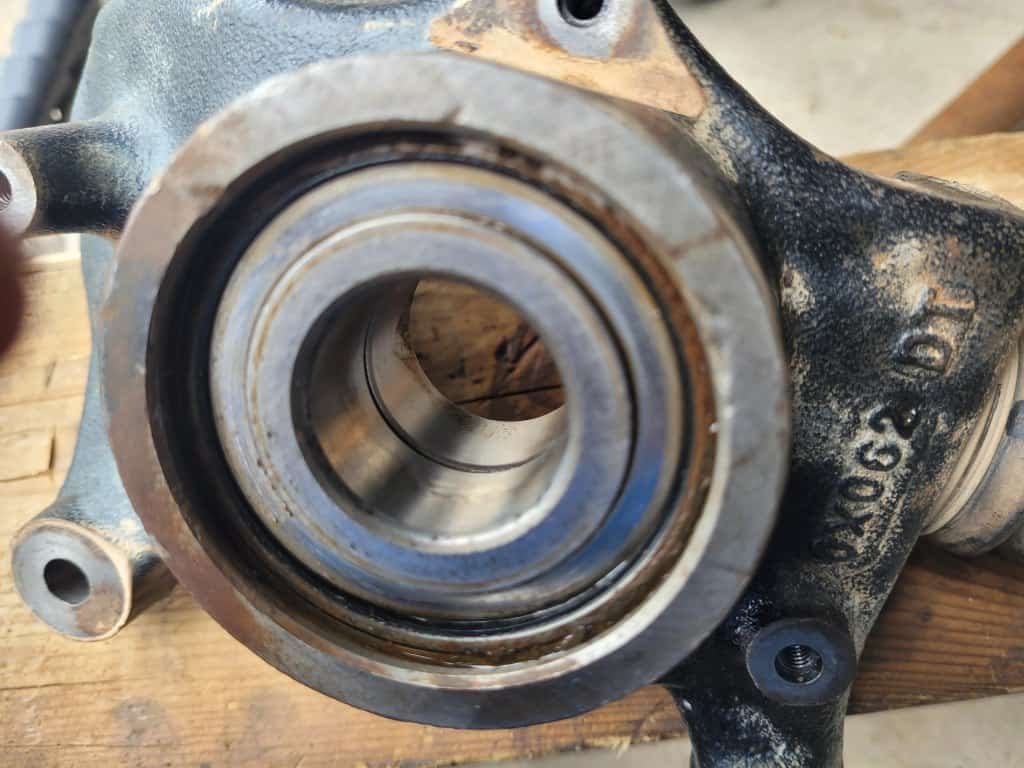
You do not need a shop manual to catch a failing wheel bearing. You need a jack and two minutes.
- Play in the wheel. Lift the machine, grab the tire at 12 and 6 o’clock, and rock it. Any clunk or looseness that is not tie-rod or ball-joint play is almost always the wheel bearing.
- Growling or rumbling that changes with speed. It often gets louder in turns as the load shifts side to side.
- A wheel that runs hot. After a ride, carefully feel near each hub. One hub noticeably hotter than the others is a red flag.
- Wobbling or a dragging brake. A worn bearing lets the hub tilt, which can drag the brake rotor and chew up pads.
- Water or rusty grease weeping past the seal. By the time you see this, the bearing inside is usually already pitted.
One thing we tell every distributor: a rider who catches play early replaces a $30–$60 kit. A rider who ignores it replaces the kit, the hub, and sometimes the knuckle. The bearing always wins that fight.
Why Wheel Bearings Die Faster on ATVs Than on Cars
People are often surprised that a car wheel bearing can run 100,000+ miles while an ATV bearing may need attention every couple of seasons. The reasons are simple physics:
- Direct water and mud exposure. No fender liner, no splash shield — the hub sits in the spray zone.
- Pressure washing. This is the number one killer we see in warranty returns. A 2,000 PSI jet aimed at the hub forces water straight past the seal lips.
- Big tires and lift kits. Oversized tires multiply the leverage on the bearing. A 30-inch mud tire on a machine designed for 26s roughly doubles the bending load on the hub.
- Slow speeds, high loads. Rock crawling and mud riding mean the bearing turns slowly under maximum load — the worst condition for the grease film.
If you ride water crossings regularly, treat wheel bearings as a seasonal service item, like an air filter. It is cheaper than being stranded.
OEM Part vs. All Balls, Pivot Works, and Aftermarket Kits: What’s the Real Difference?
Here is the part of the conversation most brands will not have with you.
The majority of powersports wheel bearings — OEM and aftermarket alike — come from a relatively small number of bearing factories. The bearing inside a $95 dealer kit and the bearing inside a well-made $35 aftermarket kit are frequently the same size, same class of steel (GCr15 / 52100 chrome steel), same ABEC grade, sometimes from the same type of production line. What you are often paying for at the dealer is the part number and the packaging.
Where aftermarket kits genuinely differ from each other:
| Factor | Budget no-name kit | Quality aftermarket kit (All Balls, Pivot Works, BYWB Bearing) |
| Bearing steel | Mixed sources, inconsistent hardness | Certified GCr15/52100 chrome steel, controlled heat treatment |
| Seals | Hard, generic rubber, poor lip contact | Application-matched nitrile, proper lip tension |
| Grease | Minimal fill, general-purpose | Correct fill volume, water-resistant grease |
| Fit tolerance | Loose — play felt within months | Held to spec, matches OEM stack-up |
| Part number coverage | Popular models only | Cross-referenced to OEM and All Balls 25-xxxx numbers |
We manufacture kits built to the same reference part numbers used by All Balls, Hi-Flo and EBC — so a kit crossing to an All Balls 25-1402, for example, is dimensionally and functionally interchangeable. For dealers and distributors, that cross-reference is the whole game: it is how a customer searching for their machine finds you.
How to Find the Right Kit for Your Machine
Getting the fitment right takes two minutes if you do it in this order:
- Write down the exact year, make and model — including sub-model. “2021 Polaris RZR XP 1000” and “2021 Polaris RZR XP 4 1000” can take different kits, and front vs. rear are almost never the same.
- Check whether you need front, rear, or both. Many riders replace in axle pairs. If one side is worn, the other has the same hours on it.
- Use the OEM or All Balls reference number if you have it. Any serious supplier can cross from an OEM number (e.g., Polaris 3514635) or an All Balls number to their own kit.
- If in doubt, measure. Bearing bores are standardized — a 6205 is a 6205 everywhere on earth. Calipers on the old bearing will confirm bore, OD and width in seconds.
For repair shops and dealers stocking inventory: the top 20 part numbers cover the large majority of late-model Polaris and Can-Am machines on the trail. Start there before going deep into the catalog.
Installation Tips That Actually Extend Bearing Life
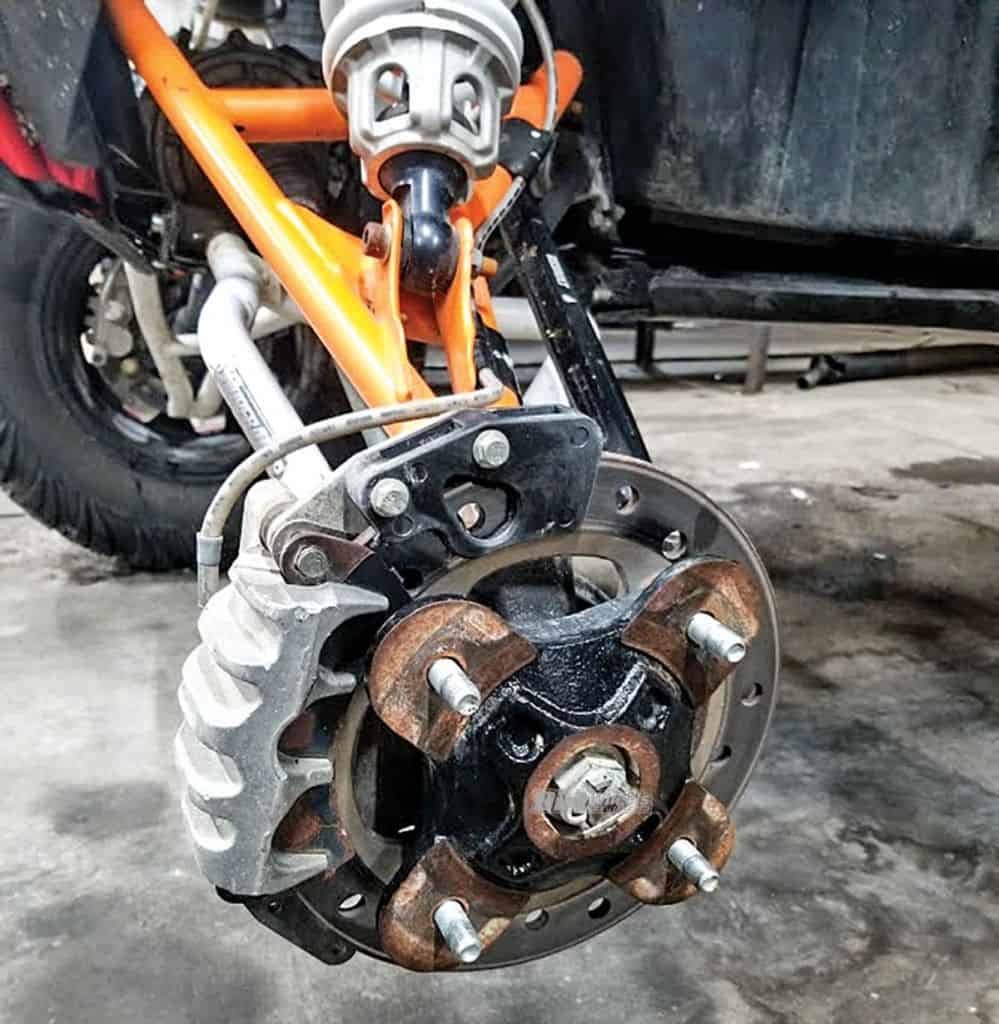
Most premature failures we analyze are not bearing defects — they are installation damage. Three habits make the difference:
- Press on the right race. Press the bearing in by the outer race, never through the balls by pressing the inner race. Pressing through the balls brinells the raceways on day one, and the bearing is born damaged.
- Freeze the bearing, warm the hub. Twenty minutes in a freezer and a hub warmed with a heat gun makes pressing almost effortless and removes the temptation to hammer. Hammers and bearings are enemies.
- Pre-pack the seal lips. A finger of waterproof grease on the seal lip before installation buys you real extra life in wet conditions. This one costs nothing.
And a note for the pressure-washer crowd: never aim the jet directly at the hub or the back of the wheel. Wash around it. Your bearings will last noticeably longer.
What to Look for When Sourcing Kits in Bulk
If you are a distributor, dealer or private-label buyer, the checklist changes. Consistency across a 5,000-piece order matters more than any single bearing. Ask your supplier:
- Can they cross-reference your OEM/All Balls/Hi-Flo number list, line by line?
- What steel and heat treatment spec do they certify, and can they show material reports?
- What is their seal supplier and lip design — do they spec seals per application or use one generic seal for everything?
- What QC checks run on assembly — noise testing, radial clearance, rotational torque?
- Will they build to low MOQs so you can test part numbers before committing to volume?
A factory that answers those five questions crisply is worth more than one that is 5% cheaper and vague.
FAQ
How long do ATV wheel bearings last?
Anywhere from one hard season to five years. Water exposure, tire size and pressure washing habits matter more than brand. Machines ridden dry trails on stock tires often go years; mud and water riders should inspect annually.
Should I replace both bearings in the hub, or just the bad one?
Both. They have identical hours and identical contamination exposure. A kit costs little more than a single bearing, and you are already in there.
Are aftermarket kits as good as OEM?
A quality aftermarket kit built to the OEM dimensional spec, in certified chrome steel, with proper seals, performs equivalently in service. The market has proven this for two decades — nearly every race team and rental fleet runs aftermarket.
Can I just repack my existing bearings with fresh grease?
No. ATV wheel bearings are sealed units. Once the factory seal is pried off to add grease, the bearing’s contamination protection is gone. Replace, do not repack.
What grease should be inside a wheel bearing?
A water-resistant lithium-complex or calcium-sulfonate grease, filled to roughly 25–35% of free volume. Overfilling causes heat; underfilling causes starvation. This is one of the quiet differences between a good kit and a cheap one.
Final Thoughts
Wheel bearings are a small part doing a brutal job. The riders who get the most life out of them are not the ones who buy the most expensive kit — they are the ones who buy a correctly-made kit, press it in properly, and keep the pressure washer away from the hub.
At BYWB Bearing, we have manufactured wheel bearing kits and precision ball bearings for the powersports, automotive and agricultural aftermarket since 1999. We build to All Balls, Hi-Flo, EBC, FAG, KOYO and NSK reference numbers, support low-MOQ custom kitting and private-label packaging, and already serve distributors and brands across North America. If you are sourcing kits for your shop, dealership or brand, send us your part number list — we will come back with a cross-reference and a quotation.
ATV & UTV Wheel Bearing Kits: What’s Inside, When to Replace, and How to Buy the Right One
Maintaining your off-road vehicle is essential for both performance and safety. Among the most critical components are the wheel bearings, which take the brunt of the mud, water, and rough terrain. Understanding your wheel bearing kit is the first step toward a smoother ride.
What’s Inside an ATV & UTV Wheel Bearing Kit?
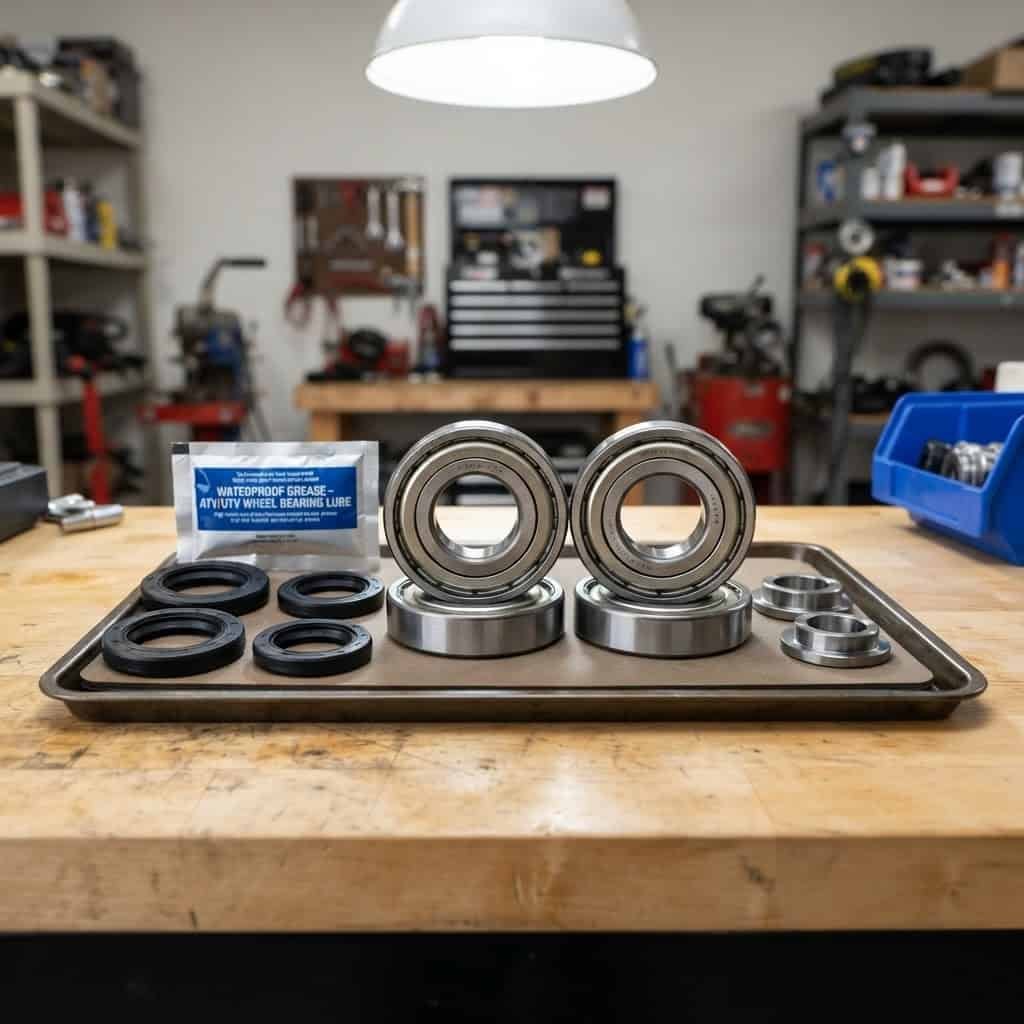
A standard high-quality kit typically contains everything you need to service one or more wheels. Knowing these components helps you verify that you have a complete set before starting the installation.
- Precision Bearings: The core of the kit, usually made from high-grade steel designed to withstand significant radial and axial loads.
- Rubber Seals: Double-lipped or triple-lipped seals that keep moisture and debris out while keeping the grease in.
- Snap Rings/Cotter Pins: Hardware used to secure the bearing and axle assembly in place.
- Specialized Grease: High-performance lubricant often pre-packed or provided to ensure longevity under high heat and friction.
When to Replace Your Wheel Bearings
Unlike some parts that wear out gradually, wheel bearings can fail rapidly once the seal is compromised. Watch for these common warning signs to prevent a breakdown on the trail:
- Audible Grinding or Squealing: A metallic noise that increases with speed is the most common indicator of bearing failure.
- Wobble or “Play” in the Wheel: If you can shake the wheel while the vehicle is jacked up, the bearing is dangerously loose.
- Uneven Tire Wear: Misalignment caused by a failing bearing will lead to premature tire tread degradation.
- Vibration in the Steering: Feeling a shudder through the handlebars or steering wheel often points to a front bearing issue.
How to Buy the Right One
Check Compatibility
Always verify the Year, Make, and Model of your ATV or UTV. Bearings for a Polaris RZR will differ significantly from those used on a Honda Foreman.
Choose the Right Grade
If you frequent deep mud or water, opt for “Heavy Duty” kits with enhanced sealing technology to prevent premature entry of contaminants.
