
What Is the Ball Bearing?

Are you uncomfortable with rough mechanical tools? It’s irritating, right? That’s where a ball bearing helps! It allows smooth motion in machinery by reducing friction between moving parts.
In this way, parts are able to rotate freely without being damaged by excessive wear and tear. Industrial machines and household appliances rely on ball bearings for countless applications.
So, if you are looking for something that smoothes your device, then Ball bearing is your answer. Delve in to the article to know everything about ball bearing, it’s types, functions, applications, and benefits.
Types of Ball Bearing
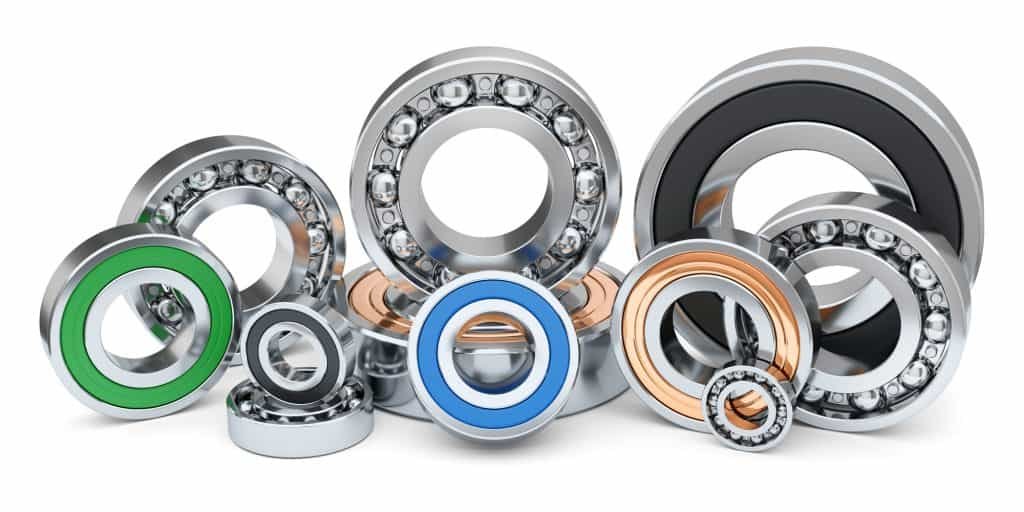
Ball bearings help make various machinery and equipment smooth and frictionless. There are a few types of ball bearings that are listed below:
1. Angular Contact Ball BearingsBYWB Angular contact Ball bearing
Angular contact ball bearings have raceways angled along the bearing axis on both inner and outer rings. Also, they can handle combined loads, accommodating both axial and radial forces. Mostly, this bearing features protective seals and are made from stainless steel, ceramic hybrids, or plastic.
- Single Row Angular Contact Bearing: Multiple balls are used to increase the load-carrying capacity and axial loads. But they usually need a second bearing for proper adjustment.
- Double Row Angular Contact Ball Bearing: These bearings have sufficient space to take both axial and radial loads in either direction.
- Four Points Angular Contact Bearing: Can handle axial, radial, and multi-directional loads. If you compare it to double-row bearings, they are separable and require less axial space.
2. Deep Groove Ball Bearings BYWB DEEP GROOVE BALL BEARING
These ball bearings are flexible and efficient enough for supporting heavy loads while offering both axial and radial support.
- Single Row Deep Groove Ball Bearing: This bearing features low friction and is available with or without seals.
- Double Row Deep Groove Ball Bearing: Double-row deep groove ball bearings support higher loads than single-row bearings.
3.Duplex Ball Bearings
With duplex ball bearings (DB, DF, DT), loads are distributed efficiently, which enhances the stability, and free up some space for the axial.
4. Hybrid Ball Bearings Using Ceramic Balls
Compared to older designs, these bearings have less centrifugal force and friction, and are therefore more efficient when compared to steel rings with ceramic balls.
5. Miniature Bearings
Micro bearings are typically used in precision applications, with small diameters (under 20 mm) that maintain high performance under moderate thrust and radial loads.
6. Precision Ball Bearings
These bearings provide exceptional precision and tolerance, which makes them ideal for high-precision applications. Also, like other bearings, they handle radial and thrust loads efficiently.
7. Roller Bearings
Roller bearings are not strictly ball bearings but they serve as a support in rotating elements in machines, transferring loads effectively.
8. Self-Aligning Ball Bearings
These bearings feature dual rows and a spherical outer raceway, which allows them to accommodate angular misalignment between shaft and housing.
9. Steel Ball Bearings
Steel ball bearings are multi-purpose and suitable for not only professional machinery but also caters to hobby projects, while being durable and corrosion-resistant.
10. Thrust Ball Bearings
The thrust ball bearing is specifically designed to manage axial loads, and is available in single- and double-direction configurations.
- Single Direction Thrust Ball Bearing: These are designed to support axial loads in one direction, with two ring components.
- Double Direction Thrust Ball Bearing: These bearings support loads in both directions and are built with a central ring for additional stability.
How Are Ball Bearings Made?

Let’s dig further to how these ball bearings are made, this includes their design, specifications, and materials used in their manufacturing:
Ball Bearings Design
For an efficient functionality and application of a ball bearing, it’s important that the design should be accurate. Here are some key aspects:
- Raceway Geometry: Bearing performance is governed by the curvature and the alignment of the raceways. Having properly designed raceways ensures smooth rotation and reduces ball stress.
- Cage Design: The cage prevents the balls from contacting each other. It’s important to consider the bearing’s speed and noise level when selecting a design.
- Seals and Shields: These shields or seals protect the bearing from contaminants and maintain lubrication, allowing it to last longer and perform better.
Materials Used in Balls in Ball Bearings
There are many materials used for roller bearing balls, but they are primarily chosen to match rings. As a result, you must keep the bearings in mind if they will be heated or cooled during their usage. So, if you wish to have long-lasting Ball bearings, don’t compromise on the material. These are some common materials:
- Roller Bearing Steel 1.3505/100Cr6
- Stainless Steel 1.4401 and 14401
- Soda-Lime Glass
- Borosilicate Glass
- Aluminum Oxide
- Silicon Nitride
Ball Bearing Specifications
In the following section, we will discuss ball bearings’ dimensions and operating specifications:
Dimensions of Ball Bearings
When choosing ball bearings, the following dimensions should be your first priority to consider:
Diameter Bore
The bearing industry uses a standardized number system for bearings with metric diameter bores. You can convert bore sizes 04 to millimeters by multiplying by 5.
Outside Diameter
Bearings are measured by the outside diameter of their outer rings.
Overall Width
Depending on the bearing assembly, the locking collar may be included in the overall width.
Operating Specifications
Ball bearings must meet specific operating specifications for optimal performance. These include:
- Static and Dynamic Load Ratings
- Limiting Speed
- Lubrication
The Function of Ball Bearings
Ball bearings are designed to limit rotational friction while supporting both axial and radial loads for your ease. They do this by placing the balls in two races. One race is usually fixed to a rotating assembly, like a shaft or hub, while the other one remains immobile.
As one of the bearing races rotates, so do the balls. Balls roll against each other, resulting in a lower coefficient of friction. Due to the smaller contact area between the races and balls, ball bearings typically have a lower load capacity than other rolling-element bearings.
What Are Ball Bearing Used For?
Here are some applications where Ball bearings can be used and its benefits:
Applications of Ball Bearings

Bearings are used in many industries, below-mentioned are a few industries where it is applicable:
- Airframe and Aircraft Control
Bearings used in the airframe and aircraft control are designed specifically for aerospace. The designs include rollers, balls, and needle rollers. - Aerospace Applications
It is uniquely made to handle a wide range of aerospace applications, such as engine bearings and helicopter bearings. - Agricultural Machinery
Specialized ball bearings are recommended for agricultural machinery. They are used in equipment like tractors and harvesters to make sure the operation is efficient and smooth. - Automotive Sector
Automobile bearings are designed to meet the Automotive sector’s specific needs. Such as in the tyres that move on the roads, the steering that revolves. - Ball Screw Support
Ball screw bearings are usually angular contact types with steep contact angles, such as 60 degrees, and are available in duplex, triplex, and quadruple Setups. - Miniature and Instrument Bearings
The ball bearings that you use in dental drills and disk drives are miniature or instrument bearings with angular contact or deep grooves. - Medical or Dental Bearings
These bearings are often miniature in design and designed for medical and dental instruments. - Pump Applications
Let’s say there’s poor lubrication and high loads in pump applications, but don’t worry! Ball bearings are designed to tolerate harsh operating conditions. - Spindle and Super Precision
To maintain the exceptional accuracy in machine tool spindles, BYWB suggests Precision ball bearings. - Sporting and Consumer Goods
For the sports and consumer goods markets, the bearings help in skateboards, inline skates, and fishing reels.
Benefits of Ball Bearings
- Vibrations, noises, and frictional torque are low with miniature bearings.
- Steel ball bearings are robust, durable, and corrosion resistant.
- Borosilicate glass ball bearings are effective heat resistors and temperature resistant. They are not only mechanically stable, but also their linear expansion coefficient is low.
- An angular contact ball bearing with a single row has a high load-carrying capability. It is very easy for them to run. It is easy to mount the universally matchable bearings.
- A double row angular contact bearing has a lot of benefits, including less axial space and accommodating both axial and radial loads. They also can cope with tilting moments.
- Furthermore, the four point angular contact ball bearing can handle both axial and radial loads. Additionally, their load-carrying capacity is high, and when clamped tightly, the inner ring is limited in deformation.
- Dynamic and static misalignments can be accommodated by self-aligning ball bearings.
Where to Buy Ball Bearing?
When it comes to purchasing ball bearings, it’s vital to choose reputable suppliers to ensure quality and reliability. We have distributors in the USA, Canada, Europe, and Vietnam, and also you can directly purchase it from BYWB .
Conclusion
Last but not least, ball bearings play an equally important role in countless machines in many industries. Mechanical systems are made more efficient thanks to their ability to reduce friction, support loads, and improve efficiency. No matter if you need precision bearings for aerospace, automotive, or even medical applications, you just have to choose the right bearing for the best performance and durability!
If you’re looking for high-quality, reliable ball bearings that meet your specific needs, BYWB Bearings is your trusted partner. Contact BYWB today to get your premium ball bearings that help your machines run smoothly and efficiently.
