
When you source bearings from a manufacturer — whether for automotive wheel hubs, electric motors, or industrial machinery — how do you know the product will actually perform? The answer lies in bearing quality standards.
These standards are not just paperwork. They define dimensional accuracy, material quality, tolerance grades, noise levels, and the entire quality management system behind every bearing that leaves the factory. For procurement managers, engineers, and aftermarket distributors, understanding these standards is the difference between a reliable supply chain and costly field failures.
This guide breaks down the four most important bearing quality standards you will encounter: ISO 9001, IATF 16949, ABMA, and DIN — what each one covers, who needs it, and how they work together.
1. ISO 9001: The Foundation of Quality Management
What It Is
ISO 9001 is the world’s most widely recognized quality management system (QMS) standard, published by the International Organization for Standardization. The current version is ISO 9001:2015. It is not specific to bearings — it applies to any organization in any industry — but it forms the baseline that every reputable bearing manufacturer should hold.
What It Covers for Bearings
ISO 9001 does not tell a factory how to make a bearing. Instead, it requires the manufacturer to:
- Document processes for design, production, inspection, and delivery
- Maintain traceability — every batch of bearings can be traced back to raw material lots, heat treatment records, and inspection results
- Control nonconforming products — defective bearings are identified, segregated, and prevented from reaching customers
- Conduct internal audits and management reviews regularly
- Implement corrective actions when quality issues arise
Why It Matters for Buyers
If a bearing supplier claims ISO 9001 certification, it means a third-party auditor (such as TÜV, SGS, or Bureau Veritas) has verified that the factory follows a structured quality system. This gives you confidence that:
- The 6203 bearing you ordered today will have the same dimensions and performance as the one you ordered six months ago
- If a problem occurs, the manufacturer has a system to find the root cause and fix it
- Raw materials like bearing steel (typically GCr15 / SAE 52100) are purchased from approved suppliers with material certificates
Internal Link: Learn more about bearing materials and performance in our Complete Guide to Stainless Steel Bearing
Limitations
ISO 9001 is a general standard. It proves the factory has a quality system, but it does not guarantee that bearings meet specific dimensional or performance tolerances. For that, you need product-level standards like ABMA and DIN (covered below), and for automotive applications, IATF 16949.
2. IATF 16949: The Automotive-Grade Standard
What It Is
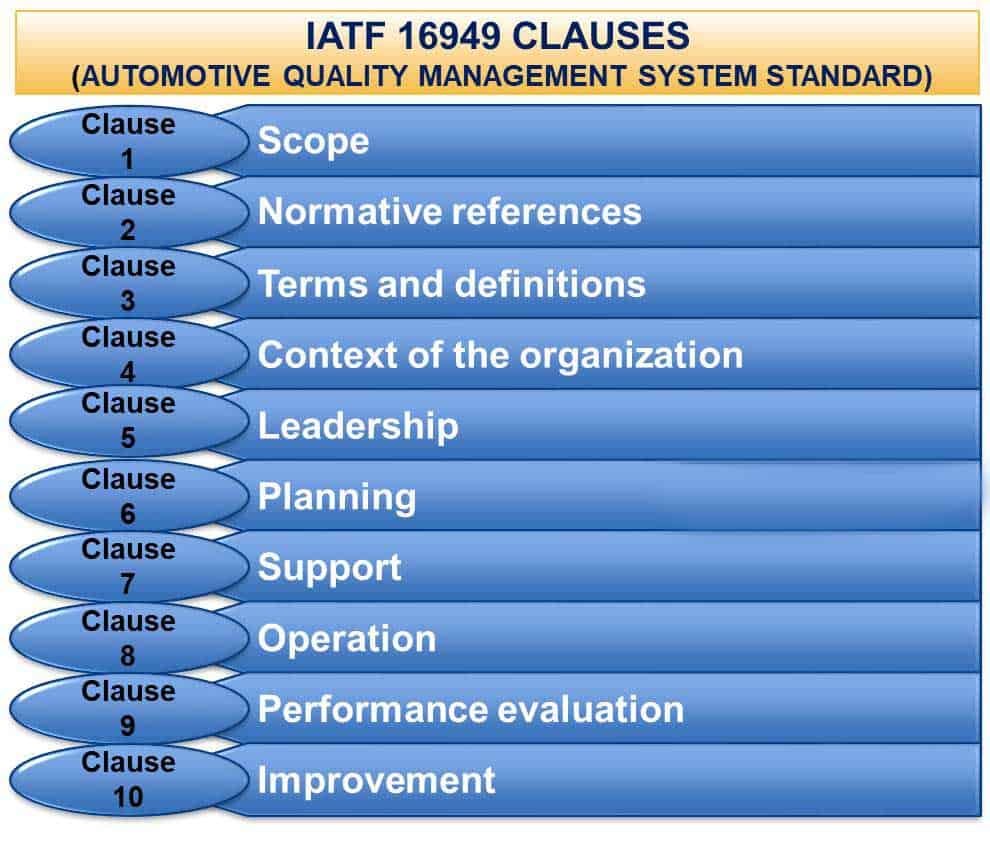
IATF 16949 (currently the 2016 revision) is the quality management standard developed specifically for the automotive industry by the International Automotive Task Force (IATF). It replaced the older ISO/TS 16949. While it builds on ISO 9001, its requirements are far more rigorous.
What Makes It Different from ISO 9001
IATF 16949 adds automotive-specific demands that ISO 9001 does not cover:
| Requirement | ISO 9001 | IATF 16949 |
| Advanced Product Quality Planning (APQP) | Not required | Mandatory for all new products |
| Production Part Approval Process (PPAP) | Not required | Customers must approve parts before mass production |
| Failure Mode and Effects Analysis (FMEA) | Optional | Required for design and process |
| Statistical Process Control (SPC) | Optional | Required for key characteristics |
| Measurement Systems Analysis (MSA) | Optional | Required for measurement systems |
Why It Matters for Bearing Buyers
If you are sourcing automotive bearings — wheel bearings, hub units, tensioner bearings, clutch release bearings, or water pump bearings — IATF 16949 certification tells you the manufacturer can meet the demanding requirements of OEM and Tier 1 automotive customers.
Bearings used in vehicles face extreme conditions: high loads, temperature cycling, contamination, and vibration. A manufacturer with IATF 16949 has proven they can:
- Control variation in bearing dimensions using SPC — critical for achieving proper interference fits in wheel hubs
- Predict and prevent failures using FMEA — reducing the risk of premature bearing noise or seizure
- Submit PPAP documentation — so you get full part approval packages for your own quality records
Internal Link: See our automotive product range at Automotive Bearings
The Bottom Line
IATF 16949 is the gold standard for automotive bearing manufacturers. If your application is automotive — even aftermarket — you should prioritize suppliers who hold this certification.
3. ABMA Standards: The American Benchmark
What It Is
The American Bearing Manufacturers Association (ABMA) develops dimensional and performance standards for bearings used primarily in the North American market. ABMA works in conjunction with ANSI (American National Standards Institute), and many ABMA standards are aligned with or equivalent to ISO standards but expressed in inch sizes for the US market.
Key ABMA Standards for Bearings
| Standard | Title | What It Defines |
| ANSI/ABMA Std 20 | Radial Ball Bearings, Inch Design | Boundary dimensions for inch-series ball bearings |
| ANSI/ABMA Std 12.1 | Instrument Ball Bearings | Tolerances for precision miniature bearings |
| ANSI/ABMA Std 4 | Tolerance Definitions | Terminology and tolerance definitions for ball bearings |
| ANSI/ABMA Std 9 | Load Ratings and Fatigue Life | Methods for calculating bearing life (aligned with ISO 281) |
| ANSI/ABMA Std 18.1 | Needle Roller Bearings | Dimensions and tolerances for needle bearings |
ABEC and RBEC Tolerance Classes
ABMA also defines tolerance classes that are widely used in the US:
- ABEC 1, 3, 5, 7, 9 — for ball bearings (ABEC = Annular Bearing Engineering Committee)
- ABEC 1, 3, 5 — for roller bearings (RBEC = Roller Bearing Engineering Committee)
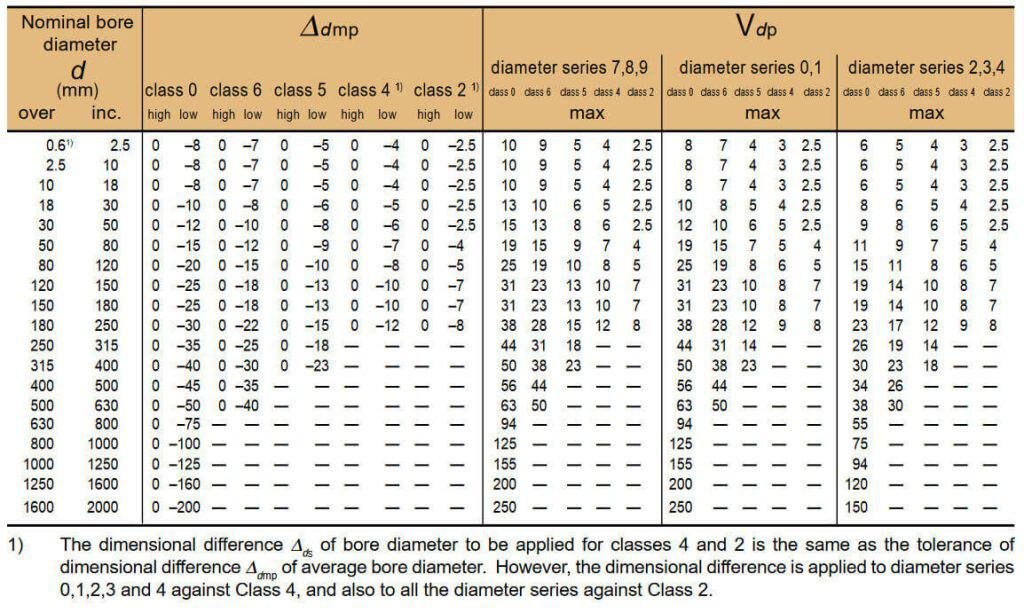
Higher numbers mean tighter tolerances. ABEC 1 is standard precision, while ABEC 7 and ABEC 9 are used in high-speed precision applications like machine tool spindles and dental handpieces.
Why It Matters for Buyers
If your market is the United States or Canada, and you need inch-sized bearings or must meet North American engineering specifications, ABMA compliance ensures:
- Bearings meet recognized dimensional standards — no surprises with bore, outer diameter, or width
- Tolerance classes are clearly defined, so you can specify exactly what precision level you need
- Load rating calculations follow a standardized method, allowing fair comparison between brands
Internal Link: Our Inch Size Ball Bearings
4. DIN Standards: The German Precision Benchmark
What It Is
DIN (Deutsches Institut für Normung) is the German national standards body. Germany has a long tradition of precision bearing manufacturing (think FAG, INA), and DIN standards for bearings are respected worldwide — especially in European markets.
Key DIN Standards for Bearings
| Standard | Title | Scope |
| DIN 615 | Needle roller bearings, drawn cup | Dimensional and running accuracies |
| DIN 620 | Rolling bearing tolerances | Tolerance classes for all bearing types |
| DIN 625 | Deep groove ball bearings | Boundary dimensions (aligned with ISO 15) |
| DIN 5401 | Rolling bearings — Balls | Ball dimensions and tolerances |
| DIN 720 | Tapered roller bearings | Single-row metric tapered dimensions |
| DIN 628 | Angular contact ball bearings | Boundary dimensions for ACBB types |
DIN 620 Tolerance Classes
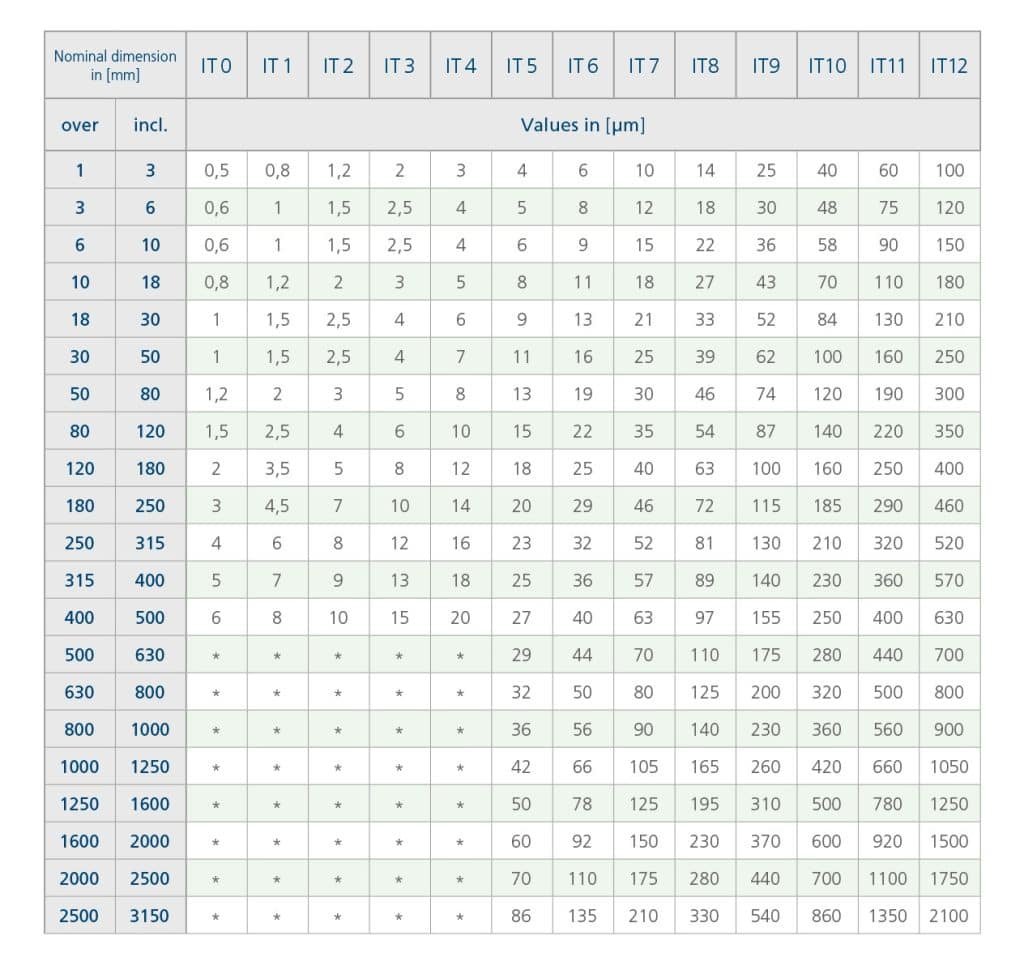
DIN 620 defines tolerance classes that correspond to ISO tolerance classes but use different naming:
| DIN Class | ISO Equivalent | Application |
| P0 (Normal) | Class 0 | General-purpose bearings — motors, fans, appliances |
| P6 | Class 6 | Higher precision — pumps, gearboxes |
| P5 | Class 5 | Precision — machine tools, instrumentation |
| P4 | Class 4 | Ultra-precision — grinding spindles, high-speed applications |
| P2 | Class 2 | Extreme precision — aerospace, gyroscopes |
Why It Matters for Buyers
DIN standards are particularly important if you:
- Sell to European markets — many European buyers specify DIN-compliant bearings by default
- Replace European-brand bearings — DIN dimensions ensure interchangeability with FAG, SKF, or INA equivalents
- Need precision documentation — DIN tolerance classes give you a clear, recognized language for specifying bearing quality
Internal Link: Our Deep Groove Ball Bearings
How These Standards Work Together
One common point of confusion is thinking these standards compete with each other. They do not — they serve different purposes and complement one another:
| PRODUCT STANDARDS(Define dimensions, tolerances, performance)ABMA (US/inch) — DIN (EU/metric) — ISO 492/15/281 (International) |
↓
| QUALITY SYSTEM STANDARDS(Define how the factory manages quality)ISO 9001 (General) — IATF 16949 (Automotive-specific) |
Think of it this way:
- ISO 9001 and IATF 16949 are about the factory’s quality management system — they tell you the manufacturer has disciplined processes
- ABMA, DIN, and ISO product standards are about the bearing itself — they define the exact dimensions, tolerances, and performance the bearing must meet
A top-tier bearing manufacturer will hold both types: a QMS certification (ISO 9001 or IATF 16949) AND manufacturing capability to meet product standards (ABMA, DIN, ISO dimensional/tolerance standards).
What BYWB Bearing Does
At BYWB Bearing, we take quality standards seriously. With nearly 24 years of bearing manufacturing experience and two fully-owned production plants covering 30,000 square meters, we operate under ISO-aligned quality management systems. Every bearing we produce — from deep groove ball bearings to automotive wheel hub units — is manufactured to meet recognized dimensional and tolerance standards.
Our quality process includes:
- Raw material control — bearing steel sourced from approved suppliers with full material certification
- In-process inspection — dimensional checks at every production stage
- Final inspection — noise, vibration, and dimensional testing before packaging
- Full traceability — batch numbers and quality records for every shipment
Whether you need standard metric bearings to DIN dimensions, inch-sized bearings to ABMA standards, or automotive bearings meeting IATF 16949 quality principles, BYWB has the manufacturing capability and quality systems to deliver.
Quick Checklist: What to Ask Your Bearing Supplier
Before placing an order, ask these questions:
- Do you hold ISO 9001 certification? (Minimum baseline for any supplier)
- Do you hold IATF 16949? (Essential for automotive applications)
- Which dimensional standards do your bearings meet? (ABMA for inch sizes, DIN/ISO for metric)
- What tolerance class can you supply? (P0/ABEC 1 standard, P6/ABEC 3 for higher precision)
- Do you provide material certificates and inspection reports?
- What is your bearing life calculation method? (Should follow ISO 281 / ABMA Std 9)
- Can you provide PPAP documentation if needed? (Critical for automotive Tier suppliers)
Conclusion
Bearing quality standards are not bureaucratic red tape — they are the framework that ensures every bearing performs as expected, batch after batch. ISO 9001 gives you confidence in the factory’s quality system. IATF 16949 raises the bar for automotive-grade reliability. ABMA and DIN define the product-level precision that your engineering team can design around.
When you understand these standards, you can evaluate suppliers objectively, specify bearings with confidence, and ultimately build more reliable products. If you have questions about which standards apply to your specific application, contact BYWB Bearing — our engineering team is ready to help.
