
Shaft bearings are quiet heroes in nearly every machine — from electric motors and gearboxes to pumps, conveyors, machine tools, and vehicles. They support rotating shafts, reduce friction between moving parts, and keep motion precise and reliable. Choosing and installing the correct shaft bearing affects performance, longevity, and cost of maintenance.
This guide covers everything you need to know about shaft bearings: what they are, their common types, how to install them correctly, a practical size chart to help you match bearings to shaft diameters, and essential maintenance and troubleshooting tips. Whether you’re an engineer, technician, buyer, or DIYer, this article will give you clear, practical information to make better decisions.
What is a Shaft Bearing?
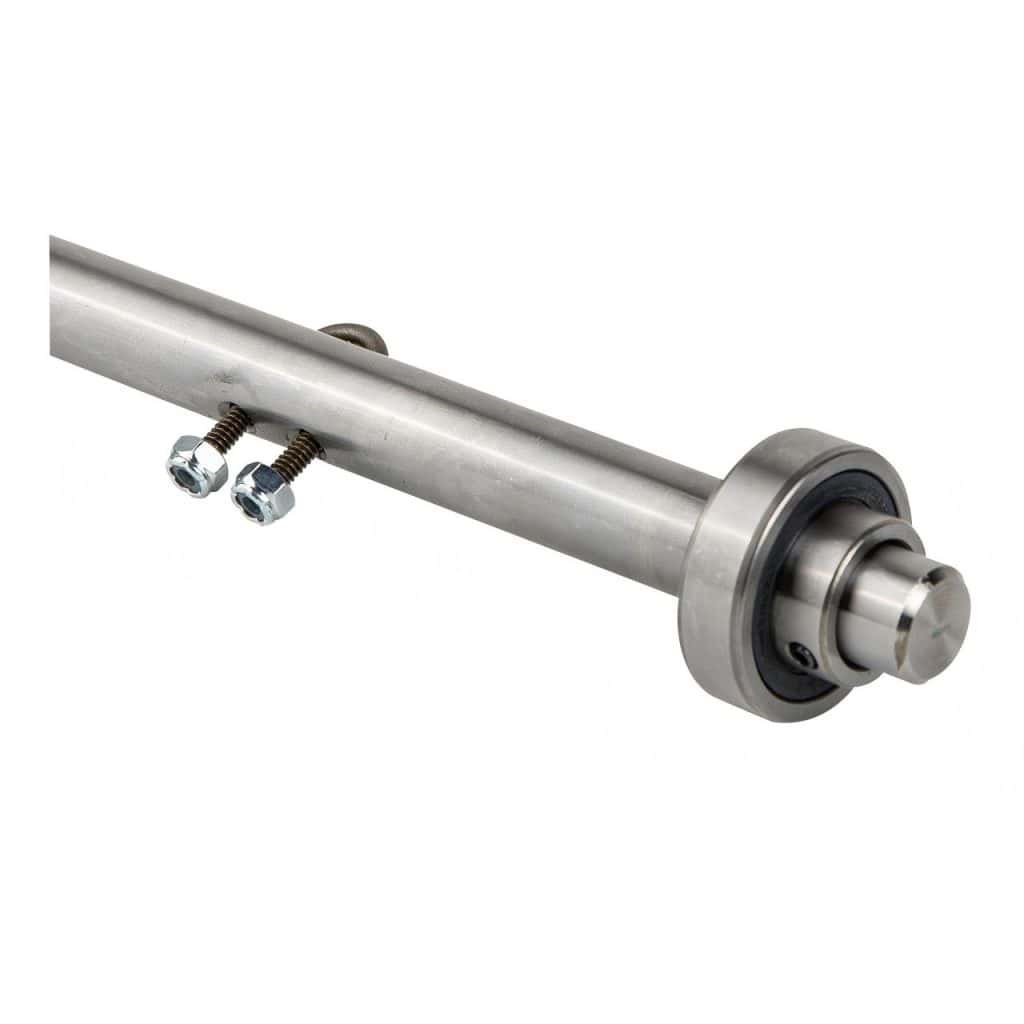
A shaft bearing is a mechanical component that supports a rotating or sliding shaft and allows controlled motion while minimising friction and wear. It maintains the shaft’s radial and/or axial position and transmits load from the shaft to the surrounding housing or frame.
Key functions of a shaft bearing
Support loads — radial (perpendicular to the shaft), axial (along the shaft), or combined.
Reduce friction — enabling smooth rotation and lowering heat and energy loss.
Maintain alignment — preventing excessive shaft movement or misalignment that causes vibration and wear.
Transfer loads — guiding forces safely into housings or adjacent components.
Bearings are designed to operate with lubrication (oil or grease), sealing arrangements to keep contaminants out, and specific tolerances to provide either a press fit or a loose fit depending on the application.
What are the types of shaft bearing?
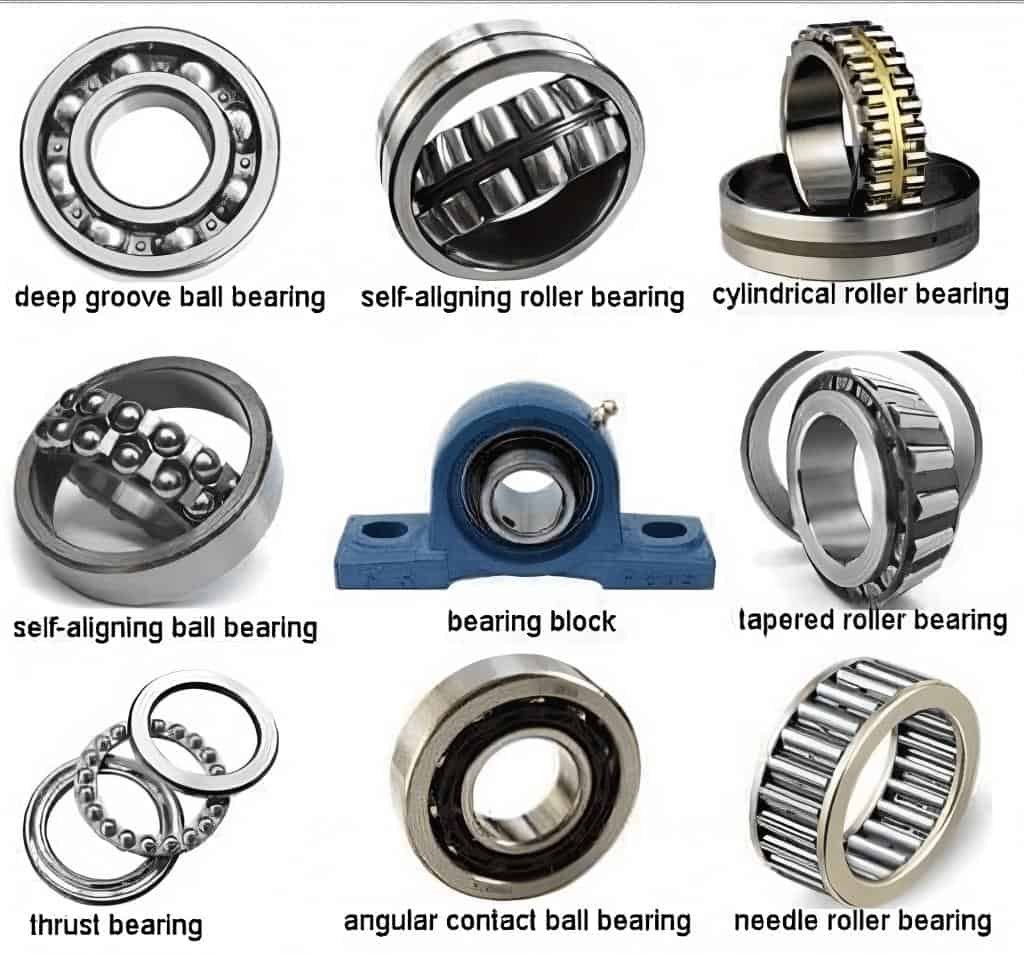
Shaft bearings come in many designs. The most common categories you’ll encounter are rolling-element bearings and plain (sleeve) bearings. Below are the principal types with short explanations, typical uses, and benefits.
1. Deep groove ball bearings
Description: The most common rolling-element bearing with an inner ring, outer ring, cage, and balls running in deep raceways.
Loads handled: Primarily radial loads, limited axial loads in both directions.
Applications: Electric motors, gearboxes, pumps, fans, appliances.
Advantages: Low friction, high-speed capability, low maintenance, compact.
2. Angular contact ball bearings
Description: Designed with raceways offset so they can handle axial loads in one direction as well as radial loads.
Loads handled: Combined radial and axial loads; often used in matched pairs for axial loads in both directions.
Applications: Spindles, machine tool spindles, pumps, automotive applications.
Advantages: High precision, good for high-speed, ability to sustain significant axial loads.
3. Cylindrical roller bearings
Description: Use cylindrical rollers in place of balls; rollers increase contact area and load capacity.
Loads handled: High radial loads; some designs can take limited axial load.
Applications: Gearboxes, heavy machinery, electric motors for heavy loads.
Advantages: High radial load capacity, robust.
4. Tapered roller bearings
Description: Use tapered rollers and raceways that allow them to handle combined radial and axial loads.
Loads handled: Heavy radial and axial loads in one direction; often used in pairs to support axial loads both ways.
Applications: Automotive wheel hubs, transmissions, rolling mills.
Advantages: High load capacity, ability to handle shock loads and misalignment to some degree.
5. Needle roller bearings
Description: Use long, thin rollers (needle-shaped) with small cross-sections.
Loads handled: High radial loads in a compact cross-section; limited axial capacity unless combined with thrust elements.
Applications: Automotive transmissions, rocker arm pivots, compressors.
Advantages: Low section height, high load capacity for size.
6. Spherical roller bearings
Description: Self-aligning bearing with symmetrical rollers that can tolerate shaft misalignment or housing deformation.
Loads handled: High radial loads and moderate axial loads in both directions.
Applications: Heavy-duty equipment like crushers, conveyors, gearboxes where misalignment is probable.
Advantages: Tolerance to misalignment, high load ratings.
7. Thrust bearings (ball and roller thrust)
Description: Designed specifically to carry axial (thrust) loads.
Loads handled: Axial loads; not designed for significant radial loads.
Applications: Automotive clutches, turntables, jacks, vertical shaft equipment.
Advantages: Dedicated axial load handling, compact when used correctly.
8. Plain bearings (bushings / sleeve bearings)
Description: Sliding contact bearing that usually consists of a soft, low-friction surface (metal, polymer, or composite) surrounding the shaft.
Loads handled: Moderate radial loads; axial capability varies with design.
Applications: Heavy machinery, small motors, pivot points, applications with shock loads or where rolling elements aren’t suitable.
Advantages: Simple, cost-effective, tolerant to misalignment and shock, quiet operation.
9. Magnetic bearings (brief mention)
Description: Use magnetic fields to levitate the shaft and eliminate physical contact.
Loads handled: Radial and axial loads—depends on magnetics and control system.
Applications: High-speed spindles, vacuum equipment, turbo-molecular pumps.
Advantages: No contact (no wear), high speed, long service life—requires power and control electronics.
How to Install Bearings on a Shaft — Step-by-step

Correct installation is essential. A poorly installed bearing is one of the leading causes of early failure. Below is a practical, step-by-step procedure that covers general cases for common rolling-element bearings. Always refer to the bearing manufacturer’s recommendations and safety instructions for the specific product.
Tools and supplies you will typically need
Clean lint-free rags and solvent for cleaning.
Calipers and micrometers for measuring shaft and bearing bore.
Bearing heaters (induction or oil bath) or an ice/freezer for the shaft (thermal fitting methods).
Arbor press or hydraulic press, or mallet and a soft drift for light press fits.
Protective gloves, safety glasses.
Torque wrench (for set screws or locknuts).
Anti-seize or light machine oil (only where recommended).
Lubricant (bearing grease or oil as specified by bearing manufacturer).
Shaft key, retaining rings, locknuts or circlips as required.
Preparation: inspect and measure
- Inspect the shaft and housing. They should be clean, dry, and free of burrs, nicks, corrosion, or residue. Remove old grease and debris.
- Measure critical dimensions. Use calipers/micrometer to measure shaft journal diameter and bearing bore. Check tolerances against bearing datasheet. Pay attention to runout or taper in the shaft.
- Check fit type. Decide whether the bearing will be a press (interference) fit or a sliding (clearance) fit. Typical practice: inner ring on shaft as press fit; outer ring into housing as light press fit. For bearings intended to float, the opposite ring will be a loose fit.
Common mounting methods
1. Cold press fit (mechanical press)
When to use: Moderate interference fit where a press is available.
How: Place the bearing squarely on the shaft and use an arbor press or hydraulic press to push the bearing onto the shaft. Always apply force to the ring being fitted — when pressing the inner ring onto a shaft, press on the inner ring only. Never press on the rolling elements or outer ring because it can damage the raceways and rollers.
Tip: Use a sleeve or mounting tool that bears only on the inner ring. Press slowly and evenly.
2. Thermal fitting (expansion/contraction)
When to use: For tight interference fits or large bearings.
How with bearing heater: Heat the bearing uniformly (induction or oil bath) until the bore expands slightly (temperature varies by bearing size; follow manufacturer guidance). Slide the heated bearing onto the shaft quickly and allow to cool — it will shrink to create a secure fit.
How with shaft chilling: For small bearings or shafts, cool the shaft (freezer, dry ice) to shrink it slightly before inserting the bearing.
Safety: Never overheat bearings — excessive temperature can alter metallurgical properties and damage seals. Use recommended temperature limits.
3. Slip fit / light interference (hand fit)
When to use: When the inner ring is so designed to rotate with the shaft but be removable, or when bearings need to be replaced regularly.
How: Gently slide the bearing on using even pressure; use assembly lubricant if recommended.
4. Using set screws, keys, or locknuts
Set screws: Only used on certain sealed bearings or where the inner ring has flats. Tighten to the torque specified by the manufacturer. Avoid direct contact of the screw with the shaft unless there is an engineered keyway or flat.
Keys and keyways: Provide positive drive between shaft and bearing inner ring or components. Ensure key is the correct fit and not oversized.
Locknuts and bearing collars: Commonly used on tapered roller bearings and hubs—tighten to specified torque and check axial preload if required.
Assembling into housing
- Press outer ring into housing when required. Support the outer ring only; do not press on the inner ring when mounting the outer ring.
- Align and seat the bearing. Ensure it sits squarely in the housing. Verify there is no binding and rotate gently by hand.
Lubrication and sealing
Apply lubricant as specified. For grease-lubricated bearings, apply the correct grease and fill to recommended levels (often 25–50% of free space for electric motors; follow datasheet). For oil-lubricated systems, ensure proper oil channels and seals.
Install seals and shields. Confirm seals are seated properly to block contaminants.
Preload and axial location
For paired angular contact or tapered bearings, establish axial preload per manufacturer specifications. Use calibrated torque wrenches, feeler gauges, or specialized setups to achieve correct preload.
Axial location: Use shoulders, locknuts, circlips, or retaining rings to control shaft axial movement.
Final checks
Rotate the assembly by hand and feel for smooth rotation and absence of grinding or tight spots.
Measure endplay or preload if specified.
Re-check set-screw torque and locking devices.
Run a short break-in at low speed under light load, then re-inspect and retorque fasteners if needed.
Shaft Bearing Size Chart (Practical Reference)
Below is a practical chart showing common shaft diameters and recommended typical bearing families. This chart is a quick reference — always verify exact bearing part numbers, tolerances, and widths with the manufacturer or BYWB catalog for your application.
| Bearing No. | Boundary dimensions | Basic load ratings | Limiting speeds | Mass | ||||||
| KN | RPM | kg | ||||||||
| d | D | B | R | r | dynamic Cr | static Cor | Grease | Oil | ||
| 7000 | 10 | 26 | 8 | 0.3 | 0.15 | 4650 | 2070 | 28000 | 37000 | 0.023 |
| 7200 | 10 | 30 | 9 | 0.6 | 0.3 | 5000 | 2520 | 24000 | 32000 | 0.029 |
| 7300 | 10 | 35 | 11 | 0.6 | 0.3 | 9500 | 4600 | 22000 | 29000 | 0.04 |
| 7001 | 12 | 28 | 8 | 0.3 | 0.15 | 5050 | 2470 | 25000 | 33000 | 0.025 |
| 7201 | 12 | 32 | 10 | 0.6 | 0.3 | 6600 | 3350 | 21000 | 28000 | 0.035 |
| 7301 | 12 | 37 | 12 | 1 | 0.6 | 10500 | 4950 | 19000 | 26000 | 0.044 |
| 7002 | 15 | 32 | 9 | 0.3 | 0.15 | 5800 | 3150 | 22000 | 29000 | 0.035 |
| 7202 | 15 | 35 | 11 | 0.6 | 0.3 | 8350 | 4350 | 18000 | 25000 | 0.046 |
| 7302 | 15 | 42 | 13 | 1 | 0.6 | 12500 | 6650 | 17000 | 22000 | 0.055 |
| 7003 | 17 | 35 | 10 | 0.3 | 0.15 | 7150 | 3850 | 19000 | 26000 | 0.046 |
| 7203 | 17 | 40 | 12 | 0.6 | 0.3 | 11000 | 6100 | 17000 | 22000 | 0.064 |
| 7303 | 17 | 47 | 14 | 1 | 0.6 | 14800 | 8000 | 15000 | 20000 | 0.107 |
| 7004 | 20 | 42 | 12 | 0.6 | 0.3 | 9700 | 5600 | 17000 | 23000 | 0.08 |
| 7204 | 20 | 47 | 14 | 1 | 0.6 | 13300 | 7700 | 15000 | 20000 | 0.1 |
| 7304 | 20 | 52 | 15 | 1.1 | 0.6 | 17300 | 9650 | 13000 | 18000 | 0.138 |
| 7005 | 25 | 47 | 12 | 0.6 | 0.3 | 10700 | 6850 | 14000 | 19000 | 0.093 |
| 7205 | 25 | 52 | 15 | 1 | 0.6 | 14800 | 9400 | 12000 | 16000 | 0.125 |
| 7305 | 25 | 62 | 17 | 1.1 | 0.6 | 24400 | 14600 | 11000 | 15000 | 0.23 |
| 7006 | 30 | 55 | 13 | 1 | 0.6 | 13900 | 9450 | 12000 | 16000 | 0.135 |
| 7206 | 30 | 62 | 16 | 1 | 0.6 | 20500 | 13500 | 11000 | 14000 | 0.198 |
| 7306 | 30 | 72 | 19 | 1.1 | 0.6 | 31000 | 20500 | 9600 | 13000 | 0.345 |
| 7007 | 35 | 62 | 14 | 1 | 0.6 | 17500 | 12500 | 11000 | 14000 | 0.18 |
| 7207 | 35 | 72 | 17 | 1.1 | 0.6 | 27100 | 18400 | 9300 | 12000 | 0.281 |
| 7307 | 35 | 80 | 21 | 1.5 | 1 | 36500 | 24200 | 8400 | 11000 | 0.462 |
| 7008 | 40 | 68 | 15 | 1 | 0.6 | 18800 | 14500 | 9600 | 13000 | 0.222 |
| 7208 | 40 | 80 | 18 | 1.1 | 0.6 | 32000 | 23000 | 8300 | 11000 | 0.37 |
| 7308 | 40 | 90 | 23 | 1.5 | 1 | 45000 | 30500 | 7400 | 9900 | 0.625 |
| 7009 | 45 | 75 | 16 | 1 | 0.6 | 22300 | 17700 | 8700 | 12000 | 0.262 |
| 7209 | 45 | 85 | 19 | 1.1 | 0.6 | 36000 | 26200 | 7400 | 9900 | 0.42 |
| 7309 | 45 | 100 | 25 | 1.5 | 1 | 58500 | 40000 | 6600 | 8900 | 0.837 |
| 7010 | 50 | 80 | 16 | 1 | 0.6 | 23700 | 20100 | 7900 | 10000 | 0.305 |
| 7210 | 50 | 90 | 20 | 1.1 | 0.6 | 37500 | 28600 | 6700 | 9000 | 0.47 |
| 7310 | 50 | 110 | 27 | 2 | 1 | 68000 | 48000 | 6000 | 8100 | 1.09 |
| 7011 | 55 | 90 | 18 | 1.1 | 0.6 | 31000 | 23600 | 7100 | 9500 | 0.447 |
| 7211 | 55 | 100 | 21 | 1.5 | 1 | 46500 | 36000 | 6100 | 8200 | 0.6 |
| 7311 | 55 | 120 | 29 | 2 | 1 | 79000 | 56500 | 5500 | 7300 | 1.39 |
| 7012 | 60 | 95 | 18 | 1.1 | 0.6 | 32000 | 28100 | 6600 | 8800 | 0.478 |
| 7212 | 60 | 110 | 22 | 1.5 | 1 | 56000 | 44500 | 5700 | 7600 | 0.8 |
| 7312 | 60 | 130 | 31 | 2.1 | 1.1 | 90000 | 66000 | 5100 | 6800 | 1.74 |
| 7013 | 65 | 100 | 18 | 1.1 | 0.6 | 33500 | 31500 | 6100 | 8100 | 0.509 |
| 7213 | 65 | 120 | 23 | 1.5 | 1 | 63500 | 52500 | 5200 | 7000 | 1 |
| 7313 | 65 | 140 | 33 | 2.1 | 1.1 | 102000 | 75500 | 4700 | 6300 | 2.11 |
| 7014 | 70 | 110 | 20 | 1.1 | 0.6 | 42500 | 39500 | 5700 | 7600 | 0.705 |
| 7214 | 70 | 125 | 24 | 1.5 | 1 | 69000 | 58000 | 4900 | 6500 | 1.09 |
| 7314 | 70 | 150 | 35 | 2.1 | 1.1 | 114000 | 86000 | 4400 | 5800 | 2.56 |
| 7015 | 75 | 115 | 20 | 1.1 | 0.6 | 43500 | 41500 | 5300 | 7100 | 0.745 |
| 7215 | 75 | 130 | 25 | 1.5 | 1 | 71500 | 62000 | 4500 | 6000 | 1.2 |
| 7315 | 75 | 160 | 37 | 2.1 | 1.1 | 125000 | 97500 | 4100 | 5400 | 3.07 |
Notes:
When in doubt, measure your shaft journal diameter with a micrometer and consult BYWB’s bearing catalogue or contact BYWB technical support for recommended part numbers and fits.
Choosing the Right Shaft Bearing — Quick Checklist
- Identify loads: radial, axial, or combined? Magnitude and direction matter.
- Speed: high-speed spindles prefer deep-groove or angular contact ball bearings; heavy radial loads prefer roller bearings.
- Space and envelope: thin-section bearings or needle rollers for tight spaces.
- Environment: contamination, moisture, temperature extremes—choose seals, corrosion-resistant materials, or special lubricants.
- Mounting preferences: press fit vs floating design, matched pairs for axial control, or one-side axial location.
- Maintenance plan: greased-for-life vs re-lubrication intervals.
- Budget vs performance: higher-precision and specialty bearings cost more but increase life and reliability.
Common installation mistakes and how to avoid them
Pressing on the wrong ring. Always apply force to the ring being fitted (inner ring for shaft fit, outer ring for housing fit).
Contaminated parts. Dirt, grit, or moisture on the shaft or bearing will drastically shorten life.
Excessive heat. Overheating bearings during thermal fits can soften races and ruin the bearing.
Incorrect lubrication. Too much or wrong grease lowers contact areas and increases temperature; too little leads to metal-to-metal contact.
Improper preload. Too much preload raises temperature and wear; too little causes slippage or vibration.
Wrong tolerances. Using an incorrect fit (too loose or too tight) can lead to fretting corrosion or seizure.
Maintenance and Troubleshooting Tips
Maintenance
Regular inspection: Listen for noise, feel for vibration, monitor temperature during operation.
Lubrication schedule: Follow recommended relubrication intervals. Electric motors often use sealed bearings; other applications need periodic greasing or oil changes.
Keep it clean: Contaminants are the most common root cause of bearing failure.
Record keeping: Track bearing part numbers, installation dates, hours of operation, and failure modes.
Troubleshooting common symptoms
Noise (grinding or squeal): Contamination, lack of lubrication, or damaged raceways.
Heat: Excessive preload, poor lubrication, or high friction.
Vibration: Misalignment, oval shaft, damaged rollers, or loose mounting.
Short life / pitting: Contamination, poor lubrication, electrical pitting (from stray currents), or improper fit.
If bearings fail repeatedly, examine the entire system: shaft runout, housing bores, coupling alignment, and operating conditions.
Conclusion
Shaft bearings are fundamental components in mechanical systems. Picking the right type, installing it properly, and maintaining it carefully will greatly extend machine life and improve reliability. Use this guide as a practical reference: identify loads and operating conditions, select a bearing family that matches those needs, install with attention to fit and cleanliness, and follow a maintenance schedule.
For specific part numbers, precise tolerance recommendations, and application-specific advice, contact BYWB Bearing’s technical team or consult the BYWB product catalogue. Correct selection and professional installation will save downtime, reduce maintenance costs, and deliver dependable performance for your equipment.
About BYWB Bearing
BYWB Bearing provides a wide range of high-quality bearings for automotive, industrial, and precision applications. Our engineers can help you choose the right bearing and mounting method for your project.
