
You might not have heard about these bearings before but they are one of the important bearings used in the automobile, aerospace, and other industries. So, what are they? Why you need to use them? Are there any types of needle roller bearings?
Well, let’s find out all the answers in this article. We will explain what these are along with very other related information.
What is a Needle Roller Bearing?
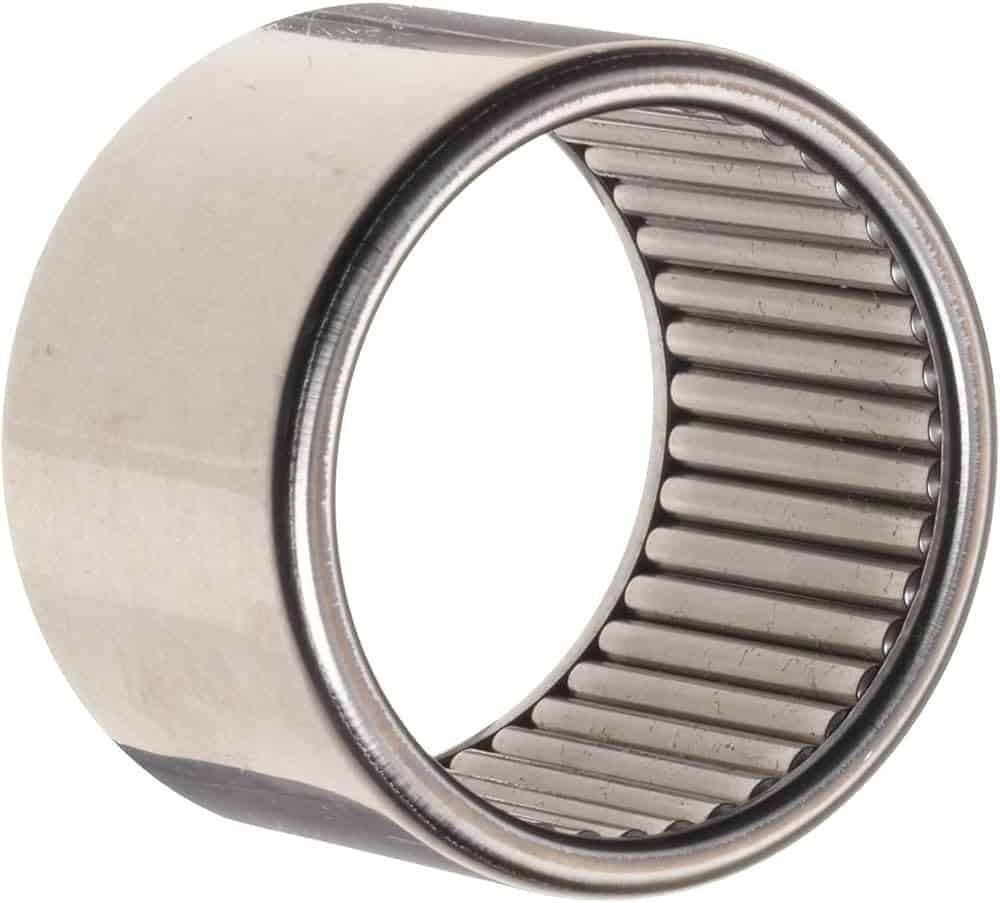
A needle roller bearing is a type of roller bearing having an elongated thin needle shape and features. It is famously known as needle bearing in the market. When you compare them with ball bearings, you will find them having a much smaller cross-sectional area but surprisingly a much higher load bearing capability.
That is why they are ideal for confined spaces, especially for limited radial space. Their design is quite low-profile, but precision is unmatchable. The diameter of such bearings is 0.1 mm whereas the length is 0.4 mm. Needle bearings are made with high strength material but are very lightweight. They have a relatively thin outer ring which is manufactured from precision and hard material.
Since their outer diameter and volume are small compared to thickness, they do three functions in different industries:
- Lightweighting
- Precision engineering
- Miniaturization
Needle roller bearings require a lubricant for heat dissipation and to cater to friction. That friction is the result of the load being carried, the size, and the type of the needle roller bearing. It’s a good thing about these roller bearings that they are good shock and vibration absorbent, especially the ones with outer rings.
Components of Needle Roller Bearing
These bearings aren’t made of single parts. Rather, they have different components, such as needle rollers, cage, outer ring (raceways), and other components according to different types.
Needle Rollers
They are the true load-bearing component and one of the essential parts of all types of needle roller bearings. They make sure that the outer and inner rings can rotate without any friction. Moreover, needle rollers are composed of high quality steel alloy.
Outer Rings (Raceways)
Raceways are the optional components, present in some types. They basically guide the rollers to rotate within the bearing. Both the inner and outer rings are manufactured to get fit very precisely. However, some clearance is needed in case of thermal expansion.
These rings are made of either carbon chromium steel or some other types of alloys. These materials help enhance the hardness, durability, fatigue resistance, and stability in dimensions.
Cage
The cage is the component of needle roller bearings that actually keeps the needle rollers separate from each other so that the load is distributed pretty equally. Bearing cages helps lessen noise, stop sliding, and enhance rolling conditions. What’s more, is that cages keep all the needle rollers inside one assembly.
The cage of needle roller bearings is composed of steel. However, you can use plastic cages if the situation permits you to do that. Otherwise, steel is the ideal choice. Most of the cages are surface treated and have a layer of lubrication to make them friction-free. Hence, they avoid heat emission.
Some configurations of drawn cup needle roller bearings don’t have a cage. Instead, they have complementary needle rollers.
Seals
Like raceways, seals are also present in some types. They detach cage, needle rollers, and lubricant from impurities and moisture, especially in harsh situations. These need to be tolerant to oxidation, chemicals, and heat whenever exposed to such conditions. Seals help in relubrication. How? Basically, they give access as a hole to the outer ring from the inner ring.
Seals are quite durable when friction is the minimum between the bearing and shaft. They are also lubricated and surface treated to make them less damaging to friction. The needle roller bearings having a seal have less rotational speed as compared to the types without seals. There are three materials used for making seals:
- Polyurethane
- Flourorubber
- Acrylonitrile-butadiene rubber
Needle Roller Bearing Types
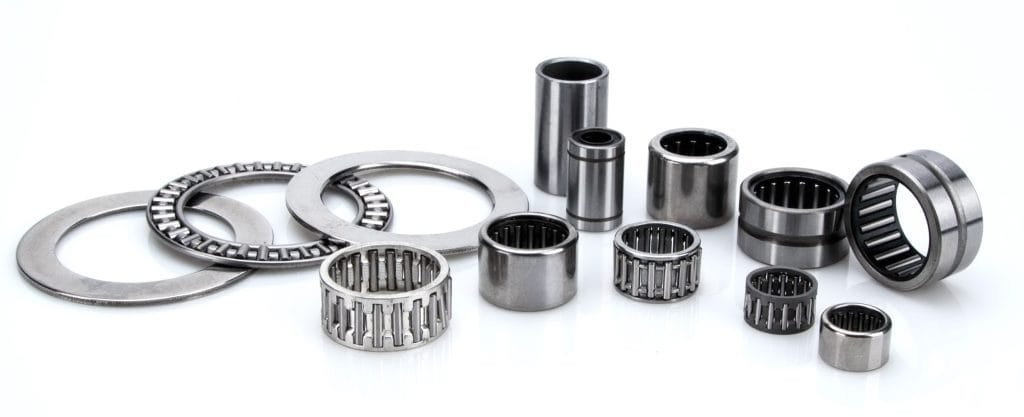
There are multiple types of needle roller bearings. Each has a specific application and performs a certain function in various industries. We have made a table for you to learn and compare between all the types.
| Types | Description | Features | Applications |
| Drawn Cup Bearing (TA and HK series) | Their outer ring is made of good quality steel and has very thin walls. They are tiny in size and provide the best support in limited radial spaces. They have three components: ring, retainer, and needle rollers. | Make tools lightweight and compact User-friendly design Great capacity for high precision heavy loads | These bearings are suitable for low cost and higher mass production. Automobile industry Mesh gearboxes |
| Solid Needle Roller Bearing | They offer optimized load capacity in high precision. Their cage is lightweight but very strong enough to guide its rollers seamlessly. | Maximum rigidity Can be changed internationally Best for machine tools | These bearings work optimally in all sorts of conditions. Big industrial tools Automobile parts Mesh gearboxes |
| Needle Roller Thrust Bearing | They feature a cage and rollers assembly with the cage created by 2 precision-pressed plates of steel. The rollers are on the cage rolling through greater axial loads. They can even be used instead of thrust washers because of their small size. They have different shapes/configurations. | Very compact design Highly rigid Resistant to wear and tear | Torque converters Automobiles Compressors Axial piston pumps |
| One-Way Clutch Needle Roller Bearing | This bearing has a special type of outer ring. It is lightweight and has a high torque capacity. | Easy to operate Smooth mounting High torque | ATMs Office equipment Machinery used in agriculture Fishing reels Electric bikes |
| Needle Roller Bearing without Inner Ring | It is an NK series bearing and made without any inner ring making them even more compact. Best for high speed functioning. | It has two series:Metric seriesInch series Both have retainers, full needles, and sealing types. | Automotive parts Cam followers Crankshaft |
| Cage and Needle Roller Assembly | Like other types, they also give high load capacity and are compact. They allow adequate lubrication for higher speeds. | Easy to use design Provide good lubrication | Industrial machinery Mesh gearboxes Robotic speed reducers Automobile parts |
What are the Disadvantages of Needle Roller Bearings?
Needle roller bearings have multiple applications, including pumps, gearboxes, transmissions, torque converters, compressors, suspension systems, CNC machine spindles, and Formula 1 engines.
Here’s a table listing the advantages and disadvantages of needle roller bearing.
| Advantages | Disadvantages |
| They are the best choice for compact spaces as compared to ball bearings. | They are costly compared to their size. |
| They have greater tolerance for axial and radial loads. | Their noise is a bit louder than other bearing types. |
| They consume less power and have greater mechanical maintenance. | Not the best choice for axial loads. |
| The upkeep of needle roller bearings is very low compared to other types of bearings. | They easily misalign. |
| These bearings are the best for rocking movement. | |
| Needle roller bearings have low friction coefficient, so they don’t overheat. | |
| These don’t require frequent lubrication. |
When to Use Needle Roller Bearings?
Well, there are different use cases of needle roller bearings. Let’s break down some industries where the needle rollers are widely used:
- It is most commonly used in the automobile industry in machinery of power transmission, gear sets, 2 and 4 stroke engines, and air compressors.
- You can use needle roller bearings in high-temperature machinery with a large load capacity since the bearing is quite durable and performs functions effectively.
- They are used in domestic appliances, such as pumps, spindles, and movable power equipment.
Ball Bearings vs. Roller Bearings: What are the Key Differences?

When selecting a bearing for an application, one often encounters two primary types: roller bearings and ball bearings. While both serve the essential purpose of reducing friction and enabling smooth motion, understanding their differences can help you choose the ideal solution for your specific requirements. In this article, we will explore the key distinctions, advantages, disadvantages, and common applications of roller bearings and ball bearings.
1. Basic Design and Functionality
Ball Bearings
Ball bearings consist of spherical rolling elements (balls) placed between two races (inner and outer). These balls facilitate low friction by rolling between the races, allowing rotational or linear motion.
Key Features:
Point contact between balls and races.
Designed to handle both radial and axial loads (though axial load capacity is limited).
Roller Bearings
Roller bearings use cylindrical, tapered, or needle-shaped rolling elements instead of balls. The rolling elements create a line contact with the races, distributing loads over a larger surface area.
Key Features:
Line contact between rollers and races.
Excellent for heavy radial loads and moderate thrust loads.
2. Load Capacity
Ball Bearings
Radial Load: Suitable for moderate radial loads.
Axial Load: Handles limited axial loads, making them ideal for light-duty applications.
Roller Bearings
Radial Load: Superior radial load capacity due to the line contact design.
Axial Load: Some roller bearings, such as tapered roller bearings, can manage high axial loads in addition to radial loads.
3. Friction and Speed
Ball Bearings
Offer lower friction compared to roller bearings due to their point contact design.
Operate efficiently at higher speeds, making them suitable for applications like electric motors and fans.
Roller Bearings
Generate more friction because of the line contact.
Function better at lower to moderate speeds but excel under heavy load conditions.
4. Durability and Lifespan
Ball Bearings
Higher speeds may lead to quicker wear under heavy loads.
Typically used in lighter load scenarios for a longer lifespan.
Roller Bearings
More durable under heavy loads due to their load distribution.
Ideal for industrial applications requiring robustness and longevity.
5. Common Applications
Ball Bearings
Home appliances (fans, blenders, washing machines).
Automotive (steering systems, wheel hubs).
Aerospace and robotics (precision mechanisms).
Roller Bearings
Industrial machinery (conveyors, crushers, gearboxes).
Heavy-duty automotive (trucks, trailers, off-road vehicles).
Wind turbines and construction equipment.
6. Advantages and Disadvantages
| Feature | Ball Bearings | Roller Bearings |
| Friction | Low friction; ideal for high-speed applications. | Higher friction; better for heavy loads. |
| Load Capacity | Moderate radial and limited axial loads. | High radial and moderate to high axial loads. |
| Durability | Adequate for light to moderate loads. | Excellent for heavy-duty applications. |
| Size and Weight | Compact and lightweight. | Typically larger and heavier. |
| Applications | High-speed and precision devices. | Industrial and heavy-load environments. |
7. Which One Should You Choose?
The choice between roller bearings and ball bearings ultimately depends on the application requirements:
Choose Ball Bearings concern:
Speed and low friction are priorities.
The application involves light to moderate loads.
Choose Roller Bearings concern:
Durability and load capacity are crucial.
The application involves heavy radial or axial loads.
Conclusion
So, needle roller bearings are tiny, slender ring bearings that are high precision load carrying bearings to support radial loads. Because of their small and space-saving design, they have many applications in various industries, such as automobiles, machine manufacturing, domestic appliances, aerospace machinery, and other industries.
There are different components of needle roller bearings. These components are cage, outer and inner rings, needle rollers, and seals. Each component is made of a different type of material and serves a specific purpose. These parts work in sync to make the whole needle roller bearing.
Different types of needle roller bearings are drawn cup, solid bearing, needle roller thrust bearing, cage and roller assembly, one-way clutch needle roller bearing, and needle roller bearings without inner ring.
When you talk about the advantages of these bearings, there are many. They are easily maintained, prevent overheating, consume very little power, have greater tolerance of radial and axial loads, and so many others. However, needle roller bearings have some drawbacks too. They are not very good for carrying axial loads, are very expensive, lose alignment, and produce noise.
If you want more details about the needle roller bearings or any other type of bearing, contact BYWB Bearing. We are experts in bearing supplying and manufacturing and are one of the best manufacturers in China. You can reach out to us anytime form anywhere for your bearing quotations and queries. So, don’t wait. Contact us now!
