
In the world of precision engineering and high-performance machinery, bearings play an essential role in ensuring smooth operations and longevity. Among the many types available, BYWB bearings – known for their robust design and reliability – stand out, especially when engineered as double row angular contact ball bearings. This article provides an in‐depth look at what these bearings are, their advantages over single row designs, the reasons for choosing them, their common applications, and how to read a typical size chart. Whether you are an engineer, procurement specialist, or simply curious about the mechanics behind high-performance systems, this guide aims to provide you with valuable insights.
1. What Is a Double Row Angular Contact Ball Bearing?
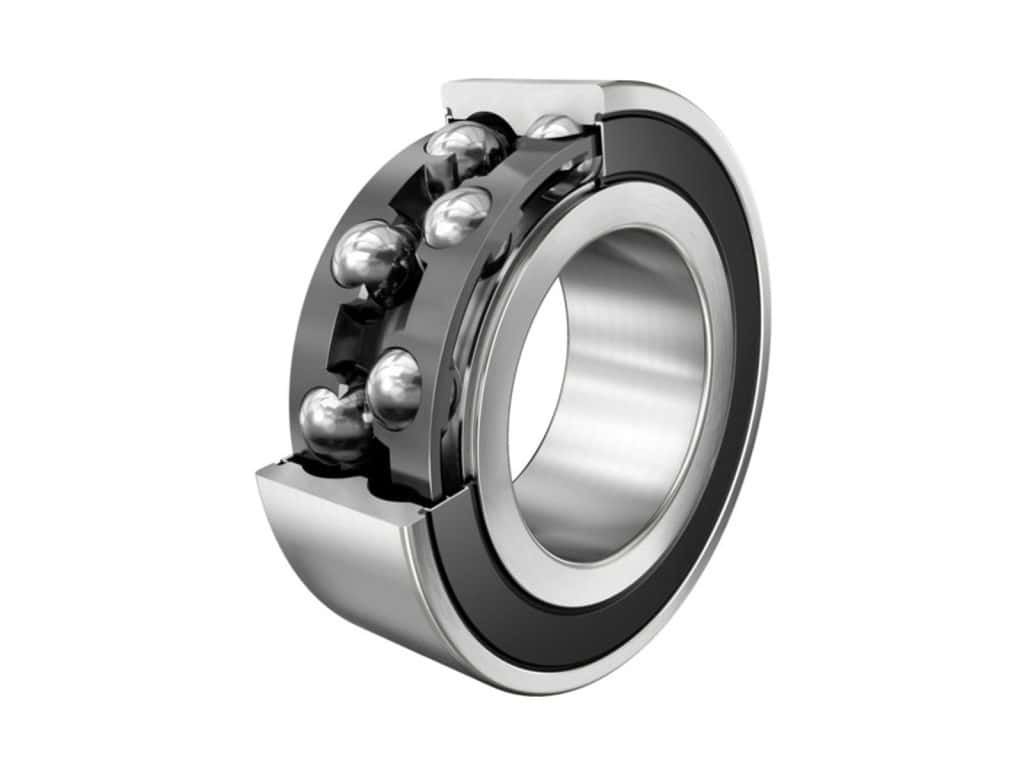
Double row angular contact ball bearings are a specialized type of rolling element bearing that is designed to support both radial and axial loads simultaneously. Unlike traditional single row bearings, these units incorporate two rows of balls arranged symmetrically, enabling them to handle loads acting in opposite directions. This unique configuration offers enhanced rigidity and load capacity, making them ideal for high-precision applications.
Key Features and Design
Angular Contact Geometry:
The inner ring raceway and the balls are designed with a specific contact angle. This angle allows the bearing to take axial loads in one direction or even in both directions when arranged in a double row configuration. The contact angle can vary depending on the application, ensuring that the bearing meets the precise requirements of machinery that operates at high speeds or under heavy loads.
Double Row Arrangement:
In a double row bearing, two rows of balls work in tandem. This arrangement increases the load capacity compared to a single row bearing and improves the bearing’s ability to manage combined loads (both radial and axial). The two rows not only provide better support but also help in distributing the forces more evenly, thereby reducing stress on individual components.
Sealing and Lubrication:
These bearings typically come with advanced sealing solutions that protect the inner components from contaminants while retaining lubrication. This ensures optimal performance over extended periods, even in harsh operational environments.Such as open, Shield ZZ,and Double rubber sealed 2RS options.
High Precision and Durability:
Manufactured to strict tolerances, double row angular contact ball bearings provide excellent precision, reduced run-out, and high dynamic rigidity. Their construction minimizes vibration and noise, making them suitable for precision machinery and high-speed operations.
Understanding the engineering behind these bearings is fundamental to appreciating their role in modern machinery. Manufacturers such as NSK and SKF have long been at the forefront of bearing technology, offering detailed product lines and technical data that explain the advantages and applications of angular contact ball bearings.
2. Advantages of Double Row Ball Bearings
Double row ball bearings offer a host of benefits that make them a popular choice in demanding applications. Their design is specifically engineered to meet the needs of high-speed, high-load, and precision-required environments.
Enhanced Load Capacity
One of the standout advantages of double row bearings is their significantly higher load capacity compared to single row designs. By incorporating two rows of balls, these bearings can handle larger radial and axial forces simultaneously. This is particularly important in heavy-duty applications where load distribution is critical.
Superior Rigidity and Stability
Double row ball bearings provide increased rigidity due to their symmetrical construction. The dual rows work together to reduce deformation under load, ensuring that the bearing maintains its shape and performance over time. This rigidity is essential in applications where precision and minimal deflection are critical, such as in high-speed spindles or machine tool spindles.
Improved Operational Life
The load distribution and robust design contribute to a longer service life. With lower stress on individual balls and raceways, these bearings experience reduced wear and tear, leading to fewer maintenance requirements and lower overall lifecycle costs. Their durability makes them an ideal choice for continuous or high-performance operations.
Reduced Vibration and Noise
The balanced load distribution in double row bearings minimizes vibrations during operation. This not only results in smoother performance but also reduces the noise level, which is a crucial factor in precision environments where any disturbance can affect product quality or machine performance.
Versatility in Handling Combined Loads
Unlike many other bearing types, double row angular contact ball bearings are adept at handling combined loads. This means they can support both radial and axial forces in various directions, making them adaptable to a wide range of industrial applications. Their versatility ensures that they perform reliably in complex mechanical systems where loads can vary dynamically.
3. Why Use a Double Row Ball Bearing Instead of a Single Row Ball Bearing?

When deciding between double row and single row ball bearings, engineers must consider several factors, including load capacity, application requirements, and overall system performance. Here’s a detailed comparison that highlights why a double row bearing might be the preferred choice.
Load and Load Distribution
Increased Load Capacity:
Double row bearings are specifically designed to handle higher loads by distributing forces over two rows of balls. In contrast, single row bearings are more limited in their load-carrying capabilities, particularly when significant axial loads are involved. This makes double row bearings more reliable in applications with heavy combined loads.
Better Stress Distribution:
The dual row design allows for more effective stress distribution across the bearing. This means that the individual contact points between the balls and raceways experience less concentrated stress, reducing the risk of premature failure and extending the bearing’s operational life.
Precision and Stability
Enhanced Rigidity:
The double row arrangement improves the overall stiffness of the bearing assembly. This is crucial in high-precision applications where any flex or misalignment can lead to errors or suboptimal performance. Single row bearings may not provide the same level of rigidity, especially in applications with varying load directions.
Operational Consistency:
In machines where high-speed rotation is critical, the enhanced balance and reduced vibration of double row bearings ensure smoother operation. This translates to higher accuracy and better performance in critical industrial processes.
Design Flexibility and Application Range
Handling Complex Load Cases:
Machinery that is subjected to both significant radial and axial forces often benefits from the double row design. This flexibility is something single row bearings cannot always offer, especially in high-performance or high-speed contexts. Engineers often choose double row bearings when they need to ensure that the bearing can cope with unpredictable or combined load scenarios.
Improved Heat Dissipation:
With their robust construction, double row bearings often demonstrate better heat management compared to single row types. This helps in maintaining performance under continuous operation and in high-temperature environments.
Economic Considerations
Long-Term Cost Savings:
Although double row bearings may have a higher upfront cost, their extended operational life and reduced maintenance needs can lead to significant cost savings over time. Reduced downtime and fewer replacement cycles make them an economical choice for industries that demand continuous operation.
Enhanced Reliability:
The increased reliability of double row bearings means fewer unexpected failures and interruptions in production. This reliability is critical for industries where maintenance delays can result in costly production losses.
In summary, while single row ball bearings might be suitable for lighter, less demanding applications, the double row variant offers unmatched performance when it comes to heavy loads, precision, and overall durability.
4. Where Are Double Row Angular Contact Ball Bearings Used?
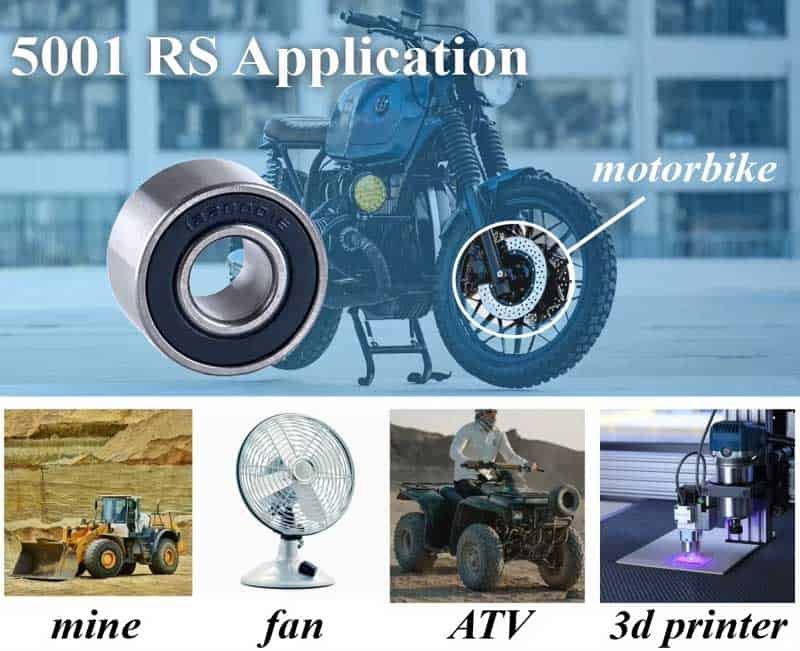
Double row angular contact ball bearings are employed in a wide variety of industrial applications thanks to their ability to handle combined loads, high speeds, and precision requirements. Below are some of the most common uses for these bearings.
Machine Tools and Spindles
High-speed machine tools, including milling machines, lathes, and grinding machines, rely on double row bearings for their spindle assemblies. The enhanced rigidity and load-carrying capacity ensure that the spindles operate with minimal vibration, leading to higher machining accuracy and improved surface finishes.
Automotive and Aerospace Applications
In automotive engines, transmissions, and steering systems, double row angular contact ball bearings are used to manage combined loads effectively. Their superior performance under high stress makes them ideal for critical components in both automotive and aerospace sectors, where reliability and precision are non-negotiable.
Pumps and Compressors
Industrial pumps and compressors often experience fluctuating pressures and loads. Double row bearings help in ensuring smooth rotational movement while accommodating both radial and axial forces. This results in improved efficiency, reduced wear, and a longer service life for these machines.
Renewable Energy and Wind Turbines
In the renewable energy sector, especially within wind turbines, the bearings play a vital role in transferring wind energy into electrical power. The robustness and durability of double row bearings help wind turbines withstand variable and sometimes extreme load conditions, contributing to the overall efficiency of the energy conversion process.
Robotics and Automation
Precision is paramount in robotics and automation systems. Double row angular contact ball bearings provide the necessary stability and smooth motion required for robotic joints and precision-guided components. Their ability to handle high-speed movements and combined loads makes them an integral part of advanced automation systems.
Industrial Machinery
Across various sectors – from metalworking to food processing – industrial machinery benefits from the performance and durability of double row bearings. These bearings ensure that critical rotating components maintain their alignment and perform optimally even under continuous heavy-duty operation.
5. Double Row Angular Contact Ball Bearing Size Chart
| Bearing | Boundary dimensions | Basic load ratings | Limiting speeds | Mass | ||||
| No. | mm | KN | RPM | KG | ||||
| d | D | B | dynamic Cr | static Cor | Grease | Oil | ||
| ZZ 2RS | open | |||||||
| 5200 | 10 | 30 | 14.3 | 6.95 | 3.8 | 14000 | 19000 | 0.049 |
| 5201 | 12 | 32 | 15.9 | 7.6 | 4.5 | 13000 | 17000 | 0.057 |
| 5202 | 15 | 35 | 15.9 | 8.2 | 5.25 | 11000 | 15000 | 0.064 |
| 5302 | 15 | 42 | 19 | 17.2 | 10.1 | 9900 | 13000 | 0.132 |
| 5203 | 17 | 40 | 17.5 | 10.8 | 7.1 | 9900 | 13000 | 0.096 |
| 5303 | 17 | 47 | 22.2 | 20.4 | 12.1 | 9000 | 12000 | 0.181 |
| 5204 | 20 | 47 | 20.6 | 15.8 | 10.1 | 8800 | 12000 | 0.153 |
| 5304 | 20 | 52 | 22.2 | 20.6 | 12.7 | 8000 | 11000 | 0.217 |
| 5205 | 25 | 52 | 20.6 | 18.2 | 13.2 | 7300 | 9800 | 0.175 |
| 5305 | 25 | 62 | 25.4 | 30.5 | 20.5 | 6700 | 8900 | 0.362 |
| 5206 | 30 | 62 | 23.8 | 26.1 | 19.7 | 6300 | 8400 | 0.286 |
| 5306 | 30 | 72 | 30.2 | 39.5 | 27.5 | 5700 | 7600 | 0.553 |
| 5406 | 30 | 90 | 39.7 | – | – | – | – | 0.14 |
| 5207 | 35 | 72 | 27 | 33 | 24.5 | 5500 | 7400 | 0.436 |
| 5307 | 35 | 80 | 34.9 | 49.5 | 35 | 5000 | 6600 | 0.766 |
| 5407 | 35 | 100 | 44.4 | – | – | – | – | 1.95 |
| 5208 | 40 | 80 | 30.2 | 40.5 | 32 | 4900 | 6600 | 0.59 |
| 5308 | 40 | 90 | 36.5 | 60.5 | 44 | 4400 | 5900 | 1.01 |
| 5408 | 40 | 110 | 49.2 | – | – | – | – | 2.55 |
| 5209 | 45 | 85 | 30.2 | 40 | 32.5 | 4400 | 5900 | 0.64 |
| 5309 | 45 | 100 | 39.7 | 72.5 | 54 | 4000 | 5300 | 1.34 |
| 5409 | 45 | 120 | 54 | – | – | – | – | 3.25 |
| 5210 | 50 | 90 | 30.2 | 39 | 35 | 4000 | 5300 | 0.689 |
| 5310 | 50 | 110 | 44.4 | 85.5 | 64.5 | 3600 | 4800 | 1.81 |
| 5410 | 50 | 130 | 58.7 | – | – | – | – | 4.1 |
| 5211 | 55 | 100 | 33.3 | 56 | 49 | 4300 | 5100 | 0.96 |
| 5311 | 55 | 120 | 49.2 | 106 | 82 | 3300 | 4400 | 2.32 |
| 5411 | 55 | 140 | 63.5 | – | – | – | – | 5.05 |
| 5212 | 60 | 110 | 36.5 | 74.4 | 60.8 | 3500 | 4700 | 1.4 |
| 5312 | 60 | 130 | 54 | 122 | 95.5 | 3000 | 4000 | 3.05 |
| 5412 | 60 | 150 | 68.3 | – | – | – | – | 6 |
| 5213 | 65 | 120 | 38.1 | 86.9 | 75.3 | 3200 | 4300 | 1.66 |
| 5313 | 65 | 140 | 58.7 | 138 | 109 | 2800 | 3700 | 3.96 |
| 5214 | 70 | 125 | 39.7 | 94.5 | 82.6 | 3100 | 4100 | 1.82 |
| 5314 | 70 | 150 | 63.5 | 155 | 125 | 2600 | 3500 | 4.74 |
| 5215 | 75 | 130 | 41.3 | 92.4 | 120 | 2900 | 3900 | 2.1 |
| 5315 | 75 | 160 | 68.3 | 168 | 141 | 2400 | 3200 | 5.65 |
Reading and Interpreting the Chart
When selecting a double row angular contact ball bearing, engineers must compare the size chart data with the specific requirements of their application. For example, in high-speed spindle applications, a smaller bore diameter with a high load rating might be preferred, whereas industrial machinery may require larger bearings to handle more substantial loads.
Sample Size Chart (Illustrative Example)
| Parameter | Symbol | Typical Value Range |
| Bore Diameter | d | 10 mm – 500 mm |
| Outer Diameter | D | 30 mm – 1000 mm |
| Width | B | 10 mm – 200 mm |
| Contact Angle | α | 15° – 40° |
| Dynamic Load Rating | C | Varies based on design |
| Static Load Rating | C₀ | Varies based on design |
Note: The above values are for illustration only. Actual dimensions and ratings will vary based on the manufacturer and specific bearing design.
Understanding these parameters is essential not only for ensuring compatibility with your machinery but also for optimizing performance and longevity. Manufacturers like BYWB provide detailed technical documents and catalogs, making it easier for customers to select the right bearing for their needs.
6. Conclusion
Double row angular contact ball bearings, such as the innovative BYWB bearing series, represent a pinnacle in bearing technology. Their dual-row design, optimized for both radial and axial load handling, makes them indispensable in a variety of high-precision, high-load applications.
From machine tools and automotive systems to renewable energy solutions and robotics, these bearings have proven their worth in challenging environments. Their superior load capacity, enhanced rigidity, and extended service life provide significant advantages over single row bearings, making them a cost-effective and reliable solution for many industrial applications.
Understanding the intricacies of bearing design – from the importance of contact angles and load ratings to the critical dimensions listed on size charts – empowers engineers and procurement specialists to make informed decisions. When combined with a commitment to quality and precision, choosing the right double row angular contact ball bearing can lead to improvements in efficiency, performance, and overall machinery reliability.
