
Introduction to Bearing Heat Treatment

In the manufacturing process of bearings, heat treatment plays a crucial role in enhancing their durability, performance, and dimensional stability. Bearings are made from specialized steel, and when these steels are in their soft (unhardened) state, their structure is referred to as being in the pearlite phase. However, to achieve the strength and hardness required for bearing applications, the steel must undergo a heat treatment process that involves high temperatures and rapid cooling.
The Transformation of Bearing Steel: Pearlite to Austenite
The heat treatment process begins with heating the bearing steel to a temperature of approximately 1,750°F (about 950°C). At this stage, the structure of the steel changes from pearlite to a phase known as austenite. Austenite is a face-centered cubic (FCC) structure that is much softer and more ductile than pearlite. After the steel is heated to this high temperature, it is quickly cooled or “quenched” in a liquid, which causes the austenite to transform into martensite.
Martensite is a hard, brittle phase that gives the steel its strength and wear resistance. However, while martensite makes the steel very hard, it is not yet thermally stabilized. During the quenching process, not all of the austenite transforms into martensite, which results in a phenomenon known as “retained austenite.”
The Issue of Retained Austenite and Metallurgical Growth
Retained austenite is a critical issue in bearing steel. Over time, the retained austenite can transform into martensite, leading to a volume increase—a process known as metallurgical growth. This volume change can alter the dimensions and shape of bearing parts, even at room temperature. While this is not usually a concern for low-precision, commodity-grade bearings, it can lead to significant issues in high-precision applications such as ABEC 5P, 7P, and 9P miniature bearings.
Metallurgical growth can cause dimensional instability, affecting the precision and performance of the bearings. To eliminate this risk, the steel must undergo thermal stabilization. This process involves subjecting the steel to repeated cycles of chilling at -120°F (-85°C) and tempering to transform the retained austenite into martensite. By doing so, the steel becomes more stable, reducing the risk of unwanted volume changes over time.
Key Areas of Failure in Bearing Heat Treatment
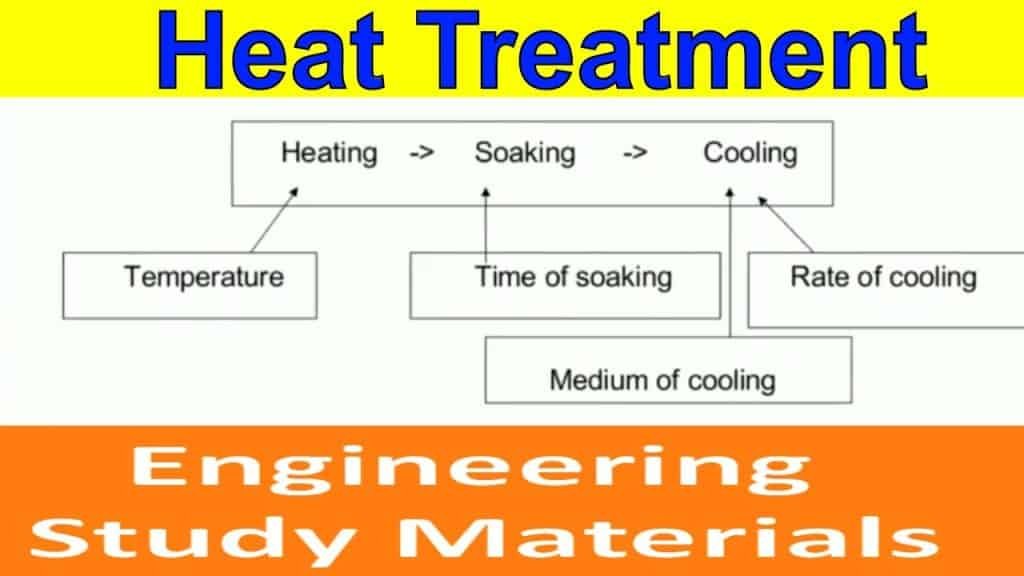
While heat treatment is essential for enhancing bearing performance, it is also fraught with potential challenges. Distortion is one of the most significant concerns during bearing heat treatment. Not only do bearing manufacturers need to preserve the case hardness introduced during surface treatments like carburizing and nitriding, but they also need to ensure that the final dimensions of the bearing remain accurate. Any distortion during heat treatment can lead to significant performance issues.
Manufacturers often face challenges in minimizing distortion. Factors such as quench media, the uniformity of media flow, stacking, fixture quenching, and the number of cooling cycles can all impact the final result. Additionally, more subtle elements, such as the temperature achieved during heat treatment, the duration at temperature, and furnace fixture maintenance, also play a role in ensuring the bearing’s dimensional accuracy.
The Quenching Phenomenon and Its Impact on Bearing Performance
Quenching is one of the most complex processes in heat treatment, particularly when it comes to bearings. During immersion quenching, the heat transfer mechanism is not entirely understood and involves several phases. As the bearing is immersed in the quenching medium, boiling occurs. During this boiling phase, the quenchant vaporizes and carries away heat from the surface of the component.
The heat transfer rate during quenching depends on several factors, including the thermal conductivity of the steel, the viscosity of the quenchant, the chemical nature of the quenchant, the temperature of the quenching bath, and the agitation levels in the bath. These variables affect the cooling rate, which is crucial in determining the final microstructure and hardness of the bearing.
There are three primary phases of heat transfer during quenching: the vapor blanket, nucleate boiling, and convective cooling. Each of these phases affects the cooling rate in different ways, and controlling these phases is essential for ensuring that the bearing undergoes uniform cooling.
Minimizing Distortion and Cracks: The Right Quenching Method
Distortion and cracks often occur due to the temperature differences between the surface and core of the component during the quenching process. This issue can be minimized by selecting the appropriate quenching medium and ensuring that the cooling rate is neither too high nor too low. The optimal cooling rate depends on various factors, such as the steel composition, section thickness, and the desired hardness.
Choosing the right quenchant is crucial for achieving the required cooling rate. Quenchants can include brine, water, oils, and polymer solutions. The condition of the quenchant, whether new or old, clean or contaminated, as well as the level of agitation, can significantly impact the cooling rate.
How to Calculate the Required Cooling Rate for Bearings
Calculating the required cooling rate for a given bearing component is a complex task, but modern technology can help bearing manufacturers achieve more accurate results. One such breakthrough is the ProQuench software, developed by ProVaC Manufacturing Technologies Pvt. Ltd. This software can calculate surface heat flux and predict the cooling rate from the surface to the core of the bearing.
ProQuench offers in-situ measurement of the quenching capacity of various quenching mediums and provides detailed insights into the heat transfer process during quenching. The software also predicts the microstructure and hardness of the bearing from surface to core, allowing manufacturers to fine-tune the heat treatment process to achieve the desired results.
Some key features of the ProQuench software include:
In-situ measurement of quenching capacity for different quenching mediums
Monitoring the “health” of quenchants with continued use
Selection of the appropriate quenchant for specific materials
Inspection of quenchants in their as-received condition
Analysis of the effects of agitation, flow rate, and quenching position in the tank
Detection of contamination in quenchants
Estimation of the heat transfer coefficient during quenching
By using such advanced tools, bearing manufacturers can reduce the risk of quench failures and improve the overall quality of their products.
How to Ensure Longevity and Performance in High-Temperature Bearings

Proper Installation and Fit
High-temperature bearings face unique challenges that require careful attention during installation and operation. These challenges are primarily related to the materials’ responses to heat and the mechanical stresses that arise in extreme conditions.
Impact of Temperature on Bearing Fit
The coefficients of thermal expansion for different materials can significantly affect the fit of high-temperature bearings during operation. Materials that expand at varying rates can alter the clearance between the bearing components, potentially affecting performance.
To mitigate these issues, it is essential to maintain the proper clearance for high-temperature bearings during installation. This ensures that the bearings remain aligned even as the materials expand due to heat, reducing the risk of overheating or seizure during operation.
Hoop Stress and Bearing Rings
Hoop stress—the circumferential stress exerted on the bearing rings—can be a critical factor in high-temperature environments. Excessive hoop stress may cause the bearing rings to deform or even fail, especially if the stress surpasses the material’s yield strength at elevated temperatures. Selecting materials with appropriate thermal and mechanical properties, along with proper design considerations, is crucial to maintain the integrity of the bearing rings under such conditions. Addressing these factors not only ensures performance but also significantly extends the lifespan of high-temperature bearings.
Conclusion
Heat treatment is a critical process in the manufacturing of high-quality bearings, particularly when dimensional stability and precision are required. By understanding the complexities of quenching and thermal stabilization, bearing manufacturers can ensure that their products meet the highest standards of performance. Advanced tools like ProQuench software are helping manufacturers achieve better control over the heat treatment process, reducing the risk of distortion and cracks, and ultimately delivering bearings that meet the exact specifications for their applications.
At BYWB Bearing, we are committed to providing expert guidance and support on all matters related to bearing materials and heat treatment. If you have any questions or would like assistance, please feel free to reach out to our team of engineers via https://bywbbearing.com/. We are happy to help!
