
If you own a side-by-side long enough, you will replace a wheel bearing. It is not a matter of if — it is a matter of when, and whether you catch it before it chews up the hub, the knuckle, and your weekend. UTV wheel bearings live a harder life than almost any other bearing on the machine: they sit inches from the ground, carry the full weight of the vehicle plus your gear, and spend half their life submerged in mud, creek water, and pressure-washer spray.
This guide covers what UTV wheel bearings do, why they fail faster than most owners expect, the warning signs to watch for, what replacement really costs, and how to pick a wheel bearing kit that will not leave you stranded twenty miles from the trailhead. Whether you ride a Polaris RZR, a Can-Am Maverick, a Honda Talon, or a Yamaha YXZ, the principles are the same.
What Does a UTV Wheel Bearing Actually Do?
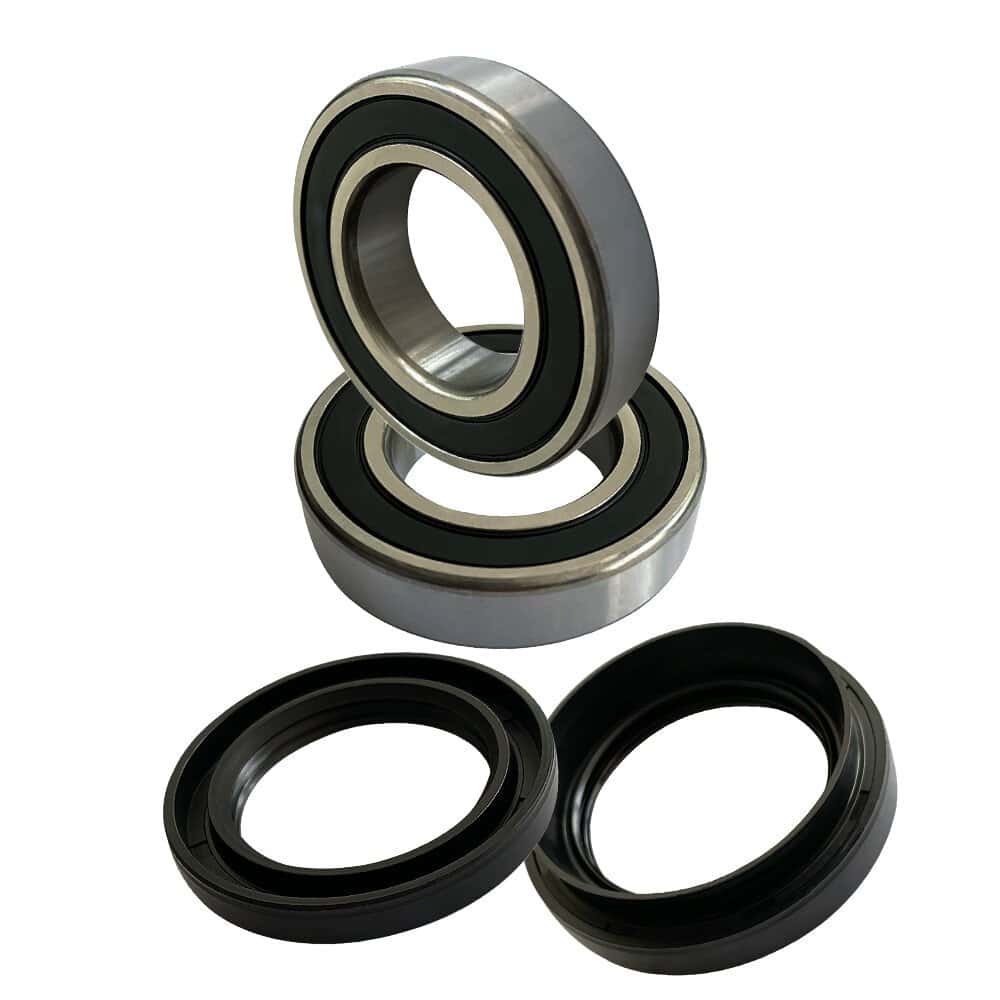
Every wheel on your UTV spins on a bearing pressed into the hub or knuckle. On most modern side-by-sides, this is a sealed double-row ball bearing — two rows of steel balls running in a single cartridge-style unit, sealed on both sides and packed with grease at the factory. Older machines and some ATVs use tapered roller bearings that sit in the hub as separate inner and outer units.
The bearing’s job sounds simple: let the wheel rotate freely while supporting radial loads (the weight pressing down) and axial loads (the side forces when you corner, slide, or slam through ruts). A healthy bearing does this silently. A dying one lets you know — usually at the worst possible time.
Why Side-by-Sides Kill Wheel Bearings So Fast
A wheel bearing on a highway truck can last 100,000 miles. A wheel bearing on a UTV ridden hard in mud country might last a single season. The difference comes down to environment and how these machines get used:
- Mud and water crossings. Fine silt and muddy water work past the seals. Once grit mixes with the grease, the bearing becomes a lapping machine that grinds itself apart from the inside.
- Pressure washers. Blasting the wheels at close range forces water past even good seals. Keep the nozzle back, and never aim directly at the hub center.
- Oversized tires and offset wheels. Bigger, heavier tires and wheels with aggressive offsets multiply the leverage on the bearing with every bump and corner. A 32-inch tire on a +4 offset wheel can cut bearing life dramatically compared to stock.
- High-speed desert running. Long, fast desert sections keep bearings at high RPM and high temperature for hours. Heat thins the grease and accelerates wear.
- Dunes and jumping. Sand is abrasive, and launching or landing hard sends shock loads straight through the wheel into the bearing races.
Polaris, for reference, tells RZR owners to inspect wheel bearings every 50 hours or 1,000 miles — and cuts that interval in half for severe use like frequent water immersion. That should tell you how the manufacturers view this component.
7 Warning Signs of a Bad UTV Wheel Bearing
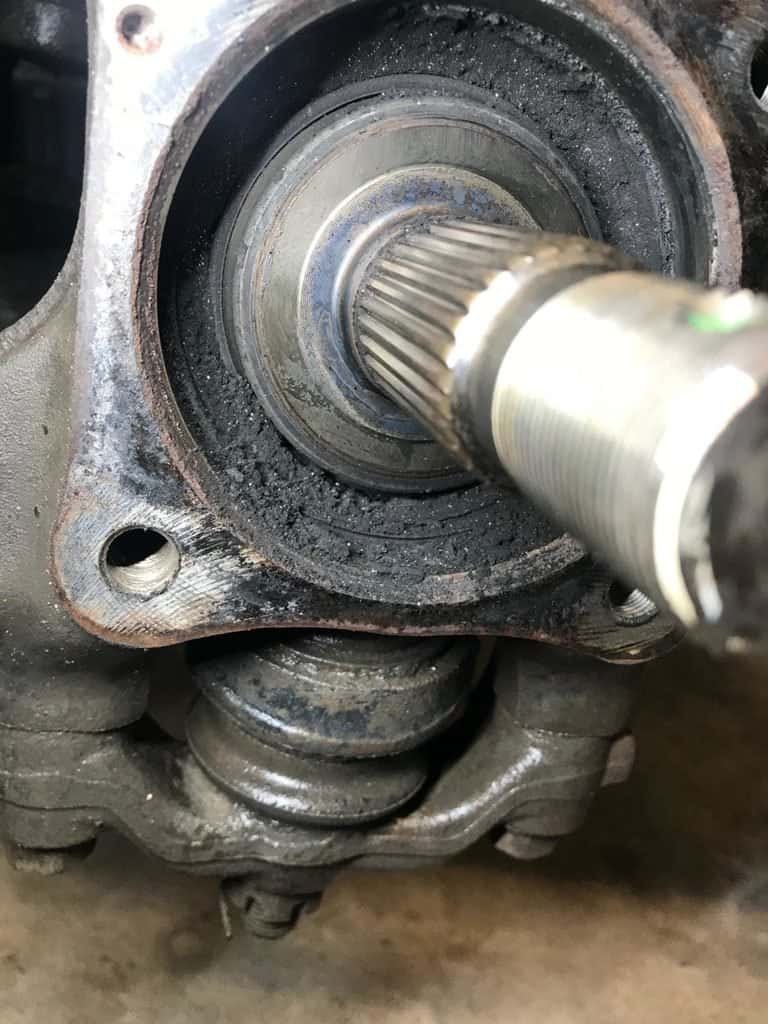
Catch a failing bearing early and the job is a $40 part and an hour in the garage. Ignore it, and you are looking at a destroyed hub, a damaged knuckle, or a wheel that wobbles itself loose on the trail. Watch for these symptoms:
- 1. Noise. A hum, growl, or grinding noise from one corner that changes with speed and often gets louder in turns.
- 2. Wheel play. With the machine jacked up, grab the tire at 12 and 6 o’clock and rock it. Any clunk or play that is not steering linkage is usually the bearing.
- 3. Wobble at speed. A wheel that shakes at speed or feels loose through the handlebars, especially in off-camber sections.
- 4. Grease weeping past the seal. Grease or dark, rusty streaks running out of the hub mean the seal has failed. The bearing is running on contaminated grease or none at all.
- 5. Clunking over bumps. A rhythmic click or clunk when rolling over bumps, often confused with a CV joint problem.
- 6. ABS or fault codes. On machines with wheel-speed sensors, a failing bearing can throw off the sensor reading and trigger a warning light.
- 7. Uneven hub temperature. After a ride, carefully feel each hub. One running noticeably hotter than the others is working too hard — friction from a worn bearing is usually why.
The 10-Minute Driveway Check
You do not need a lift or special tools to check your bearings. Jack up one corner so the tire clears the ground, then:
- Grip the tire at 12 and 6 o’clock and rock it in and out. Note any play.
- Repeat at 3 and 9 o’clock — play here can also indicate tie-rod or ball-joint wear, so compare both tests.
- Spin the wheel by hand and listen. A good bearing is silent and smooth. A bad one rumbles, grinds, or catches.
A trace of play on some machines is normal; anything you can feel as a clunk is not. When in doubt, compare left to right — the good side is your baseline.
OEM vs. Aftermarket: What Are You Actually Paying For?
A genuine Polaris or Can-Am wheel bearing from the dealer typically runs $60 to $120 per corner. A quality aftermarket kit — bearing plus seals, retaining ring, and cotter pin — usually costs $25 to $60 per wheel. The honest truth: in many cases, the aftermarket bearing comes off the same type of production line, built to the same dimensions, using the same 52100 chrome steel.
What you pay extra for at the dealer is the box and the parts-counter convenience. What you risk with the cheapest no-name kits is inconsistent heat treatment, thin seals, and grease that washes out after the first creek crossing. The sweet spot for most riders is a reputable aftermarket kit from a manufacturer that actually makes bearings — not just resells them.
How to Choose a Wheel Bearing Kit That Lasts
Not all kits are equal. Before you buy, check these five things:
- Bearing type. Modern UTVs overwhelmingly use double-row ball bearings. Some aftermarket suppliers offer double-row tapered roller conversions for big-tire builds — they handle side loads better but cost significantly more. For most riders, a quality double-row ball bearing is the right call.
- Seal quality. Look for double-lip rubber seals on both sides (2RS style). Better kits add a rubber-coated outer shell that seals against the hub bore itself — a real advantage in mud and water. Stainless steel seal covers resist corrosion better than plain steel.
- Grease fill. The bearing should come pre-greased with a quality water-resistant grease, filled to the correct percentage. Under-filled bearings run dry; over-filled ones churn and run hot.
- Ball and steel grade. G10-grade balls and vacuum-degassed bearing steel are what separate a bearing that lasts two seasons from one that lasts two months. If the seller cannot tell you the ball grade, that tells you something.
- Kit completeness. A proper kit includes the retaining ring (circlip) and cotter pin, matched to the OEM part numbers for your exact model and year. “Universal” kits that skip these small parts cost you a second trip and a second order.
Common UTV Wheel Bearing Sizes and Cross-References
Always confirm fitment against your machine’s year, make, and model before ordering — Polaris and Can-Am have changed hub designs across generations. That said, these are the sizes and OEM numbers we cross-reference most often:
| Machine (examples) | Position | Common Size (mm) | Frequent OEM Numbers |
| Polaris RZR XP 1000 / Turbo | Front & Rear | 40 x 74 x 40 | 3514635, 3514627, 3585502 |
| Polaris Ranger / Sportsman / ACE | Front & Rear | 35 x 64 x 37 / 40 x 74 x 40 | 3515087, 3514917, 3514634 |
| Can-Am Outlander / Renegade | Front & Rear | 30 x 60 x 37 | 293350040, 293350118 |
| Can-Am Maverick X3 | Front & Rear | Double-row sealed unit | 705402088 (verify by year) |
| Honda Talon 1000 | Front & Rear | Double-row ball unit | Cross by model year |
| Yamaha YXZ 1000R / Wolverine | Front & Rear | Double-row ball unit | Cross by model year |
A good supplier will cross-reference All Balls, Quad Logic, EPI, and OEM part numbers, so you can order by whatever number you have in hand.
What Does Replacement Actually Cost?
- Parts: $25–$60 per wheel for a quality aftermarket kit; $60–$120 for OEM.
- DIY labor: 1 to 2 hours per corner with basic hand tools, a socket set, snap-ring pliers, and a torque wrench. A bearing press or a large socket as a driver makes the job much cleaner.
- Dealer or shop: Expect $100–$200 per wheel in labor at a shop, plus parts.
Most owners replace bearings in pairs — both fronts or both rears — because if one side has worn out, the other is rarely far behind.
Installation and Maintenance Tips That Double Bearing Life
- Press on the correct race. When pressing the bearing into the hub, press on the outer race only. Pressing through the balls brinells the races and dooms the bearing before its first ride.
- Torque the hub nut to spec. Polaris lists 180 ft-lb on the RZR XP 1000; other models differ. Under-torquing lets the bearing walk; over-torquing preloads it to death.
- Re-torque after the first ride. A quick check after 10–20 miles catches settling before it becomes play.
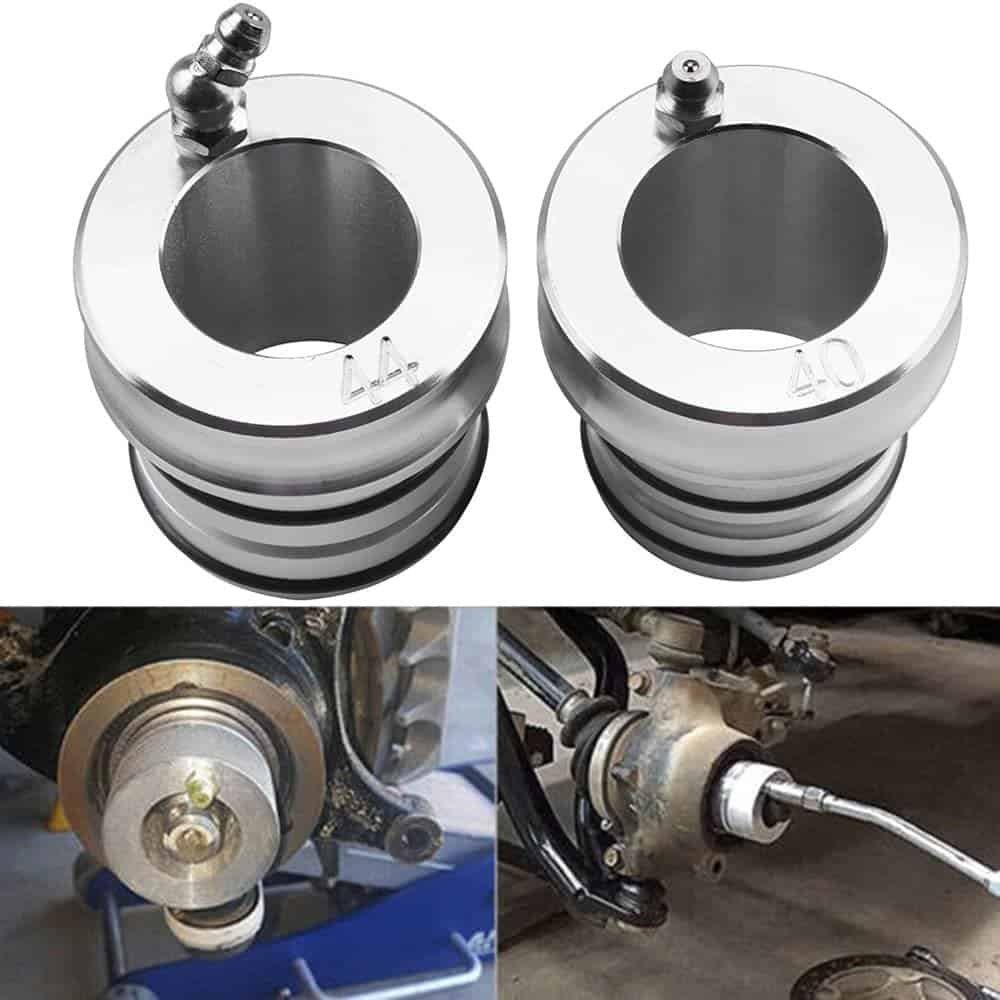
- Grease with a bearing greaser if your hubs allow it. A 40mm or 44mm greaser tool pushes fresh grease through the bearing and pushes contaminated grease out — the single best maintenance habit in mud country.
- Back off the pressure washer. Wash from a distance and never aim the jet straight at the seals.
- Rinse after water crossings. Trapped silty water against the seal works its way in as the bearing cools and contracts.
FAQ
How long do UTV wheel bearings last? With gentle recreational use, 2,000–5,000 miles is common. In mud, water, and dunes with oversized tires, a season — or less — is realistic. Inspection every 50 hours is cheap insurance.
Can I keep riding on a noisy bearing? You can, physically. You should not. A seized bearing can lock a wheel at speed, and a collapsed bearing destroys the hub and knuckle — turning a $40 job into a $400 one.
Sealed ball bearing or tapered roller? For most machines, sealed double-row ball bearings are the factory design and the right replacement. They are maintenance-free until they are not — then you replace the cartridge.
Should I replace both sides at once? Yes. Because bearings on the same axle see the same conditions, the surviving side is usually worn to a similar point. Kits for a full axle save a second teardown.
The Bottom Line
UTV wheel bearings are wear items, plain and simple. The riders who stay ahead of them inspect regularly, wash smart, and keep a spare kit on the shelf. When it is time to replace, buy on seal quality, steel grade, and kit completeness — not on the lowest price on the page.
BYWB BEARING has manufactured wheel bearings and ATV/UTV wheel bearing kits since 1999, supplying powersports distributors and brands across North America with double-sealed, fully greased kits cross-referenced to OEM, All Balls, and Quad Logic part numbers. Low MOQs, custom kits, and direct-from-factory pricing. Tell us your model list, and we will match every corner.
