
Introduction
Bearing grease plays a critical role in the performance, reliability, and service life of rolling bearings. Whether used in electric motors, automotive wheel hubs, industrial machinery, agricultural equipment, drones, or conveyor systems, the right grease can significantly reduce friction, prevent wear, protect against corrosion, and extend bearing lifespan.
Many bearing failures are not caused by poor bearing quality but by improper lubrication. Industry studies have shown that lubrication-related issues account for a large percentage of premature bearing failures. Therefore, understanding bearing grease and selecting the correct type is essential for maintenance engineers, equipment manufacturers, and end users.
In this guide, we will explain what bearing grease is, the major types of bearing grease, how to select the most suitable grease for your application, and practical lubrication recommendations.
What Is Bearing Grease?
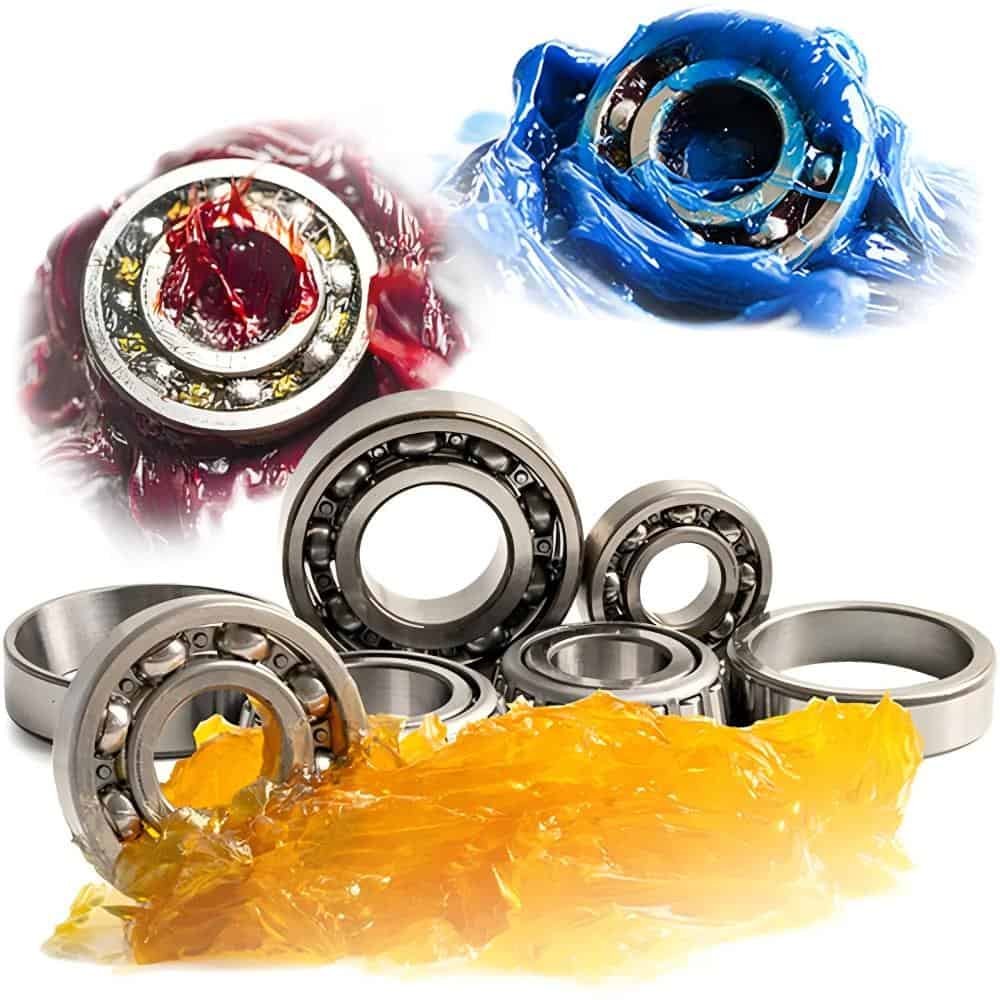
Bearing grease is a semi-solid lubricant composed of three primary components:
1. Base Oil
The base oil provides the actual lubrication film that separates rolling elements from raceways.
Common base oils include:
- Mineral oil
- Synthetic oil
- PAO (Polyalphaolefin)
- Ester oil
- Silicone oil
The base oil typically represents 70%–95% of the grease formulation.
2. Thickener
The thickener acts like a sponge, holding the oil in place and releasing it gradually during operation.
Common thickener types include:
- Lithium soap
- Lithium complex
- Calcium sulfonate
- Polyurea
- Aluminum complex
- Bentonite clay
3. Additives
Additives improve grease performance under specific operating conditions.
Examples include:
- Anti-wear additives
- Extreme pressure (EP) additives
- Rust inhibitors
- Oxidation inhibitors
- Corrosion protection additives
Together, these components create a lubricant capable of remaining inside the bearing while continuously providing protection under varying operating conditions.
Why Is Bearing Grease Important?
Proper bearing lubrication provides several critical benefits:
Reduced Friction
Grease creates a thin lubricating film between rolling elements and raceways, minimizing metal-to-metal contact.
Wear Protection
A proper grease film reduces surface fatigue and prolongs bearing life.
Corrosion Prevention
Grease prevents moisture and contaminants from reaching metal surfaces.
Contamination Protection
Grease acts as a barrier against:
- Dust
- Dirt
- Water
- Chemicals
Heat Dissipation
Although grease is less effective than oil for cooling, it helps transfer heat away from contact surfaces.
Noise Reduction
Well-lubricated bearings typically operate more quietly and smoothly.
Types of Bearing Grease
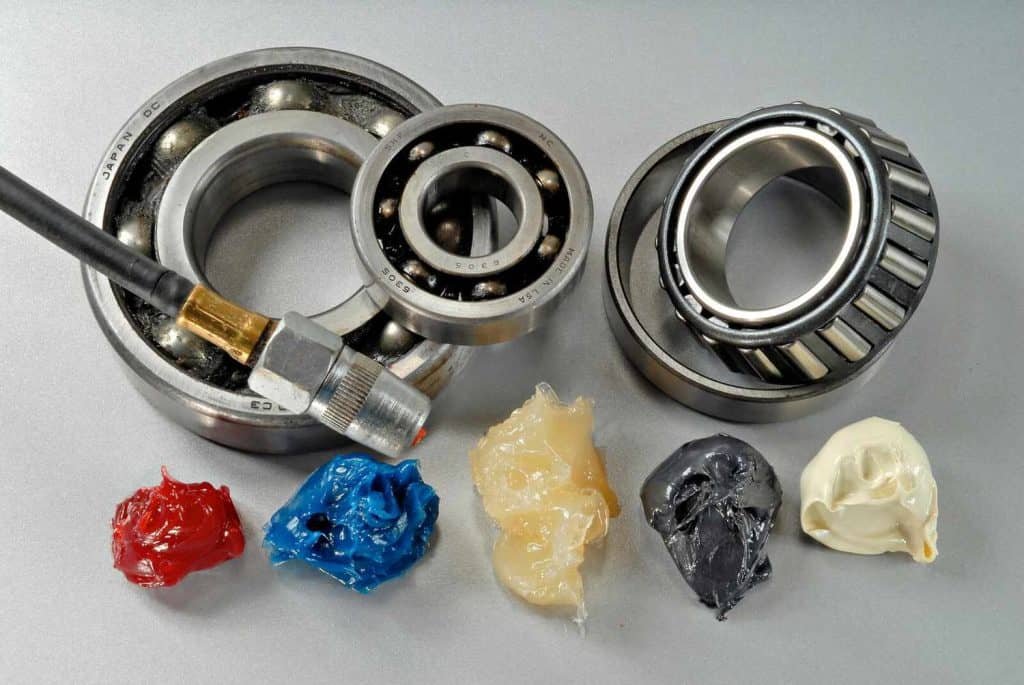
Different applications require different grease formulations. Understanding grease types is crucial for selecting the right lubricant.
Lithium Grease
Lithium grease is the most commonly used bearing grease worldwide.
Advantages
- Excellent mechanical stability
- Good water resistance
- Affordable cost
- Suitable for general-purpose applications
Typical Applications
- Electric motors
- Agricultural machinery
- General industrial equipment
- Automotive components
Temperature Range
Typically:
-20°C to +120°C
Lithium Complex Grease
Lithium complex grease is an upgraded version of standard lithium grease.
Advantages
- Higher temperature capability
- Improved oxidation resistance
- Better load-carrying performance
Typical Applications
- Wheel bearings
- High-speed machinery
- Industrial motors
- Heavy-duty equipment
Temperature Range
Typically:
-30°C to +180°C
Calcium Sulfonate Grease
Calcium sulfonate grease is known for exceptional corrosion resistance and water protection.
Advantages
- Outstanding water resistance
- Excellent rust protection
- High load capacity
- Strong mechanical stability
Applications
- Marine equipment
- Food processing equipment
- Mining machinery
- Offshore applications
Temperature Range
Typically:
-20°C to +180°C
Polyurea Grease
Polyurea grease is widely used in electric motor bearings.
Advantages
- Long service life
- Excellent oxidation stability
- Low noise operation
- High-temperature performance
Applications
- Electric motors
- HVAC systems
- Fans
- Precision equipment
Temperature Range
Typically:
-30°C to +180°C
Aluminum Complex Grease
Aluminum complex grease provides excellent water resistance and adhesion.
Advantages
- Strong resistance to washout
- Good corrosion protection
- Excellent adhesive properties
Applications
- Food machinery
- Marine equipment
- Wet operating environments
Synthetic Grease
Synthetic grease uses synthetic base oils instead of mineral oils.
Advantages
- Superior temperature stability
- Longer service intervals
- Lower friction
- Better low-temperature performance
Applications
- Aerospace equipment
- Precision machinery
- Robotics
- High-speed bearings
Temperature Range
Can exceed:
-50°C to +200°C
depending on formulation.
Understanding NLGI Grease Grades
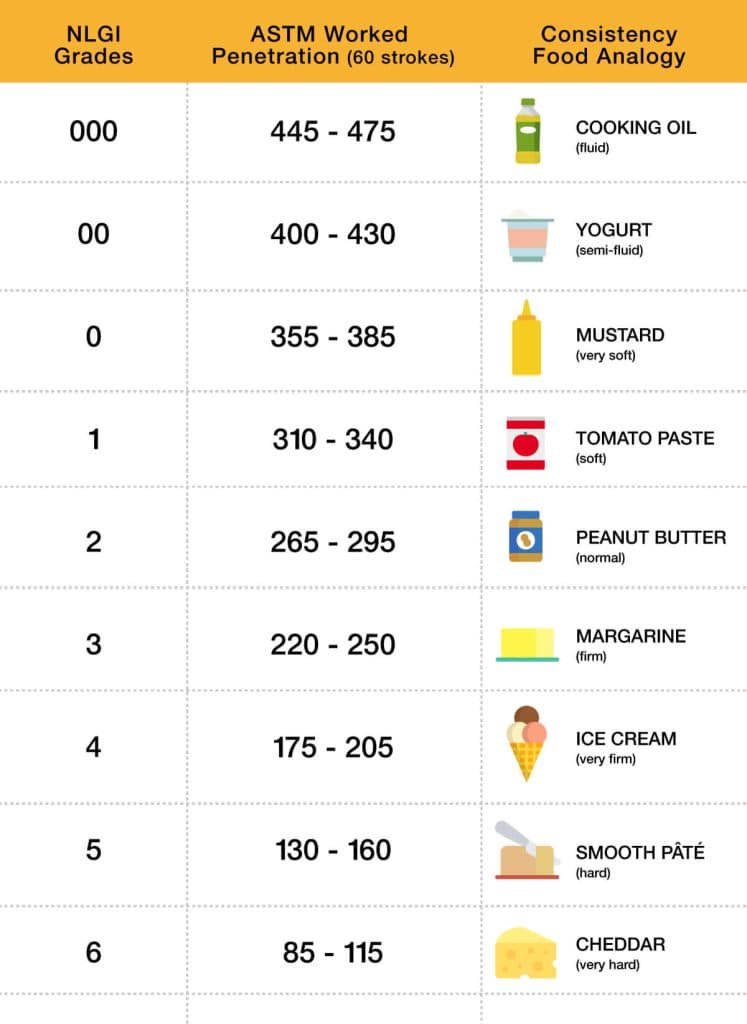
Grease consistency is classified according to NLGI grades.
| NLGI Grade | Consistency |
| 000 | Fluid |
| 00 | Semi-fluid |
| 0 | Very soft |
| 1 | Soft |
| 2 | Normal |
| 3 | Firm |
| 4 | Very firm |
| 5 | Hard |
| 6 | Block |
Most Common Grade
NLGI Grade 2 is the most widely used bearing grease because it balances pumpability and retention.
How to Select a Suitable Bearing Grease
Choosing the right grease requires evaluating multiple operating conditions.
Operating Temperature
Temperature is often the most important factor.
Low Temperatures
For cold environments:
- Synthetic grease
- PAO-based grease
- Low-temperature lithium grease
These products maintain flowability and reduce startup torque.
High Temperatures
For elevated temperatures:
- Polyurea grease
- Lithium complex grease
- Synthetic grease
These greases resist oxidation and oil separation.
Bearing Speed
Bearing speed significantly influences grease selection.
High-speed bearings require:
- Lower viscosity oils
- Low-friction formulations
- Excellent shear stability
Examples include:
- Dental equipment
- Electric motors
- Drones
- High-speed fans
Low-speed bearings often require:
- Higher viscosity oils
- EP additives
- Heavy-duty formulations
Load Conditions
Heavy loads demand stronger lubricant films.
For heavily loaded bearings choose:
- EP grease
- Calcium sulfonate grease
- Lithium complex EP grease
Typical applications:
- Mining equipment
- Construction machinery
- Industrial gearboxes
- Heavy-duty conveyors
Water Exposure
Water contamination is one of the leading causes of bearing failure.
If bearings operate in wet environments, select grease with:
- Excellent water resistance
- Rust protection
- Strong adhesion
Recommended options:
- Calcium sulfonate grease
- Aluminum complex grease
- Marine grease
Applications include:
- Boat trailers
- Marine equipment
- Food processing machinery
- Outdoor machinery
Bearing Type
Different bearing designs may require different lubricants.
Deep Groove Ball Bearings
Generally compatible with:
- Lithium grease
- Polyurea grease
Angular Contact Bearings
Often require:
- High-speed grease
- Low-friction grease
Spherical Roller Bearings
Usually need:
- EP grease
- High-load grease
Wheel Hub Bearings
Commonly use:
- Lithium complex grease
- High-temperature grease
Environmental Conditions
Consider exposure to:
- Dust
- Chemicals
- Saltwater
- Humidity
- Vibration
Harsh environments often require specialized greases with enhanced protection packages.
Bearing Grease for Common Applications
Electric Motors
Recommended grease:
- Polyurea grease
- Lithium complex grease
Key requirements:
- Low noise
- Long life
- Oxidation resistance
Automotive Wheel Bearings
Recommended grease:
- High-temperature lithium complex grease
Key requirements:
- Heat resistance
- Water resistance
- High-speed capability
Industrial Machinery
Recommended grease:
- Lithium grease
- Lithium complex grease
Key requirements:
- Reliability
- Cost efficiency
- General-purpose performance
Agricultural Equipment
Recommended grease:
- EP lithium grease
- Calcium sulfonate grease
Key requirements:
- Dust protection
- Water resistance
- Heavy-load capability
Drone Bearings
Drone motors and gimbal systems often use miniature precision bearings operating at extremely high speeds.
Recommended grease:
- Synthetic grease
- Low-torque grease
- High-speed bearing grease
Benefits include:
- Reduced friction
- Lower operating temperatures
- Extended flight time
- Reduced vibration
How Much Grease Should Be Used?
Over-greasing is a common lubrication mistake.
Recommended Fill Levels
For most bearings:
- 20%–30% of free internal space for high-speed applications
- 30%–50% for moderate speeds
- Up to 70% for low-speed applications
Problems Caused by Over-Greasing
- Excess heat generation
- Increased friction
- Seal damage
- Grease leakage
- Premature bearing failure
More grease does not mean better lubrication.
Signs That Bearing Grease Needs Replacement
Watch for the following warning signs:
Increased Bearing Temperature
A sudden rise in temperature often indicates grease degradation.
Excessive Noise
Grinding, clicking, or vibration may indicate lubricant failure.
Grease Leakage
Oil separation or leakage suggests aging grease.
Discoloration
Dark or burnt grease often indicates oxidation.
Contamination
Presence of:
- Water
- Dust
- Metal particles
requires immediate maintenance.
Common Bearing Grease Mistakes
Avoid these common errors:
Mixing Incompatible Greases
Different thickeners may react negatively when mixed.
Using Incorrect Grease Grade
Improper consistency can cause lubrication failure.
Over-Lubrication
Too much grease generates excess heat.
Under-Lubrication
Insufficient grease leads to metal contact and wear.
Ignoring Relubrication Intervals
Grease eventually degrades and must be replenished.
Conclusion
Bearing grease is one of the most important factors influencing bearing performance, reliability, and service life. A properly selected grease reduces friction, prevents wear, protects against contamination, and minimizes maintenance costs.
When selecting bearing grease, consider operating temperature, speed, load, environmental conditions, bearing type, and lubrication intervals. Lithium grease remains the most common general-purpose solution, while lithium complex, polyurea, calcium sulfonate, and synthetic greases offer advantages for specialized applications.
For demanding industrial, automotive, drone, agricultural, and precision equipment applications, choosing the right grease can significantly improve bearing life and overall equipment reliability. Working with an experienced bearing supplier such as BYWB Bearing ensures that both the bearing and lubrication solution are optimized for maximum performance and long-term durability.
