
Bearings are essential components in mechanical systems, enabling smooth rotation while reducing friction and wear. Inside most rolling bearings, a small but critical component called the bearing cage plays an important role in maintaining stability and efficiency. Although it does not carry the main load, the cage helps organize the rolling elements and ensures reliable operation.
Understanding bearing cages is important for engineers, manufacturers, and maintenance professionals who want to optimize bearing performance and longevity. This comprehensive guide explains what a bearing cage is, the different types of bearing cages, common cage materials, and the reasons why bearing cages fail. By understanding these aspects, users can select the right bearing design and prevent costly failures.
What Is a Bearing Cage?

A bearing cage, also known as a bearing retainer or separator, is a component inside a rolling bearing that separates and guides the rolling elements such as balls or rollers. Its primary role is to keep the rolling elements evenly spaced and prevent them from contacting each other directly.
In a typical rolling bearing, the cage works together with the inner ring, outer ring, and rolling elements. While the rolling elements support the load, the cage ensures smooth operation by maintaining proper spacing and alignment.
The main functions of a bearing cage include:
1. Separating Rolling Elements
The cage prevents rolling elements from rubbing against each other. Without this separation, friction and heat would increase significantly, leading to faster wear and potential bearing failure.
2. Maintaining Uniform Spacing
A cage keeps the rolling elements evenly distributed within the bearing. Proper spacing ensures balanced load distribution and smooth rotation.
3. Guiding the Rolling Elements
The cage guides the rolling elements along the correct path within the raceways, ensuring consistent rolling motion and reducing sliding friction.
4. Retaining Rolling Elements During Assembly
In certain bearing designs, the cage helps hold the rolling elements in position when the bearing rings are separated during installation or maintenance.
Although cages do not carry the primary load of a bearing, their design and material selection significantly influence speed capability, lubrication flow, vibration resistance, and overall bearing life.
Types of Bearing Cage
Bearing cages are designed in several configurations depending on bearing type, speed, load conditions, and manufacturing processes. The most common cage types include the following.
1. Stamped Metal Cages
Stamped cages are produced by pressing sheet metal into the required shape. These cages are widely used in many standard bearings because they are economical and suitable for large-scale production.
Key characteristics include:
Lightweight structure
- Cost-effective manufacturing
Suitable for medium-speed applications
Commonly used in deep groove ball bearings
Stamped steel cages are frequently found in automotive bearings, electric motors, and industrial machinery.
2. Machined Metal Cages
Machined cages are manufactured from solid metal materials such as brass or steel. These cages are stronger and more precise than stamped cages.
Advantages include:
High mechanical strength
Excellent durability
Suitable for heavy-load applications
Stable performance at high speeds
Machined cages are commonly used in high-performance industrial equipment, machine tools, and aerospace applications.
3. Pin-Type Cages
Pin-type cages are mainly used in large roller bearings. In this design, metal pins connect cage rings and maintain the position of rolling elements.
Characteristics include:
High load capacity
Strong structural support
Suitable for large cylindrical or spherical roller bearings
These cages are often used in heavy machinery, mining equipment, and large industrial gearboxes.
4. Polymer Cages
Polymer cages are made from advanced engineering plastics and are increasingly used in modern bearings.
Benefits include:
Lightweight design
Low friction characteristics
Reduced noise during operation
Good resistance to corrosion and chemicals
Polymer cages are commonly used in high-speed bearings, electric motors, and precision instruments.
5. Full Complement Bearings (No Cage)
Some bearings are designed without cages and are known as full complement bearings. These bearings contain a maximum number of rolling elements, increasing load capacity.
However, they also have limitations:
Higher friction
Lower speed capability
Greater heat generation
Therefore, these bearings are typically used in low-speed, heavy-load applications.
What Types of Bearing Cage Material Are Used?
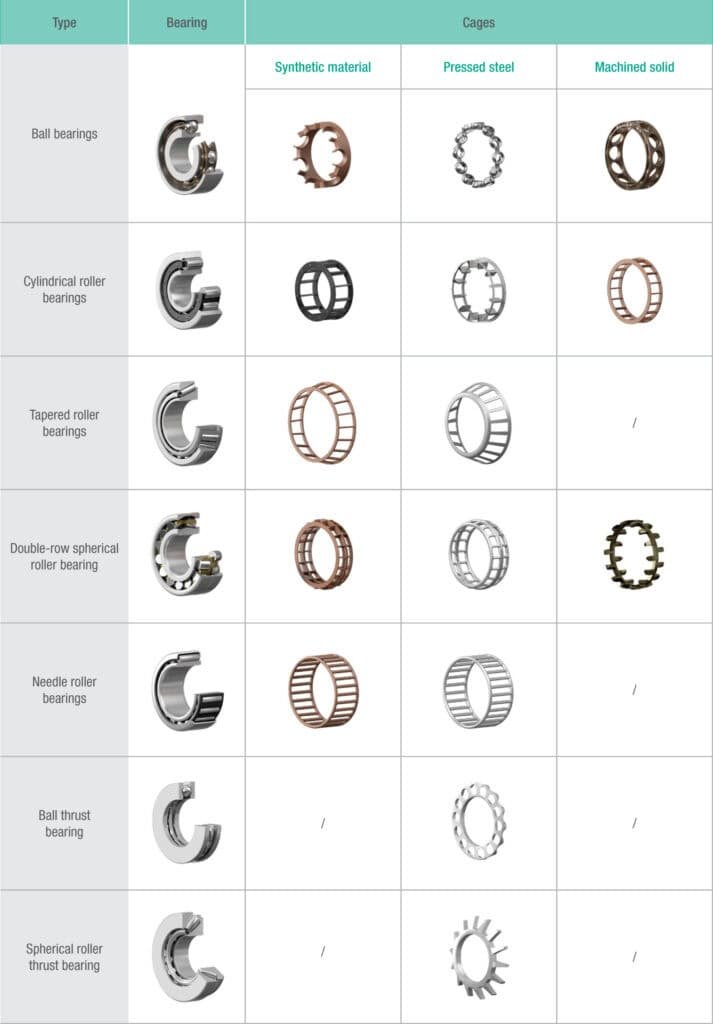
Selecting the correct cage material is essential for ensuring long bearing life and stable performance. The cage must provide sufficient strength, wear resistance, and thermal stability.
The most common bearing cage materials include the following.
Steel Cages
Steel is one of the most widely used cage materials due to its strength and durability.
Advantages include:
High mechanical strength
Good fatigue resistance
Suitable for heavy loads
Cost-effective production
Steel cages are commonly used in automotive bearings, industrial machinery, and electric motors.
Brass Cages
Brass cages are typically machined from solid brass and are known for excellent performance in demanding environments.
Key benefits include:
Good corrosion resistance
Excellent machinability
High temperature resistance
Stable performance at high speeds
Brass cages are often used in precision machinery and high-speed bearings.
Polymer (Plastic) Cages
Modern engineering plastics such as nylon, PEEK, and PTFE are widely used for bearing cages.
Advantages include:
Low friction coefficient
Lightweight structure
Reduced noise and vibration
Excellent chemical resistance
These cages are especially suitable for high-speed and low-noise applications.
Phenolic Resin Cages
Phenolic resin cages are commonly used in high-speed equipment such as machine tool spindles.
Characteristics include:
Very lightweight
High strength-to-weight ratio
Excellent lubrication retention
These cages perform well in precision, high-speed applications.
Why Do Bearing Cages Fail?
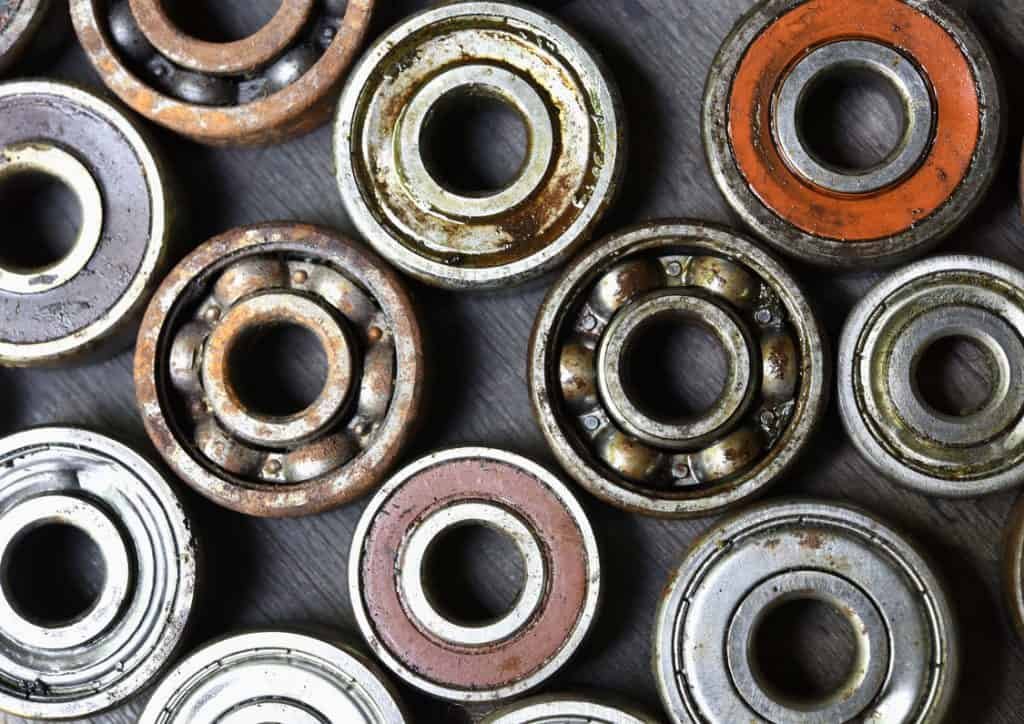
Although bearing cages are designed for durability, several conditions can cause cage damage or failure. Once the cage fails, rolling elements may collide or lose alignment, which can quickly lead to complete bearing failure.
Understanding the causes of cage failure helps improve bearing reliability and reduce maintenance costs.
1. Insufficient Lubrication
Proper lubrication is essential for minimizing friction between the rolling elements and the cage.
When lubrication is inadequate:
Friction increases
Heat builds up inside the bearing
Cage wear accelerates
Using the correct lubricant and maintaining proper lubrication intervals is essential.
2. Excessive Load
Bearing cages are not designed to carry heavy loads directly. When bearings are overloaded, stress on the cage structure increases and may lead to deformation or breakage.
Overloading often occurs due to:
Incorrect bearing selection
Unexpected operating conditions
Mechanical misalignment
3. High Operating Speed
Operating a bearing beyond its rated speed can create strong centrifugal forces that act on the cage.
These forces may cause:
Cage deformation
Fatigue cracks
Premature cage failure
High-speed applications require cages designed specifically for those conditions.
4. Contamination
Dust, dirt, and other foreign particles entering the bearing can cause abrasion between the cage and rolling elements.
Contamination can lead to:
Increased wear
Surface damage
Reduced bearing life
Proper sealing and clean lubrication systems are essential.
5. Improper Installation
Incorrect installation methods may damage the cage during assembly.
Common installation problems include:
Using excessive force
Misalignment during installation
Using incorrect tools
Proper installation procedures help avoid cage damage.
6. Excessive Vibration or Shock Loads
Heavy vibration or impact loads can repeatedly stress the cage structure, eventually causing fatigue cracks or fracture.
This problem often occurs in equipment such as:
Mining machinery
Crushers
Heavy industrial machines
7. Material Defects
Manufacturing defects such as cracks, inclusions, or poor riveting can weaken the cage structure.
Selecting bearings from reliable manufacturers with strict quality control reduces the risk of material-related failures.
Tips for Preventing Bearing Cage Failure
To improve bearing reliability and extend service life, consider the following best practices:
Select the correct bearing type and cage material for the application
Maintain proper lubrication schedules
Protect bearings from contamination
Avoid excessive loads or speeds beyond design limits
Install bearings using appropriate tools and techniques
These measures can significantly reduce the risk of cage damage and improve overall equipment reliability.
Conclusion
The bearing cage is a small yet vital component that plays an important role in the performance of rolling bearings. By separating and guiding rolling elements, the cage helps ensure smooth operation, balanced load distribution, and reduced friction.
Various types of bearing cages—such as stamped metal cages, machined cages, pin-type cages, and polymer cages—are designed to meet different operating conditions. The selection of cage materials, including steel, brass, polymer, and phenolic resin, also significantly influences bearing performance.
However, bearing cages can fail due to factors such as insufficient lubrication, excessive loads, contamination, high speeds, or improper installation. Understanding these causes allows engineers and maintenance professionals to take preventive measures and extend bearing life.
For reliable performance and durability, choosing high-quality bearings from a trusted supplier is essential. BYWB Bearing provides precision-engineered bearings designed to deliver smooth operation, long service life, and dependable performance across a wide range of industrial and automotive applications.
Frequently Asked Questions About Bearing Cages
What is the function of a bearing cage?
A bearing cage, also called a retainer or separator, keeps the rolling elements evenly spaced within a bearing. It prevents contact between balls or rollers, reduces friction, and ensures smooth rotation.
What materials are used for bearing cages?
Common bearing cage materials include steel, brass, polymer plastics (such as nylon or PEEK), and phenolic resin. Each material is selected based on operating conditions such as speed, load, temperature, and lubrication.
What are the main types of bearing cages?
The most common bearing cage types include stamped metal cages, machined metal cages, polymer cages, and pin-type cages. Each type is designed to meet different performance requirements in rolling bearings.
Why do bearing cages fail?
Bearing cages may fail due to insufficient lubrication, excessive load, high operating speeds, contamination, improper installation, vibration, or material defects. Preventive maintenance and proper bearing selection can significantly reduce failure risks.
Are polymer bearing cages better than metal cages?
Polymer cages are lighter and produce less friction and noise, making them ideal for high-speed applications. Metal cages, such as steel or brass, offer greater strength and durability for heavy-load environments.
Do all bearings use cages?
No. Some bearings are designed as full complement bearings, which do not use cages and contain the maximum number of rolling elements. These bearings can carry higher loads but typically operate at lower speeds.
