
Introduction — why this matters
Wheel bearings and wheel hubs are small parts with a big job: they let your vehicle’s wheels spin freely while keeping them securely attached to the car and transferring loads (weight, cornering, braking) into the suspension. Because they sit between the wheel and the vehicle, their health affects noise, steering precision, ABS function, and — in extreme cases — safety. Understanding the difference between wheel bearings and hub (hub-bearing) assemblies, the main types you’ll find on modern cars, and how replacement works will help drivers and technicians make safer, smarter repair decisions.
What are wheel bearings and hub bearings?

What is a wheel bearing?
A wheel bearing is the bearing element inside the wheel end that supports radial and axial loads while allowing the wheel to rotate with minimal friction. Historically, wheel bearings could be serviceable (separate inner and outer bearings or cup-and-cone/tapered roller designs that can be disassembled, cleaned, re-greased and reassembled) or sealed (prepacked bearings pressed into place). The bearing itself consists of inner and outer races plus rolling elements (balls or rollers) and a lubricant/seal system.
What is a hub bearing / wheel hub assembly?
A hub bearing (often called a wheel hub assembly, hub unit, or hub and bearing assembly) is a preassembled, factory-sealed unit that integrates the bearing(s) with the hub flange (the part the wheel bolts to). Many hub units also include the wheel speed/ABS tone ring and the wheel speed sensor or provisions for it. These assemblies are typically greased for life at the factory and are replaced as a single unit when they fail — you don’t disassemble them for re-greasing.
Short takeaway: wheel bearings are the bearing elements; hub bearings (hub assemblies) are the ready-to-install units that include bearings plus the hub flange and often sensors and seals.
Is a hub bearing the same as a wheel bearing?
The terms are sometimes used interchangeably in casual conversation, and both live in the same wheel area — but they are not strictly the same:
If you say wheel bearing, you could mean the bearing alone (serviceable or sealed cartridge) that sits inside the hub or knuckle.
If you say hub bearing or hub assembly, you usually mean a complete, sealed, preassembled unit that includes the bearing plus the hub flange and often ABS/tone ring hardware.
Mechanically they perform the same final functions (allow the wheel to rotate and carry loads), but how they’re supplied, serviced and replaced differs. Serviceable bearings let professional shops or hobby mechanics repack grease and reuse components; hub assemblies are replaced as one piece.
What are the 4 types of hub and wheel bearings?

Different manufacturers and aftermarket sources categorize wheel/hub solutions differently. A practical, widely used classification organizes wheel/hub bearing types into four broad groups commonly seen across passenger cars, light trucks, and heavier vehicles:
- Serviceable (separate) wheel bearings — cup & cone / tapered roller pairs
Two separate bearings (inner and outer), usually tapered roller bearings for load handling. They are mounted and preloaded via nuts and/or shims. Historically common on older cars and many heavy-duty applications. They are serviceable — you can repack grease and adjust preload.
- Single-row sealed hub units (press-fit / cartridge type)
A single sealed bearing (often angular contact ball bearing in a single row) pressed into the knuckle or carrier; greased and sealed for life. Common on modern compact cars and many front/rear wheel applications. These are replaced as a unit when they fail.
- Double-row hub units / double-row tapered roller units
Double-row bearings (two rows of rolling elements) or integrated double tapered rollers for higher load capacity — used where higher radial and axial loads exist (SUVs, light trucks, heavy-duty). Also typically sealed and replaced as a unit.
- Integrated hub assemblies with ABS/ASR sensors / flange-type hub units
These are hub assemblies that include the wheel flange, sealed bearings and the wheel speed sensor or tone ring (magnetic or reluctor ring). Functionally this overlaps the categories above, but the presence of sensors affects diagnosis and replacement procedures and is worth calling out separately.
(Trade catalogs sometimes use shorthand codes like HUB0/HUB1/HUB2, but the functional differences above are the important part.)
Symptoms of a failing wheel bearing / hub assembly
Recognizing wheel bearing / hub problems early avoids bigger damage and safety risks. Typical signs include:
Noise from the wheel area: humming, rumbling, growling, or grinding that changes with vehicle speed and often gets louder under load or when turning. The defective side often gets louder when turning slightly toward the good side.
Vibration or wobble: steering shimmy, wheel vibration at speed, or perceptible looseness in the wheel.
Uneven tire wear or brake rotor/pad issues if play allows runout.
ABS/traction system warnings or intermittent ABS malfunction when tone rings or internal sensors are damaged. Some hub failures damage the ABS ring or sensor.
Excessive wheel play when the wheel is rocked (car lifted and wheel off the ground).
Grease leakage or visible corrosion around hub seals on older/serviceable bearing designs.
Because noises can also come from brakes, CV joints, or drivetrain, confirm with hands-on tests (wheel sway test, stethoscope/screwdriver listening, road test) or professional inspection.
When should you replace bearings vs the whole hub assembly?
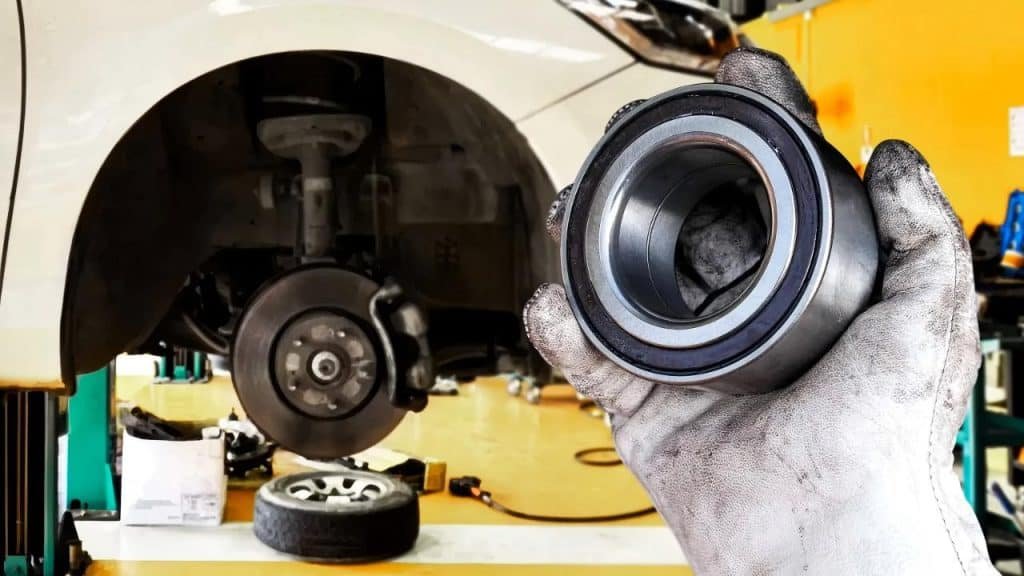
A few practical rules of thumb:
If the bearing is a press-in sealed cartridge or integrated hub unit: replace the entire sealed hub/bearing assembly. These are not intended to be disassembled or re-packed.
If the vehicle uses serviceable cup-and-cone or separate tapered roller bearings: you may be able to replace only the bearing components (races, rollers, seals) and re-use the hub flange if it’s undamaged — provided you can properly set preload and the hub/driveshaft splines are in good condition.
If ABS tone ring or wheel flange is damaged: replace the entire hub assembly even if the bearing alone looks suspect — ABS ring damage or flange distortion requires the assembly to be changed.
Also consider mileage, age and symmetry: if one side fails on a high-mile car, replacing both sides as a preventative measure is a common, sensible practice.
Tools & prep — what you’ll need for a replacement
Tools vary by vehicle and whether you replace a pressed-in bearing or a hub assembly. Typical items:
Jack, sturdy jack stands or lift (safety first)
Wheel chocks and torque wrench (for lug nuts and hub nut)
Socket set, breaker bar, impact wrench (helpful)
Large sockets or hub nut socket (vehicle-specific)
Punch/hammer, pry bar, seal puller
Bearing press or hydraulic press (needed for press-in bearings) or hub puller (for some assemblies)
Anti-seize and appropriate new seals/retaining clip hardware
Shop manual or torque spec sheet for your vehicle (do not guess torque values)
Always use proper safety equipment and procedures — working with supported vehicles and wheel chocks is essential.
How to replace wheel bearings — step-by-step (general guide)
Below is a general, high-level procedure for replacing a wheel bearing or hub assembly. Procedures differ by make/model; treat this as a clear, practical outline and follow the vehicle manufacturer’s service manual for exact steps and torque specs.
A. Replacing a sealed hub assembly (most modern cars) — the simpler path
- Park on level ground, chock wheels, and lift the vehicle. Place on jack stands.
- Remove wheel and brake caliper/rotor as needed. Hang caliper with wire (don’t stress the hose). Remove rotor if it obstructs access.
- Remove the hub nut and any retaining devices. Some cars have a central axle/hub nut (visible) — this often requires heavy torque tools. Keep track of washers/retainers.
- Disconnect ABS sensor or harness if it routes through the hub. Be careful with the tone ring.
- Remove bolts that hold the hub assembly to the steering knuckle. Slide the hub assembly out. Some may require penetrating oil and heat; others are pressed in and may need a puller.
- Clean mounting surfaces, inspect knuckle, and install new hub assembly. Slide new hub into place; torque hub bolts to manufacturer spec. Reconnect ABS sensor and reassemble brake components and wheel.
- Torque wheel lug nuts and hub nut to spec, lower vehicle, and test drive carefully to confirm noise is gone.
- Replacing serviceable (press-in) bearings — needs a press or shop equipment
Follow steps 1–4 above (lift, remove wheel, caliper, rotor, and hub nut).
Remove hub flange or bearing carrier from knuckle if required.
Use a press to remove the bearing race/assembly from the hub or knuckle bore. DO NOT damage the bore — clean it thoroughly.
Press in the new bearing squarely to the proper depth using correct adapters. Many shops heat knuckle or freeze bearing per OEM instructions to ease install; follow OE guidance.
Replace seals and reassemble in reverse order, setting bearing preload or torque as the service manual requires. Incorrect preload can lead to premature failure.
Important safety notes: wheel bearings/hubs are safety-critical. If you lack proper tools (press, torque wrench) or are unsure of preload/torque specs, have the work done by a qualified shop. Incorrect installation can cause bearing failure or a wheel to separate.
Common mistakes & pitfalls to avoid
Re-using a hub or knuckle with damage: corrosion, scored bores, or runout can ruin a new bearing quickly. Always inspect and clean mating surfaces before assembly.
Skipping torque and preload specs: these are critical. Under- or over-torquing causes play or premature wear. Use OEM torque values.
Ignoring ABS sensors / tone rings: misaligned rings or damaged sensors cause ABS faults and drivability issues. Disconnect harnesses carefully and avoid bending the ring.
Thinking seals make a failed bearing “good again”: if contamination has occurred or rollers/races are damaged, replacement is the only safe option.
Maintenance tips to extend bearing life
Keep seals intact: damaged seals let road water and grit in — the enemies of bearings. Inspect seals/boots during brake jobs.
Avoid high-pressure washes at the wheel hub: direct water pressure can force contaminants past seals.
Address brake or suspension issues early: components that allow excess movement or vibration increase bearing stress.
Use quality replacements: hub units and bearings from reputable manufacturers or OEM suppliers typically use better grease, materials and tolerances. Cheap parts may fail earlier.
How BYWB Bearing can help (short company pitch)
At BYWB Bearing we specialize in high-quality wheel bearings and hub solutions sourced for durability and OEM fit. If you need guidance on selecting the correct wheel bearing or a hub assembly for a model, or want sealed cartridge bearings, double-row hub units or replacement kits, we can help you choose the right part and supply reliable, tested components for passenger cars and light trucks.
Quick reference — when to call a professional
Hub removal requires a press, heat, and special tools for many models.
If your vehicle has electronic ABS/ESP integration inside the hub, professional tools and diagnostic checks are recommended.
Any time you’re unsure about torque/preload, or if the knuckle/hub flange shows damage, contact a trained technician.
Conclusion
Wheel bearings and hub assemblies do the same core job — enable the wheel to spin while carrying loads — but they differ in form, serviceability and how they’re replaced. Older or heavy-duty designs used separate, serviceable bearings (cup & cone or tapered rollers); most modern passenger vehicles use sealed hub units (prepacked and replaced as a unit) that often include ABS/tone rings. Recognizing symptoms early, using the correct replacement strategy, and following OEM torque/preload instructions will reduce the chance of repeat failure and keep your vehicle safer on the road. For parts or technical help, BYWB Bearing offers quality bearing solutions and technical support to match your vehicle’s needs.
