
Introduction
In modern machinery and automotive applications, smooth rotational motion under axial (thrust) loads is essential for performance, reliability, and longevity. Thrust bearings are specialized components designed to accommodate forces applied parallel to the shaft axis, ensuring efficient operation in environments where radial bearings alone are insufficient. As a leading manufacturer and supplier, BYWB Bearing offers a comprehensive range of high-quality thrust bearings engineered to meet the demands of diverse industries—including automotive, marine, aerospace, and heavy machinery. In this SEO-optimized article, we’ll explore everything you need to know about thrust bearings: what they are, whether you can drive with a broken thrust bearing, where they’re used, their advantages, and how BYWB Bearing stands out in delivering superior thrust bearing solutions.
What Is a Thrust Bearing?
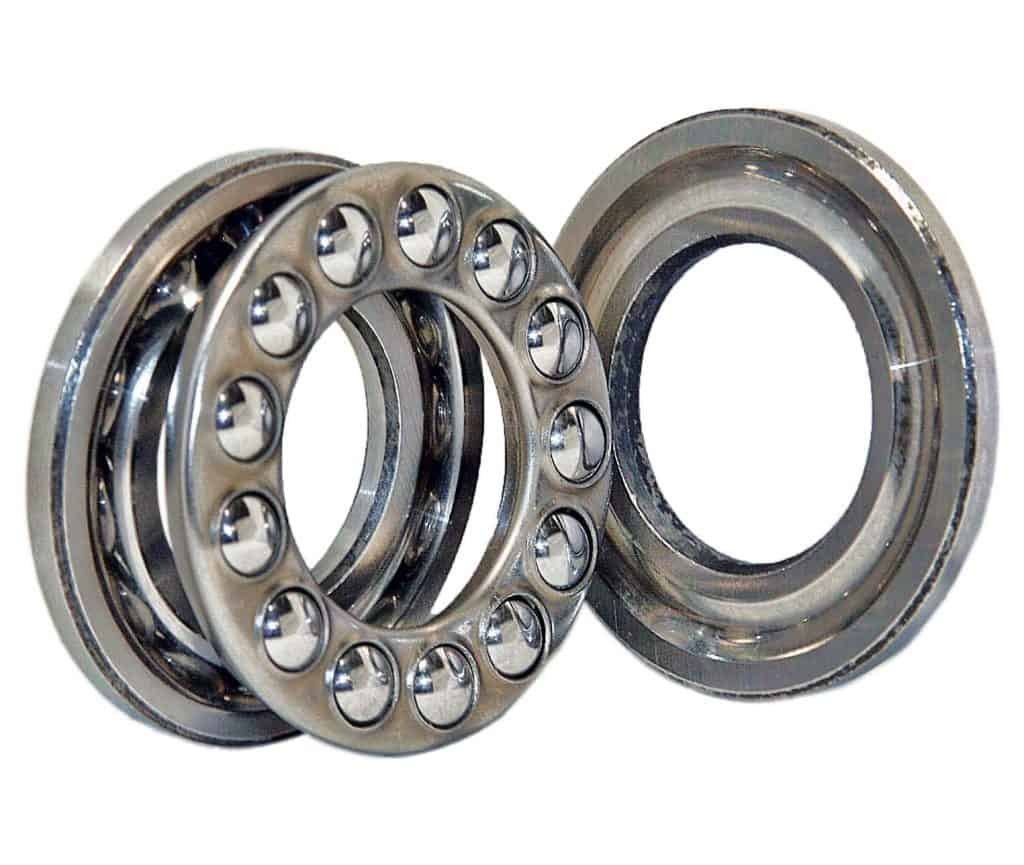
A thrust bearing is a type of rolling-element bearing specifically designed to sustain high axial loads (thrust) while permitting rotation between parts. Unlike radial bearings, which primarily handle loads perpendicular to the shaft, thrust bearings are built to withstand forces directed along the shaft’s axis.
Types of Thrust Bearings

- Ball Thrust Bearings
Feature two washers (races) with balls captured between them.
Suitable for moderate thrust loads and high-speed applications.
Commonly used in automotive steering systems.
- Roller Thrust Bearings
Utilize cylindrical, tapered, or spherical rollers in place of balls.
Capable of supporting much higher axial loads than ball thrust bearings.
Ideal for heavy machinery and industrial gearboxes.
- Magnetic Thrust Bearings
Employ magnetic levitation to support axial loads without physical contact.
Offer near-frictionless operation and minimal wear.
Found in high-speed turbines and flywheel energy storage systems.
- Hydrodynamic and Hydrostatic Thrust Bearings
Leverage a film of pressurized fluid (oil or water) to separate moving surfaces.
Provide excellent load capacity and damping characteristics.
Common in turbine generators, compressors, and marine propeller shafts.
Thrust Bearings Components
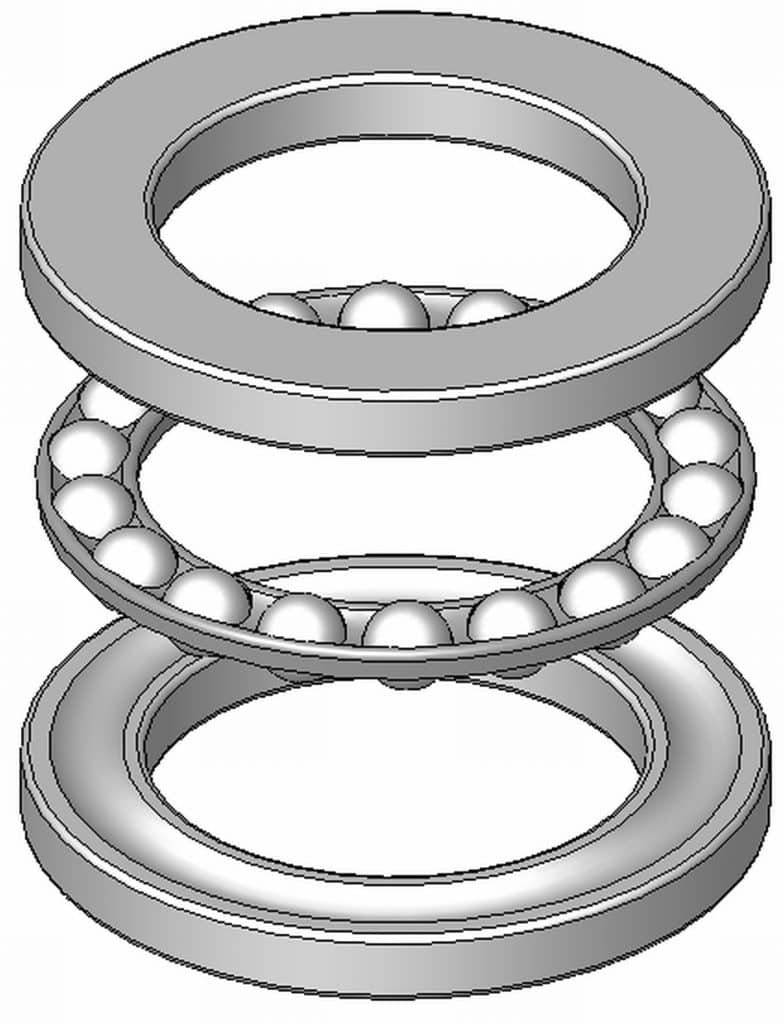
Races (Washers): Provide raceways for rolling elements.
Rolling Elements: Balls or rollers that carry the load.
Cage: Keeps rolling elements evenly spaced, reducing friction and wear.
Housing or Seat: Mounts the thrust bearing assembly and secures its position.
By understanding these fundamental elements, engineers can select the appropriate thrust bearing type and size to optimize performance under specified axial loads and operating speeds.
Can I Drive with a Broken Thrust Bearing?
Driving with a failed or severely worn thrust bearing is strongly discouraged due to safety, performance, and potential collateral damage concerns. Here’s why:
Symptoms of a Failing Thrust Bearing
Excessive Vibration: A damaged thrust bearing may produce noticeable vibrations through the drivetrain or steering column.
Noise: Grinding, clicking, or whining sounds, especially under acceleration or deceleration.
Steering Difficulty: In vehicles where thrust bearings are part of the steering assembly, you may experience stiffness or hesitation.
Axial Movement: Increased endplay (axial play) in rotating shafts—e.g., transmission input shafts—leading to gear misalignment.
Risks of Continued Operation
Increased Wear on Adjacent Components
A broken thrust bearing allows axial movement that can damage gears, seals, and other bearings.
Seals may be compromised, leading to fluid leaks and contamination.
Catastrophic Failure
Under heavy loads (e.g., towing or high-speed driving), a failed thrust bearing can seize, causing sudden lock-up.
Loss of steering control or transmission failure may result, endangering occupants and others on the road.
Costly Repairs
Neglecting a faulty thrust bearing often leads to secondary damage—transmission rebuilds, differential replacement, or engine repairs.
Early diagnosis and replacement by a quality manufacturer like BYWB Bearing can prevent escalating repair bills.
Bottom Line: If you suspect a bad thrust bearing—listen for unusual noises, monitor for vibration, and have a qualified technician inspect the driveline. Replacing the faulty bearing promptly restores safety and performance.
Where Are Thrust Bearings Used?

Thrust bearings play a critical role in applications where axial loads dominate. Below are some of the most common use cases:
| Industry | Application | Bearing Type |
| Automotive | Manual transmissions, clutches, steering columns | Ball and Roller Thrust Bearings |
| Industrial Gearboxes | Heavy gear-reduction units, conveyors | Tapered Roller Thrust Bearings |
| Pumps & Compressors | Axial-flow pumps, reciprocating compressors | Hydrodynamic Thrust Bearings |
| Marine | Propeller shafts, rudder assemblies | Thrust Ball & Roller Bearings |
| Aerospace | Turbine engines, retractable landing gear | Hybrid Ceramic Thrust Bearings |
| Renewable Energy | Wind turbine main shafts | Spherical Roller Thrust Bearings |
| Machine Tools | Spindle supports, indexing tables | High-Precision Ball Thrust Bearings |
Automotive Sector
- Clutch Release Systems: Enable smooth engagement/disengagement without axial shift of pressure plates.
Steering Assemblies: Provide low-friction axial support for rack-and-pinion setups.
Transmissions: Manage endplay in input and output shafts to maintain gear mesh accuracy.
Heavy Machinery & Gearboxes
Conveyors & Crushers: Endurance under shock loads from material handling.
Hoisting Equipment: Crane slewing drives depend on robust axial-load capacity.
High-Speed & Precision Equipment
Turbine Generators: Hydrodynamic thrust bearings can handle enormous axial forces at high RPMs.
Spindle Bearings: Precision ball thrust bearings deliver low runout for CNC machinery.
Across all these applications, selecting the right thrust bearing material, preload, and lubrication regimen is essential. BYWB Bearing collaborates closely with design engineers to provide customized solutions—be it alloy-steel rollers for heavy loads or ceramic balls for corrosion resistance and high-speed tolerance.
What Are the Advantages of Thrust Bearings?
Thrust bearings offer numerous benefits when correctly specified and installed. Below are key advantages:
- High Axial Load Capacity
Engineered rollers or balls distribute loads evenly over the raceways, allowing them to sustain large thrust forces with minimal deformation.
- Low Friction & Wear
Rolling-element design drastically reduces sliding friction compared to plain bearings.
BYWB Bearing uses advanced heat-treatment and surface-finishing processes to minimize wear and extend service life.
- Precise Axial Positioning
Maintain accurate endplay control in shafts and spindles, which is critical for gear alignment and machining precision.
- Versatility Across Speeds
From high-speed turbine applications (tens of thousands of RPM) to slow-moving heavy equipment, thrust bearings can be tailored for the required rotational speeds and load profiles.
Compact Design
Compared to hydrodynamic fluid-film bearings, rolling-element thrust bearings occupy less space and simplify maintenance.
Ease of Installation & Replacement
Standardized dimensions (e.g., ISO, ABMA) allow for drop-in replacements and straightforward retrofitting.
Enhanced Reliability
BYWB Bearing’s stringent quality control ensures each thrust bearing undergoes non-destructive testing, vibration analysis, and strict dimensional checks—translating into higher uptime and lower total cost of ownership.
Material & Lubrication Options
Available in stainless steel for corrosion resistance, ceramic hybrids for extreme speeds, and even self-lubricating polymers for maintenance-free operation.
Conclusion
Thrust bearings are indispensable components wherever axial loads must be supported without compromising rotational freedom. From automotive transmissions to industrial gearboxes, marine propeller shafts to high-speed turbines, selecting the right type of thrust bearing ensures smooth operation, precise shaft positioning, and extended equipment life.
As a trusted partner in bearing technology, BYWB Bearing offers a full spectrum of thrust bearing solutions—including ball, roller, hydrodynamic, and hybrid designs—tailored to your application requirements. Our advanced manufacturing techniques, rigorous testing protocols, and global distribution network make us the go-to source for engineers and procurement professionals seeking reliability and performance.
Whether you’re designing a new machine or maintaining existing equipment, contact BYWB Bearing today to discuss how our thrust bearings can optimize your system’s efficiency, safety, and longevity. Let us help you keep your operations running smoothly—under even the toughest axial loads.
