
What is Bearing lifespan?

Bearings are mandatory in mechanical applications, supporting smooth, reliable rotation under various load conditions. Particularly in automotive systems, like wheel bearings.
The life expectancy of bearings depends on the loads they endure, the speeds they operate at, and environmental factors. To estimate how long a bearing will last, engineers use established formulas to project bearing life, especially using the L10 life calculation method.
It’s true that wheel bearings are low maintenance, but it doesn’t mean they last a lifetime. So what exactly does a wheel bearing do? What is its lifespan? And How can you extend its life?
This guide will walk you through these calculations, lifespan expectations, failure causes, symptoms of worn bearings, and best practices for choosing quality replacements that improve bearing durability.
How to Determine Approximate Bearing Life
Predicting bearing life is actually a task because bearing reliability directly affects performance and safety. The most common method that is used in the industry to estimate the expected lifespan is L10 bearing life calculation.
The L10 calculation provides an approximate lifespan by indicating the point at which 10% of bearings in a specific batch are likely to fail.
Although real-life factors like contamination, irregular loads, and temperature changes impact bearing life, this formula serves as a solid foundation for calculating bearing durability.
L10 Bearing Life Calculation Formula
The L10 formula is based on various operating factors and applies to both radial and thrust bearings. Here’s the formula:

where:
- L10 represents the expected lifespan in hours,
- C is the basic dynamic load rating (the load a bearing can endure for a specified number of revolutions),
- P is the equivalent dynamic load the bearing experiences in use,
- N is the bearing’s rotational speed in revolutions per minute (RPM).
An Example of Using the Formula
Consider a bearing in a fan application where the load is constant at 100 pounds, operating at 1200 RPM. Using the L10 formula and assuming a basic dynamic load rating of 1402 pounds, this bearing should last approximately 40,000 hours. Such calculations help in selecting bearings with adequate load capacities for the anticipated lifespan.
What factors affect bearing life
To maximize the lifespan and performance of bearings, it’s essential to understand the factors that influence their longevity. Here are the main considerations:
1) Proper Lubrication is Essential
Lubrication is the lifeblood of any bearing. Inadequate lubrication can lead to excessive friction, causing the bearing to heat up and potentially fail. Both grease-lubricated and self-lubricating bearings rely on effective lubrication to reduce wear and prevent overheating. Additionally, contaminants such as dust, dirt, or moisture can mix with the lubricant and form abrasive particles that accelerate wear. To mitigate this, using the right lubricant and ensuring cleanliness in bearing applications is critical.
2) Bearing Load Impacts Service Life
The load a bearing endures is directly related to its lifespan. In applications with high loads or uneven weight distribution—such as those in heavy machinery—the bearing must withstand immense pressure. When calculating load requirements, it’s wise to “overdesign” by selecting a bearing with a load capacity slightly higher than the anticipated maximum. This ensures added durability, especially in dynamic environments where loads can be unpredictable.
3) Temperature Control is Crucial
Operating temperature plays a significant role in bearing life. Excessive heat can lead to thermal expansion, which may alter the bearing’s internal clearances and increase wear. Similarly, low temperatures can affect the viscosity of lubricants, leading to improper lubrication. Choosing bearing materials compatible with the expected temperature range of the application ensures stability and longevity under thermal stress.
4) Operating Speed Matters
Bearings must be carefully matched to the rotational speed of the application. Bearings subjected to speeds beyond their design limits can experience accelerated wear. Furthermore, misalignment during installation can create additional strain, leading to premature failure. Ensuring that bearings are installed and aligned correctly can significantly extend their operational lifespan.
5) Storage and Handling Influence Durability
Proper storage and handling are also essential to preserving bearing life. Certain materials, such as PTFE-based composites, are sensitive to environmental factors like UV exposure, which can degrade the material over time. Storing bearings in protective environments, free from moisture and UV light, and handling them with care, helps to prevent deterioration and maintains their structural integrity.
Selecting the right bearing and optimizing these factors to suit the operating environment and application demands will extend service life and enhance performance. If you’re seeking tailored guidance, our BYWB engineer team can assist in finding the best bearing solution to match your application needs!
How Long Do Wheel Bearings Last?

For automotive applications, wheel bearings are engineered to last between 85,000 and 100,000 miles (roughly 136,000 to 160,000 kilometers). However, the actual lifespan of a wheel bearing can fluctuate widely based on several factors, including driving habits, road conditions, and quality of maintenance. Wheel bearings in high-performance or heavy-duty vehicles tend to endure more stress and may require more frequent replacement.
Factors Affecting Wheel Bearing Lifespan
- Road and driving conditions: Driving on rough roads, over potholes, or on uneven surfaces accelerates wear.
- Quality of the bearing material: Bearings made of premium steel and manufactured with precise heat treatment last longer.
- Driving behavior: Aggressive driving, frequent hard braking, and fast cornering increase bearing wear.
- Maintenance and lubrication: Proper lubrication minimizes friction and dissipates heat, preventing overheating and premature failure.
What Are the Symptoms of Bad Wheel Bearings
Timely identification of bearing issues can prevent serious damage to vehicle components and enhance safety. Here are key symptoms of failing or worn-out wheel bearings:
- Unusual noises: Confused about what a bad bearing sounds like? It sounds like grinding, growling, or humming sounds coming from the wheel area often signal bearing issues.
- Steering wheel vibration: Excessive vibrations, especially during high-speed driving, may indicate bearing wear.
- Uneven tire wear: A worn bearing often disrupts the wheel’s rotation, leading to uneven wear on tires.
- Loose wheels: If the wheel feels loose or wobbly when lifted and checked, it may be due to bearing wear.
- ABS malfunction warning: Modern vehicles have ABS sensors within the wheel bearings; a failing bearing can lead to ABS issues.
What Are the Risks of Driving with Bad Wheel Bearings?
Mostly, the wheel bearings do not fail immediately, instead they show some symptoms, and it is likely possible that you’re driving with bad wheel bearings. Now, if you’re wondering about the risks of driving with bad wheel bearings, Let us guide you through:
- Instability
- Wear and tear on tires
- The brakes fail
- Accidents
- Disturbing Noise
Having said that, we advise you to avoid driving if you witness any of these symptoms because it can cause an adverse effect on your safety.
Quality Replacement Parts
Everyone wants their bearings to last long, right? But for that, you have to choose the right replacement parts for wheel bearings. Wheel bearings, especially those that meet BYWB (BOYO BEARING Co Ltd) standards, are constructed with high-grade steel to handle high loads.
Benefits of Quality Bearings Include:
- Increased durability: High-grade materials resist wear, withstand heavy loads, and tolerate extreme temperatures.
- Enhanced corrosion resistance: Quality bearings offer better protection against rust and corrosion.
- Smoother operation: Reduced friction and wear contribute to quieter, more efficient performance.
Ball Bearing Life in Hours
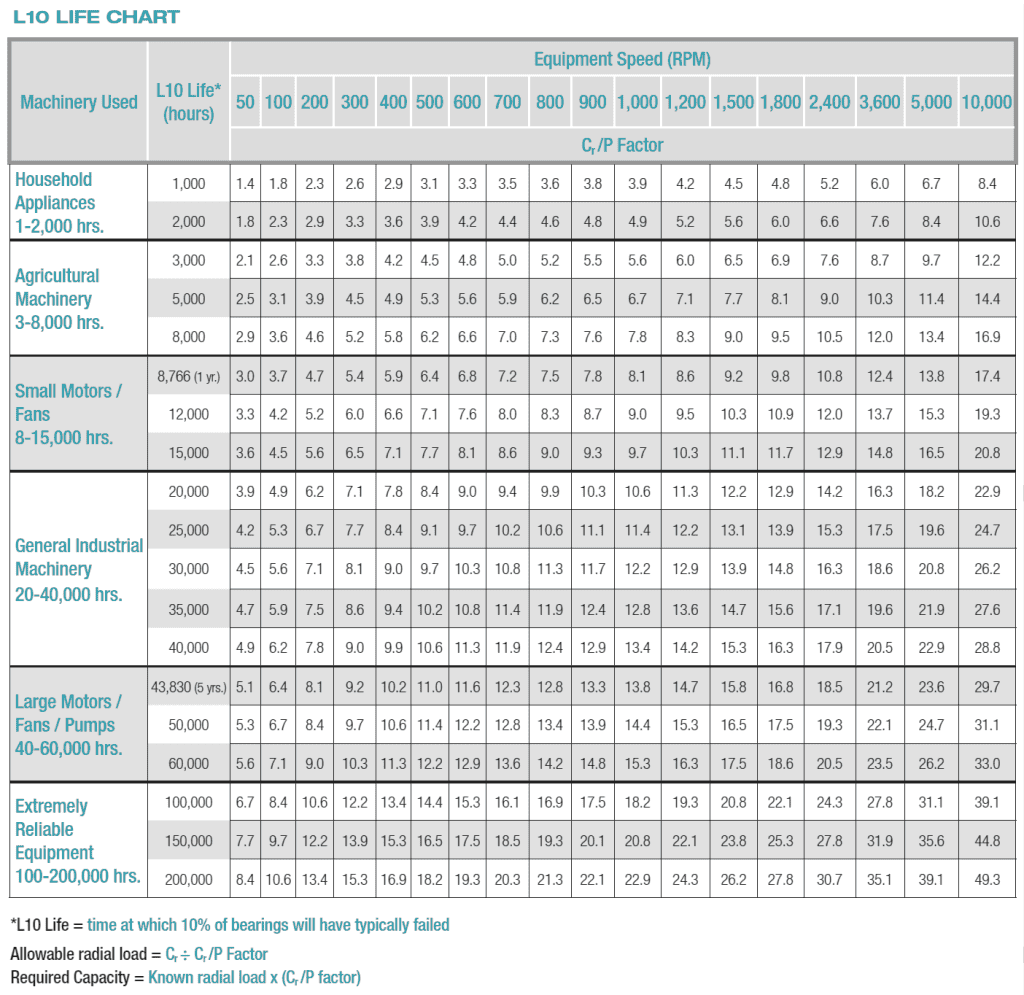
If a bearing is required to rotate continuously at high speeds, then understanding the diameters of bearing life in hours can help determine when you require maintenance or replacement.
The L10 bearing life calculation provides an expected lifespan in hours, which is valuable for industrial applications.
Ball bearings in optimal conditions can last for about 10000 of hours but still require earlier replacement if the conditions are extreme.
However, there are many types of bearings but the best bearing for use is deep groove ball bearing that can work for 50,000–70,000 hrs when it handles light load with RPM ≤ 2000, and it can last long for 25,000–45,000 hrs when it is loaded with medium weight with RPM varying 2000–5000, and will give 15,000–25,000 hrs lifespan when it loads heavily with RPM ≥ 5000.
| Bearing Type | Light Load (RPM ≤ 2000) | Moderate Load (RPM 2000–5000) | High Load (RPM ≥ 5000) |
| Standard Ball Bearing | 40,000–60,000 hrs | 20,000–40,000 hrs | 10,000–20,000 hrs |
| Deep Groove Ball Bearing | 50,000–70,000 hrs | 25,000–45,000 hrs | 15,000–25,000 hrs |
| Sealed Ball Bearing | 30,000–50,000 hrs | 15,000–30,000 hrs | 7,000–15,000 hrs |
Example: L10 Life in Practical Use
Consider a ball bearing with a dynamic load capacity of 500 pounds, operating at 2000 RPM with a 250-pound load. Using the L10 formula, the expected lifespan would be approximately 30,000 hours under these conditions. This estimate aids in setting maintenance schedules and replacement timelines.
Conclusion
Lastly, if you want your machinery to run smoothly, then you must have the knowledge about bearing basics, like load capacities and expected lifespans. You can improve the lifespan and quality of your bearing by choosing high-quality bearings, following best practices in bearing installation, and regular maintenance can help extend bearing life and maximize efficiency.
If you are looking for a trusted solution to improve bearing longevity, then BYWB bearings offer high-quality, durable options designed to handle extreme demands. We suggest you to Invest in the BYWB durable bearings today for long-lasting performance of your machinery!
