
Skateboarders know that smooth rides and sharp turns rely heavily on one tiny component: the bearings. As crucial as wheels and decks are, it’s the bearings that dictate how smoothly you’ll glide on any surface. This makes choosing the right skateboard bearings not just important, but essential for enthusiasts and professionals alike. In this article, we’ll break down the features of top-performing skateboard bearings, helping businesses and retailers understand what sets the best apart in a crowded market. Whether you’re stocking up for a skate shop or sourcing for a manufacturing project, knowing these details can significantly impact your offerings and customer satisfaction.
What are skateboard bearings?

A skateboard bearing is a specialized component designed to reduce friction between the moving parts of a skateboard, specifically between the wheels and axle. Here’s a breakdown of its structure:
Inner Race
The inner race is the central ring that fits directly around the skateboard’s axle. It’s precision-engineered to allow minimal friction between the axle and the bearing itself.
Outer Race
This is the external ring that interfaces with the wheel’s interior. It holds the balls and is crucial in transferring the rotational force from the balls to the wheel, enabling the wheel to turn smoothly.
Balls
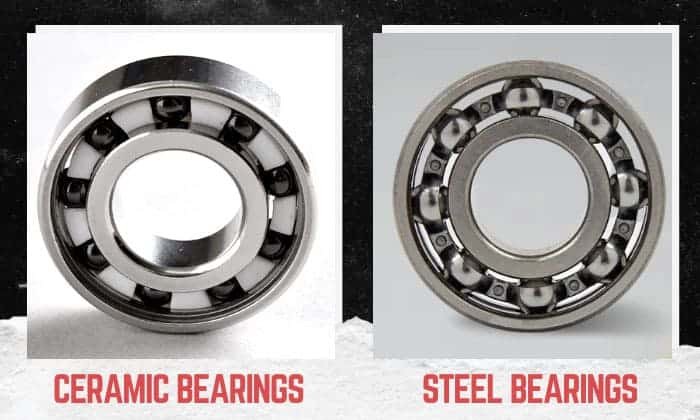
Positioned between the inner and outer races, these spherical components are typically made of steel or ceramic. They facilitate the rotation of the races by minimizing friction. Ceramic balls are lighter and more durable, offering less friction, which can lead to faster speeds.
Ball Retainer (Cage)
This component maintains even spacing between the balls, ensuring they rotate freely and evenly. By preventing the balls from clashing, the retainer enhances the smoothness and longevity of the bearing’s spin.
Shields
These are protective covers located on either side of the bearing. They can be made of metal or rubber and serve to keep contaminants like dirt and debris out while retaining lubrication within the bearing.
C-Ring
A thin ring that fits into a groove on the outer race. Its primary function is to hold the shields in place, ensuring that the internal components remain protected from external elements.
Bearing Spacers
These cylindrical pieces fit snugly between each pair of bearings on the axle. They help maintain the proper alignment and spacing of the bearings, reducing the likelihood of bearing warp and wear under the pressure of tight axle nuts.
Each part is crucial for ensuring the bearing performs optimally, providing a smooth ride and longevity to the skateboard wheels.
Their key features include:
- Materials: Typically made from steel or ceramic, with ceramic bearings being lighter and less prone to thermal expansion.
- Precision Rating: Measured by the ABEC scale, higher ratings indicate greater precision and smoothness.
- Sealing: Bearings are either sealed or serviceable, with sealed bearings offering better protection against dirt and serviceable ones allowing for cleaning and lubrication.
- Lubrication: Properly lubricated bearings reduce friction and wear, improving longevity and performance.
These features collectively ensure a smoother ride and greater wheel longevity, making the choice of bearings crucial for both casual riders and professional skateboarders.
How do I choose skateboard bearings?
Choosing the right skateboard bearings involves considering several factors to ensure optimal performance and durability:
ABEC Rating
The ABEC scale rates the precision and tolerance of bearings. Higher ABEC ratings (e.g., ABEC 7 or 9) imply higher precision and smoothness, which is crucial for high-speed skating. However, ABEC rating is not the only indicator of quality, as factors like material and seal quality also play significant roles.
Material
Bearings are typically made from steel or ceramic. Steel bearings are common and can be very durable, but they tend to be heavier. Ceramic bearings, on the other hand, are lighter, cause less friction, and are more resistant to wear and corrosion from dirt and moisture.
Size
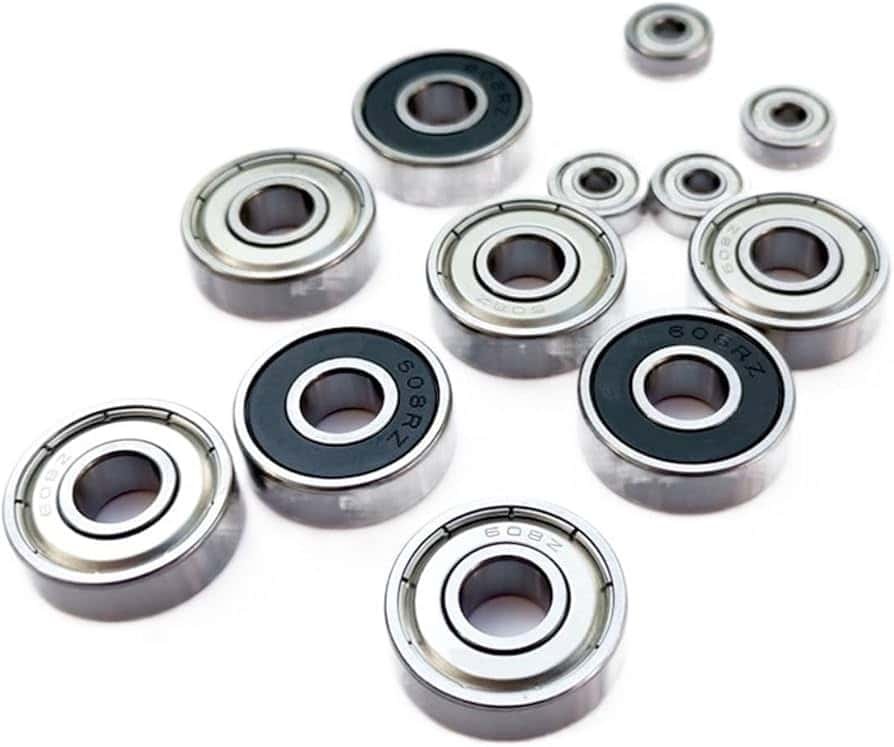
Standard skateboard bearings usually have a 608 size with a 22mm outer diameter, an 8mm core, and a 7mm width. This size fits all standard skateboard wheels.
Seals
Bearings come with either metal shields or rubber seals. Metal shields offer less friction but provide minimal protection against dirt and moisture, making them suitable for indoor or clean environments. Rubber seals offer better protection against contaminants but may increase friction slightly.
Pre-lubrication
Most bearings come pre-lubricated, which helps reduce friction and protect against wear from the outset. The type of lubricant can affect the speed and smoothness of the bearings.
Spacers and Washers
Using spacers between the bearings and washers on the axle nuts can help align the bearings correctly within the wheel, enhancing stability and performance.
Types of Skateboard Bearings
Skateboard bearings come in various types, each designed for different skating styles and environments. Understanding these types can help skateboarders and businesses choose the right bearings for their needs:
1. Steel Bearings
Construction: Typically made from high-grade chromium steel, these bearings consist of steel balls held within a steel race. They may feature different levels of hardening and heat treatment to enhance strength and durability.
Performance: Steel bearings are valued for their strength and durability. They are capable of handling significant loads and impacts, which are common in skateboarding.
Best Uses: Ideal for beginners and everyday skating where conditions vary. They can withstand rough surfaces and are less likely to deform under stress.
Limitations: The main drawback is susceptibility to rust and corrosion if exposed to water or humid conditions, which can degrade performance over time.
2. Ceramic Bearings
Construction: These bearings use ceramic balls, typically made from silicon nitride, within a steel race. The ceramic material is much harder than steel and provides a smoother surface.
Performance: Ceramic bearings are lighter and cause less friction than their steel counterparts. They are also impervious to oxidation and moisture, which prevents rusting and results in a longer lifespan.
Best Uses: Perfect for professional skateboarders and those seeking optimal performance. They excel in environments where precision and low friction are prioritized, such as in competitive racing or trick skating.
Limitations: The high cost is the primary barrier, making them an investment that might not be necessary for casual skating.
3. Titanium Bearings
Construction: These bearings integrate titanium, either in the coating or throughout the components, enhancing the durability and corrosion resistance of the steel used in standard bearings.
Performance: Titanium is lighter and stronger than steel, which helps to reduce the overall weight of the bearings while maintaining strength. They also resist wear and deformation under extreme conditions.
Best Uses: Suitable for skaters who prioritize durability and longevity in their equipment. They are particularly useful in outdoor skateboarding where exposure to elements is frequent.
Limitations: Like ceramic bearings, the cost of titanium bearings is significantly higher than traditional steel bearings.
4. Swiss Bearings
Construction: Swiss bearings are not necessarily made in Switzerland but adhere to Swiss precision standards, which include rigorous testing and quality control measures.
Performance: These bearings are known for their precision and efficiency. They maintain tight tolerances that ensure smooth rolling and high speeds.
Best Uses: They are favored by professional skateboarders and enthusiasts who require precise control and maximum speed.
Limitations: The high cost reflects their premium status and manufacturing standards, making them less accessible for casual skaters.
5. Hybrid Bearings
Construction: Combining ceramic balls with steel races, hybrid bearings aim to offer the best of both worlds.
Performance: The ceramic balls reduce friction and do not expand with heat, which improves speed and efficiency. The steel races add durability.
Best Uses: Ideal for those who want the performance benefits of ceramic without the full cost. They work well in both competitive and recreational settings.
Limitations: While cheaper than full ceramic bearings, they are still more expensive than pure steel options.
6. Miniature Bearings
Construction: Smaller than the standard 608 bearings, miniature bearings are designed for specific applications where smaller wheels or tighter spaces are involved.
Performance: They provide the necessary functionality for specialized skateboard setups but may not offer the same durability or load-bearing capacity as standard-sized bearings.
Best Uses: Best suited for special skateboarding equipment or smaller wheels where standard bearings do not fit.
Limitations: They are not as widely applicable or readily available as standard 608 bearings, and their specialized nature means they can be more difficult to replace.
How Long Do Skateboard Bearings Last?
The lifespan of skateboard bearings varies significantly based on usage, maintenance, and environmental conditions. Generally, bearings can last anywhere from a few months to several years. Regular cleaning and proper lubrication can extend their lifespan, while skating in wet or dirty conditions can drastically shorten it. The choice of bearing material, such as ceramic versus steel, also affects durability, with ceramic bearings typically offering greater longevity under optimal conditions.
Popular Skateboard Bearing List
| Item number | Dimension IDxODxW (mm) | Quality Level | Grease type |
|---|---|---|---|
| 608-2RS | 8x22x7 | ABEC-5 | Chevron SRI-2 |
| 608ZZ | 8x22x7 | ||
| 609-2RS | 9x24x7 | ||
| 609ZZ | 9x24x7 | ||
| 627-2RS | 7x22x7 | ||
| 627ZZ | 7x22x7 |
Conclusion
Whether you opt for steel, ceramic, or hybrid bearings, understanding their components and how they contribute to your skating performance is crucial. Maintenance, environment, and material choice all play a role in the lifespan and functionality of your bearings. For further guidance or to explore a comprehensive range of high-quality skateboard bearings tailored to your needs, reach out to BYWB Bearing—your trusted partner in all bearing solutions.
FAQ
1. Do all skateboards use the same bearings?
Each skateboard requires two bearings per wheel, so eight in total. It may all sound a bit complicated, but the great thing is that almost all skateboard bearings share a universal size – meaning they’ll fit on any skateboard wheel. Normally the popular one is 608 Bearing, Chrome steel and Ceramic for performance choices.
2. Are ABEC 7 bearings fast?
ABEC 7 high-quality bearings are fast spinning and long-lasting, suitable for all rolling sport disciplines. Wicked ABEC 7 FS bearings are renowned for their high quality and multi-purpose use, making them an excellent choice for various skating activities.
The ABEC scale and equivalent ISO 492 ratings are shown below:
- ABEC 1: ISO Class 6X
- ABEC 3: ISO Class 6
- ABEC 5: ISO Class 5
- ABEC 7: ISO Class 4
- ABEC 9: ISO Class 2
For example, on an ABEC 1 bearing with an outside diameter of less than 2 inches, the width of the outer ring can deviate within -0.0050 inches. However, for an ABEC 7 bearing of the same diameter, the width of the outer ring can deviate no more than -0.001 inches.
3.When To Replace or Repair Skateboard Bearings ?
No one likes taking a spill, so knowing when to replace your bearings and how to keep them fully functional is crucial. Some of the key signs to look out for include difficulty in pushing, wheels that don’t continue to spin or that make squeaky noises.
If you’re experiencing any of the above, give your bearings a clean and relube them – if they still aren’t spinning after that, it’s definitely time for new bearings.
You should also replace your bearings if they’re missing any balls or shields. Bearings can also “blow out”, where the retainers break and balls scatter – another good sign that bearings are ready to be replaced.
