
Miniature ball bearings play a critical role in modern precision equipment where compact size, high rotational speed, and low friction are required. Among them, the 685 bearing is one of the most widely used miniature deep groove ball bearings, featuring a compact dimension of 5mm × 11mm × 3mm.
Whether used in high-speed drones, fishing reels, RC models, small electric motors, robotics, or precision instruments, the 685 bearing provides reliable performance while occupying minimal space.
In this article, we will explore the technical specifications of the 685 bearing, compare sealing options, discuss how to choose the right version, and examine its most common applications.
What Is a 685 Bearing?
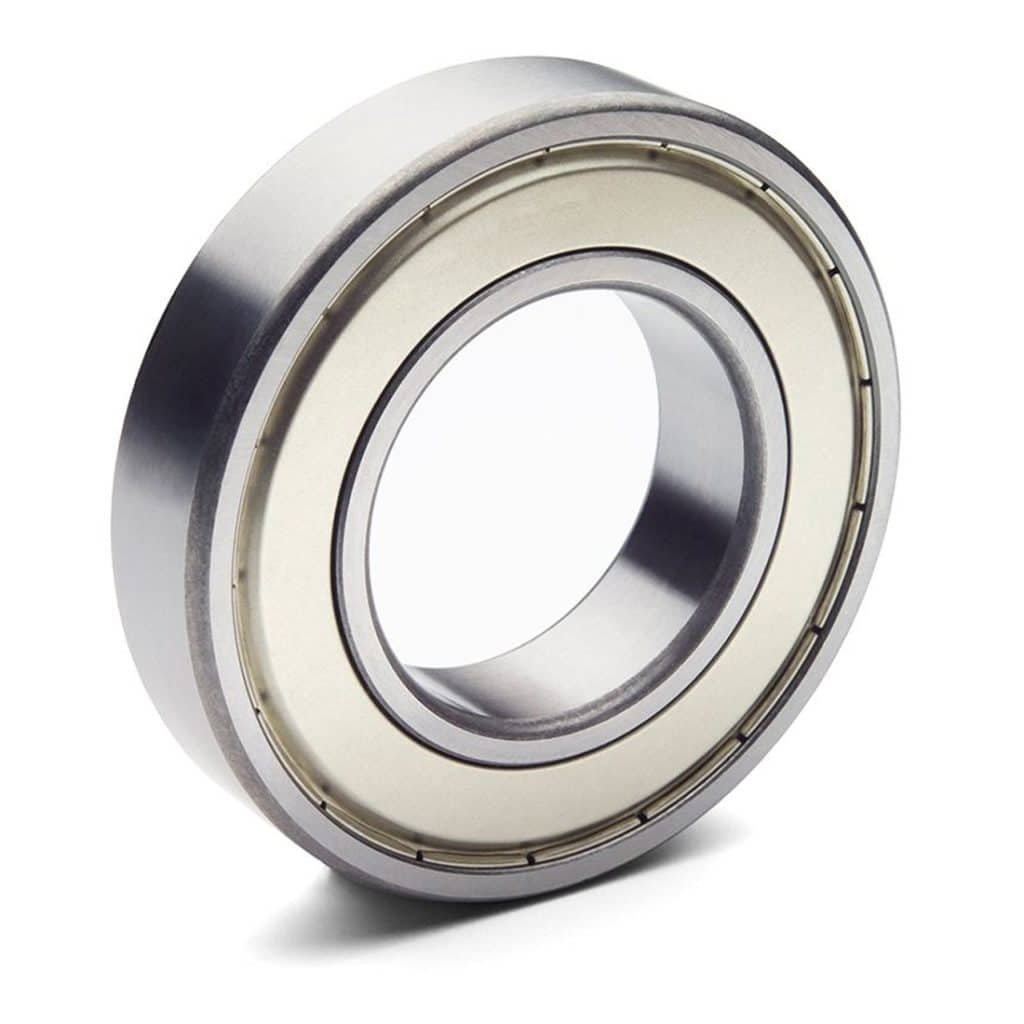
The 685 bearing is a miniature single-row deep groove ball bearing designed primarily for radial loads while also accommodating moderate axial loads in both directions.
Due to its small size and low friction design, it is commonly selected for applications requiring:
High rotational speed
Compact installation space
Lightweight construction
Low operating noise
Smooth rotation
The bearing is available in several configurations, including:
685 (Open Type)
685Z (Single Metal Shield)
685ZZ (Double Metal Shield)
685RS (Single Rubber Seal)
685-2RS (Double Rubber Seal)
685 Bearing Technical Specifications
The standard dimensions of the 685 bearing are:
Parameter Value
Bearing Series 685
Bearing Type Miniature Deep Groove Ball Bearing
Bore Diameter (d) 5 mm
Outer Diameter (D) 11 mm
Width (B) 3 mm
Dynamic Load Rating (C) Approx. 0.55 – 0.73 kN
Static Load Rating (C0) Approx. 0.25 – 0.30 kN
Maximum Speed (Grease) Up to 45,000 rpm
Material Chrome Steel GCr15 / Stainless Steel
Precision Grade ABEC-1, ABEC-3, ABEC-5, ABEC-7
Weight Approximately 1.1 g
The compact design allows the 685 bearing to operate efficiently in applications where larger bearings would add unnecessary weight and space.
685ZZ Bearing Dimensions
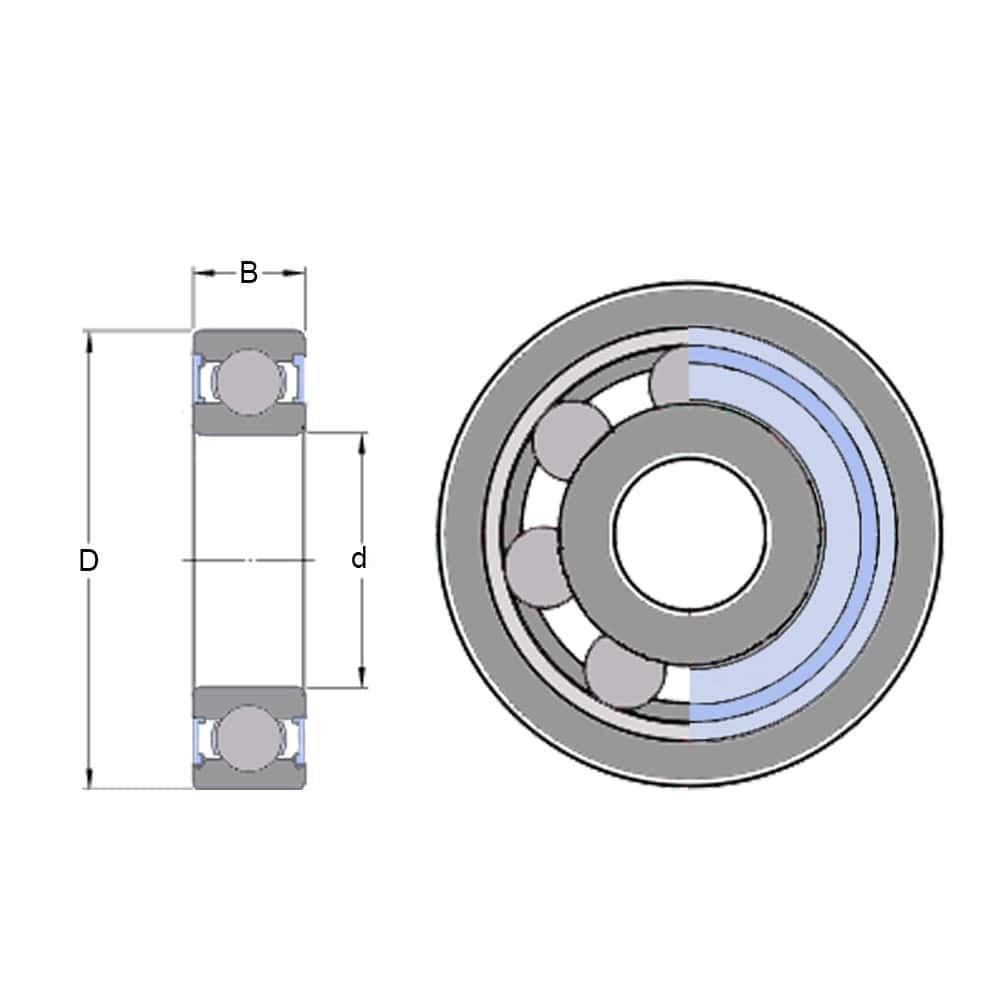
One of the most frequently searched questions is:
What are the dimensions of a 685ZZ bearing?
The dimensions of a standard 685ZZ bearing are:
Dimension Size
Inner Diameter (ID) 5 mm
Outer Diameter (OD) 11 mm
Width 3 mm
In bearing notation:
685ZZ = 5 × 11 × 3 mm
The suffix “ZZ” indicates that the bearing is equipped with metal shields on both sides, protecting the raceways from dust and debris while maintaining low friction and high speed capability.
Sealing Solutions for 685 Bearings
Selecting the correct sealing configuration is critical for bearing life and performance.
1. Open 685 Bearing
Structure
No seals or shields.
Advantages
Lowest rotational resistance
Highest speed capability
Easy relubrication
Lower cost
Disadvantages
Vulnerable to contamination
Requires regular maintenance
Best For
Laboratory equipment
Precision instruments
Clean indoor environments
High-speed drone racing applications
2. 685ZZ Bearing (Double Metal Shield)
Structure
Metal shields are installed on both sides of the bearing.
Advantages
Excellent speed performance
Reduced friction
Maintenance-free operation
Better dust protection than open bearings
Disadvantages
Not waterproof
Fine dust may eventually penetrate
Best For
Drones
Brushless motors
RC vehicles
Cooling fans
Robotics
The 685ZZ is the most commonly used version because it balances speed, durability, and protection.
3. 685-2RS Bearing (Double Rubber Seal)
Structure
Rubber seals contact the inner ring on both sides.
Advantages
Superior contamination protection
Excellent moisture resistance
Longer service life in harsh environments
Disadvantages
Higher friction
Lower maximum speed
Best For
Fishing reels
Marine equipment
Outdoor electronics
Humid environments
How to Choose the Right 685 Bearing Seal Type
Choosing the correct seal depends on your application environment.
Choose Open 685 Bearing If:
✓ Maximum speed is required
✓ Equipment operates in a clean environment
✓ Regular maintenance is acceptable
Choose 685ZZ Bearing If:
✓ High rotational speed is important
✓ Light dust protection is needed
✓ Long maintenance intervals are preferred
✓ Used in drones and RC equipment
Choose 685-2RS Bearing If:
✓ Water exposure is expected
✓ Dust contamination is severe
✓ Outdoor operation is common
✓ Maximum bearing life is desired
What Is the 685ZZ Bearing Used For?
Because of its lightweight design and low friction characteristics, the 685ZZ bearing is widely used in miniature mechanical systems.
Typical applications include:
Drones
Fishing Reels
RC Cars
Brushless Motors
Robotics
Medical Devices
Precision Instruments
Small Gearboxes
3D Printers
Optical Equipment
Among these industries, drones and fishing reels represent two of the fastest-growing applications.
685ZZ Bearings for Drones
Modern drones require components that are:
Lightweight
High-speed capable
Reliable
Low friction
The 685ZZ bearing meets all these requirements.
Common Drone Applications
Brushless Motor Assemblies
Drone motors often rotate at tens of thousands of RPM. The low-friction metal-shielded design of the 685ZZ allows smooth operation while minimizing power loss.
Gimbal Stabilization Systems
Precision camera gimbals rely on miniature bearings to provide smooth movement and accurate positioning. Hobbyists and DIY gimbal builders frequently use 685ZZ bearings in compact gimbal mechanisms.
FPV Racing Drones
Weight reduction is critical in FPV racing. The compact 5×11×3 mm design helps reduce overall mass while maintaining high rotational precision.
Why Drone Manufacturers Prefer 685ZZ
High RPM capability
Low operating noise
Excellent rotational accuracy
Lightweight construction
Maintenance-free design
685 Bearings in Fishing Reels
Fishing reels contain multiple miniature bearings that directly influence casting smoothness and retrieval performance.
Many baitcasting and spinning reels utilize bearings in the 5×11×3 mm size range, making the 685 bearing a popular replacement option. Users often upgrade factory bearings to improve casting distance and reduce startup resistance.
Typical Fishing Reel Applications
Spool Bearings
The spool requires extremely smooth rotation for longer casting distance.
Handle Knob Bearings
Miniature bearings improve handle feel and reduce resistance.
Line Roller Bearings
Help reduce line twist and improve retrieval smoothness.
Recommended Bearing Type for Fishing Reels
Environment Recommended Bearing
Freshwater Fishing 685ZZ
Saltwater Fishing Stainless Steel 685-2RS
BFS Reels ABEC-5 685ZZ
Tournament Casting Ceramic Hybrid 685
For saltwater applications, stainless steel or ceramic hybrid versions provide superior corrosion resistance.
Materials Available for 685 Bearings
Chrome Steel (GCr15)
The most common material.
Benefits:
High hardness
Excellent load capacity
Cost-effective
Stainless Steel
Benefits:
Corrosion resistant
Suitable for marine environments
Ideal for fishing equipment
Hybrid Ceramic
Benefits:
Higher speed capability
Lower friction
Reduced heat generation
Longer service life
Often used in premium fishing reels and racing drones.
Why Choose BYWB 685 Bearings?
BYWB Bearing supplies high-quality miniature bearings manufactured to strict quality standards.
Features include:
Premium GCr15 chrome steel
Stainless steel options available
Low-noise performance
High-speed capability
Precision ABEC grades
Open, ZZ, and 2RS configurations
Custom packaging solutions
OEM and wholesale support
Whether you are producing drones, fishing reels, RC products, or precision instruments, BYWB can provide reliable miniature bearing solutions tailored to your application.
Conclusion
The 685 bearing (5mm × 11mm × 3mm) is one of the most versatile miniature deep groove ball bearings available today. Its compact design, low friction characteristics, and high-speed performance make it an excellent choice for drones, fishing reels, robotics, precision instruments, and small electric motors.
For most high-speed applications, the 685ZZ bearing remains the preferred option because it offers the ideal balance between protection and rotational efficiency. For wet or contaminated environments, the 685-2RS bearing provides superior sealing and longer service life.
By selecting the proper sealing solution and material configuration, users can maximize bearing performance, extend equipment life, and improve overall system reliability.
