
Bearings are essential components in machinery, vehicles, and industrial equipment. In environments where moisture, chemicals, or corrosion are present, traditional carbon steel bearings may fail quickly. To solve this problem, stainless steel bearings are widely used because of their excellent corrosion resistance and durability.
Stainless steel bearings provide reliable performance in harsh environments such as food processing, marine equipment, and medical devices. Compared with standard bearings, they offer better protection against rust while maintaining smooth rotation and long service life.
In this complete guide, we will explore:
What a stainless steel bearing is
Differences between 304 and 440 stainless steel bearings
Types of stainless steel bearings
Ceramic bearings vs stainless steel bearings
Common applications of stainless steel bearings
Understanding these factors will help you select the right bearing for your application.
What Is a Stainless Steel Bearing?
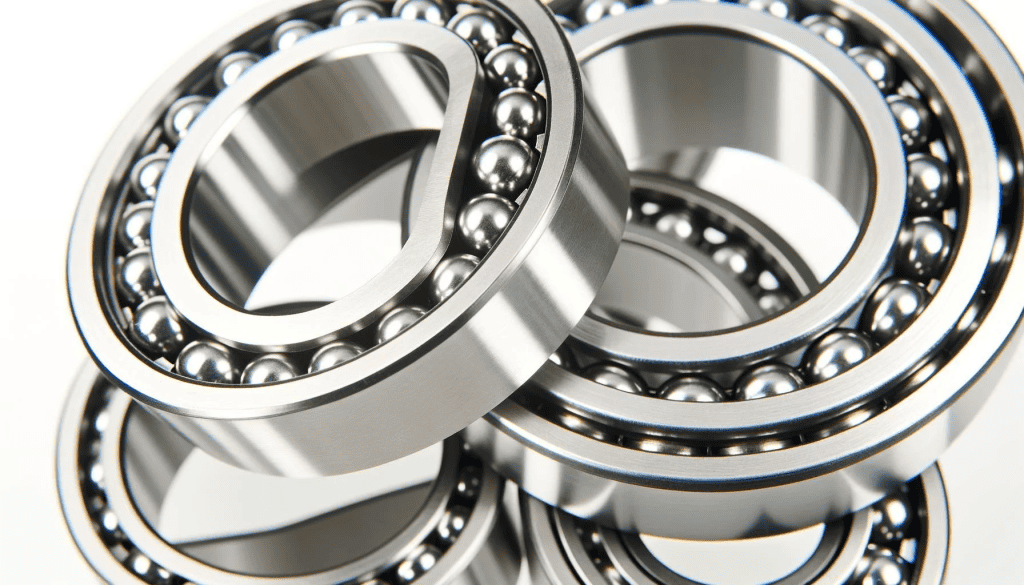
A stainless steel bearing is a rolling-element bearing manufactured using stainless steel materials for its rings, balls, or cages. These bearings are specifically designed to resist corrosion and operate reliably in wet or chemically aggressive environments.
Stainless steel contains chromium, which forms a thin protective oxide layer on the surface. This layer prevents rust and protects the material from corrosion. Stainless steel is typically defined as steel containing at least 10.5% chromium, which enables this protective passivation layer.
Because of this corrosion resistance, stainless steel bearings are widely used in industries where standard steel bearings may fail due to rust.
Key Advantages of Stainless Steel Bearings
Excellent corrosion resistance
High resistance to moisture and chemicals
Good durability in harsh environments
Hygienic material suitable for food and medical applications
Low maintenance requirements
Although stainless steel bearings may have slightly lower load capacity than chrome steel bearings, they perform significantly better in corrosive environments.
304 vs 440 Stainless Steel Bearing: Which Is Better?
Two of the most common materials used for stainless steel bearings are AISI 304 and AISI 440 stainless steel. Each material offers different mechanical and corrosion properties.
Understanding their differences helps determine which material is better for specific applications.
304 Stainless Steel Bearings
304 stainless steel is an austenitic stainless steel known for excellent corrosion resistance and good formability.
Key Characteristics
High resistance to corrosion and oxidation
Non-magnetic in most conditions
Good ductility and toughness
Cannot be hardened by heat treatment
304 stainless steel typically contains about 18% chromium and 8% nickel, which gives it strong resistance to corrosion and chemical exposure.
Advantages
Superior corrosion resistance
Ideal for humid or chemical environments
Good hygiene properties for food processing
Limitations
Lower hardness
Lower wear resistance
Not suitable for heavy load applications
Because of these properties, 304 stainless steel bearings are commonly used in food processing equipment, pharmaceutical machinery, and chemical processing systems.
440 Stainless Steel Bearings
440 stainless steel, especially 440C, is a martensitic stainless steel widely used in precision bearings.
Key Characteristics
High carbon content
Can be hardened through heat treatment
Extremely high hardness and wear resistance
After heat treatment, 440C stainless steel can reach a hardness of about 58–60 HRC, making it suitable for demanding bearing applications.
Advantages
Excellent wear resistance
High strength and hardness
Suitable for high load conditions
Limitations
Lower corrosion resistance compared with 304
Slightly more brittle due to higher carbon content
Comparison: 304 vs 440 Stainless Steel Bearings
| Property | 304 Stainless Steel | 440 Stainless Steel |
| Corrosion resistance | Excellent | Good |
| Hardness | Low | Very high |
| Wear resistance | Moderate | Excellent |
| Load capacity | Lower | Higher |
| Heat treatment | Not possible | Possible |
In general:
304 stainless steel is better for corrosion resistance.
440 stainless steel is better for strength, wear resistance, and load capacity.
Most stainless steel ball bearings used in industry are made from 440C stainless steel because it provides the best balance of hardness and corrosion resistance.
Types of Stainless Steel Bearings
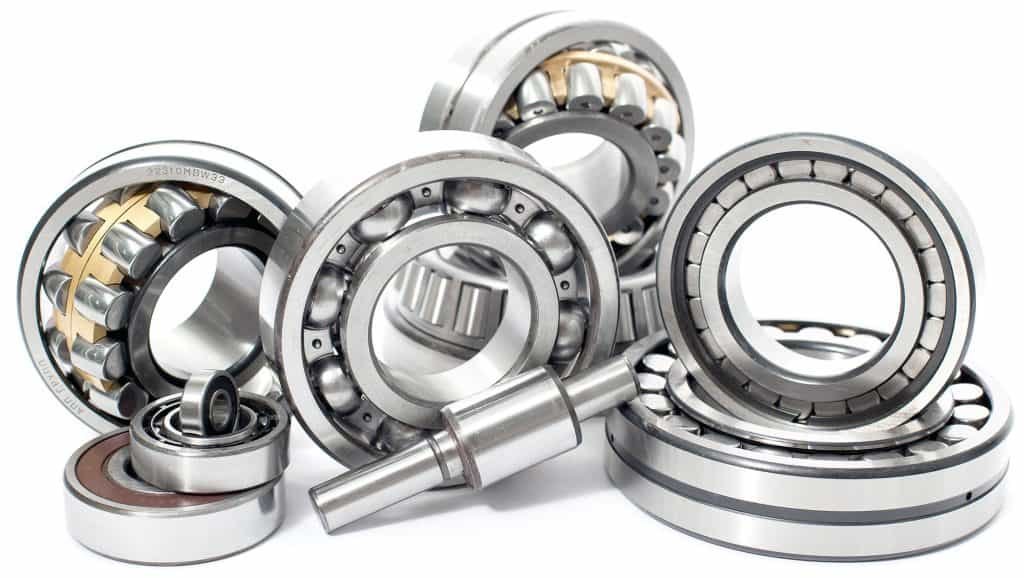
Stainless steel bearings come in several designs depending on the application.
1. Stainless Steel Deep Groove Ball Bearings
Deep groove ball bearings are the most common type.
Features:
High rotational speed capability
Low friction
Simple structure
Easy installation
They are widely used in motors, pumps, and conveyor systems.
2. Stainless Steel Angular Contact Bearings
Angular contact bearings are designed to handle combined radial and axial loads.
They are commonly used in:
High-speed machinery
Machine tools
Precision equipment
3. Stainless Steel Insert Bearings
Insert bearings are mounted into housing units and are commonly used in:
Agricultural machinery
Food processing equipment
Conveyor systems
4. Stainless Steel Thrust Bearings
Thrust bearings are designed to support axial loads only.
Applications include:
Vertical shafts
Turntables
Industrial machinery
5. Stainless Steel Miniature Bearings
Miniature bearings are small precision bearings used in:
Medical devices
robotics
precision instruments
drones and small motors
These bearings require extremely high precision and corrosion resistance.
Ceramic Bearings vs Stainless Steel Bearings
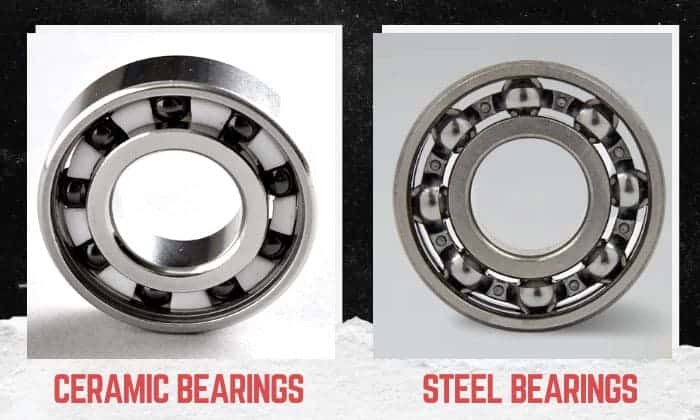
Ceramic bearings are another popular alternative to stainless steel bearings. Both types offer advantages depending on the application.
Ceramic Bearings
Ceramic bearings typically use silicon nitride (Si3N4) balls with steel or ceramic races.
Advantages
Extremely low friction
Lightweight
High temperature resistance
Very high speed capability
Limitations
Expensive
More brittle than steel
Not always necessary for standard applications
Stainless Steel Bearings
Advantages
Excellent corrosion resistance
Strong mechanical properties
Lower cost compared with ceramic bearings
Suitable for wet environments
Limitations
Slightly heavier
Lower speed capability than ceramic bearings
Comparison Table
| Feature | Stainless Steel Bearings | Ceramic Bearings |
| Corrosion resistance | Excellent | Excellent |
| Speed capability | High | Very high |
| Cost | Moderate | High |
| Durability | Strong | Brittle under impact |
| Maintenance | Low | Low |
For most industrial and automotive applications, stainless steel bearings provide the best balance of performance and cost.
Ceramic bearings are typically used in high-speed, high-performance equipment such as racing components and aerospace systems.
What Are Stainless Steel Bearings Used For?
Because of their corrosion resistance, stainless steel bearings are widely used in many industries.
Food Processing Industry
Food processing equipment requires hygienic materials that resist corrosion and contamination.
Applications include:
Conveyor systems
mixers
packaging machines
Medical and Pharmaceutical Equipment
Medical equipment often requires clean, corrosion-resistant materials.
Common uses include:
surgical instruments
laboratory equipment
pharmaceutical machinery
Marine Equipment
Marine environments expose bearings to saltwater and humidity.
Stainless steel bearings are commonly used in:
boat components
marine pumps
navigation equipment
Chemical Processing Industry
Chemical plants require materials resistant to corrosion and chemicals.
Applications include:
pumps
mixers
valves
chemical handling equipment
Automotive and Motorcycle Components
Some automotive components use stainless steel bearings for improved durability in harsh conditions.
Examples include:
water pumps
sensors
specialty wheel bearings
How to Choose the Right Stainless Steel Bearing
When selecting a stainless steel bearing, consider the following factors:
1. Operating Environment
If corrosion resistance is critical, choose 304 stainless steel bearings.
2. Load Requirements
For higher loads, 440 stainless steel bearings are the better choice.
3. Rotational Speed
High-speed applications may require specialized designs or ceramic hybrid bearings.
4. Temperature Conditions
High temperatures may require materials with better thermal stability.
5. Maintenance Requirements
Sealed stainless steel bearings reduce maintenance and increase service life.
Choosing the correct bearing material ensures reliable performance and longer equipment lifespan.
Conclusion
Stainless steel bearings are an essential solution for applications where corrosion resistance and durability are critical. Compared with traditional steel bearings, they offer superior resistance to moisture, chemicals, and harsh environments.
Among stainless steel materials, 304 stainless steel provides excellent corrosion resistance, while 440 stainless steel offers higher hardness and wear resistance. The best choice depends on the specific operating conditions.
In addition, stainless steel bearings compete with ceramic bearings in many industries. While ceramic bearings provide higher speed performance, stainless steel bearings remain the most cost-effective and reliable option for many industrial applications.
At BYWB Bearing, we provide high-quality stainless steel bearings designed for demanding environments, including food processing, medical equipment, marine systems, and industrial machinery.
Selecting the right stainless steel bearing ensures longer service life, improved reliability, and reduced maintenance costs.
