
Bearings are critical components in machines, vehicles, and industrial equipment. They allow rotating parts to move smoothly while minimizing friction and supporting loads. However, even the highest-quality bearing can fail quickly if contaminants enter or lubrication escapes.
This is where bearing seals play a vital role.
Bearing seals protect the internal components of bearings by preventing dirt, dust, water, and other contaminants from entering while keeping lubricants inside. Without proper sealing, bearings can wear out prematurely, leading to equipment failure and costly maintenance.
In this complete guide, we will explore:
What a bearing seal is
Common materials used in bearing seals
Types of bearing seals
How to remove a bearing seal safely
Key considerations when selecting a seal
Whether you work in automotive, industrial machinery, or equipment maintenance, understanding bearing seals will help you improve reliability and extend bearing life.
What Is a Bearing Seal?

A bearing seal is a protective barrier installed between the rotating bearing components and the external environment. Its main purpose is to retain lubrication inside the bearing while preventing contaminants from entering.
Bearings operate under demanding conditions. Dust, moisture, chemicals, and debris can quickly damage rolling elements and raceways. Bearing seals ensure that the internal lubrication remains clean and effective, allowing the bearing to operate efficiently for a longer time.
Main Functions of Bearing Seals
1. Lubrication retention
Seals keep grease or oil inside the bearing, ensuring proper lubrication and reducing friction.
2. Contamination protection
They block contaminants such as dust, dirt, and water from entering the bearing system.
3. Extended service life
By maintaining lubrication and preventing contamination, seals significantly increase bearing lifespan.
4. Reduced maintenance
Proper sealing reduces the need for frequent re-lubrication or replacement.
5. Improved equipment reliability
Well-sealed bearings help avoid unexpected machine failures and downtime.
In simple terms, a bearing seal acts as the first line of defense for bearing performance and durability.
Materials of Bearing Seals

The performance of a bearing seal depends heavily on its material. Different materials offer varying levels of resistance to heat, chemicals, friction, and environmental exposure.
Below are the most commonly used materials for bearing seals.
1. Nitrile Rubber (NBR)
Nitrile rubber (NBR) is the most widely used material for bearing seals.
Key Features
Excellent resistance to oils and greases
Good mechanical strength
Cost-effective
Operating temperature range: –40°C to 100°C
Because of its durability and oil resistance, NBR seals are commonly used in:
Automotive bearings
Electric motors
Industrial machinery
2. Fluoroelastomer (FKM / Viton)
FKM, commonly known as Viton, is used in high-performance applications.
Advantages
Excellent resistance to chemicals and oils
High temperature tolerance
Long service life
Typical Applications
Automotive engines
Chemical processing equipment
Aerospace machinery
Viton seals can withstand temperatures up to 230°C, making them suitable for extreme environments.
3. Silicone Rubber (VMQ)
Silicone seals are known for their excellent temperature stability.
Benefits
Wide temperature range
Good flexibility at low temperatures
Resistant to weather and ozone
However, silicone has lower mechanical strength compared with other elastomers, so it is usually used in low-load applications.
4. PTFE (Polytetrafluoroethylene)
PTFE, commonly known as Teflon, is a high-performance sealing material.
Key Characteristics
Extremely low friction
Excellent chemical resistance
High temperature tolerance
PTFE seals are widely used in high-speed and chemically aggressive environments.
5. Metal Reinforced Seals
Many bearing seals combine elastomer materials with steel reinforcement.
The metal case provides:
Structural strength
Better installation stability
Improved durability in heavy-duty applications
Types of Bearing Seals
Bearing seals come in many designs depending on operating speed, contamination risk, and lubrication requirements.
The most common types include the following.
1. Contact Seals
Contact seals physically touch the bearing’s inner ring or shaft.
Features
Strong protection against contamination
Excellent lubricant retention
Higher friction compared with non-contact seals
A typical example is the rubber lip seal, which presses against the rotating surface to create a tight barrier.
Typical Applications
Electric motors
Agricultural equipment
These seals are often identified by the RS or 2RS designation in bearing part numbers.
2. Non-Contact Seals
Non-contact seals do not touch the rotating parts.
Instead, they create a narrow gap that blocks contaminants while minimizing friction.
Advantages
Very low friction
Suitable for high-speed applications
Reduced heat generation
Examples
Clearance seals
Labyrinth seals
These are commonly used in:
High-speed fans
Turbines
Precision machinery
3. Metal Shield Seals
Metal shields are thin steel covers installed on the bearing side.
They provide basic protection against dust and debris, but they do not form a tight seal.
Characteristics
Non-contact design
Low friction
Limited protection against water or fine contaminants
Bearings with shields often use the Z or ZZ designation.
4. Labyrinth Seals
Labyrinth seals use a complex path or channel that contaminants cannot easily pass through.
Benefits
No physical contact
Minimal wear
Excellent for high-speed operations
They are commonly used in:
Heavy industrial machinery
Mining equipment
Large electric motors
5. Magnetic Seals
Magnetic seals use magnetic fields to attract and trap metal particles.
These seals are especially useful in environments where metal debris is common, such as metalworking equipment.
How to Remove a Bearing Seal
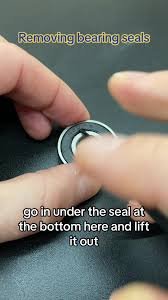
Removing a bearing seal must be done carefully to avoid damaging the bearing components.
Below is a step-by-step guide.
Step 1: Prepare the Tools
Common tools used for seal removal include:
Small flat screwdriver
Seal pick tool
Needle-nose pliers
Clean cloth
Step 2: Clean the Bearing Surface
Before removing the seal, clean the surrounding area to prevent dirt from entering the bearing.
Step 3: Insert the Tool Under the Seal Edge
Carefully insert a small screwdriver or seal pick under the outer edge of the seal.
Avoid pushing too deep, as this could damage the bearing cage or balls.
Step 4: Gently Pry the Seal
Apply light pressure and slowly lift the seal from its seat.
Work evenly around the circumference to prevent bending or distortion.
Step 5: Remove the Seal
Once the seal loosens, you can remove it using pliers or by hand.
After removal, inspect:
Seal condition
Grease contamination
Bearing raceway condition
Important Tips
Do not reuse damaged seals
Avoid scratching the bearing surface
Work slowly and carefully
In many cases, sealed bearings are designed to be maintenance-free, so removing the seal may void manufacturer recommendations.
Applications of Bearing Seals
Bearing seals are used across many industries.
Automotive Industry
Wheel bearings
Water pump bearings
Transmission systems
Industrial Machinery
Electric motors
Gearboxes
Conveyor systems
Household Appliances
Washing machines
Dryers
Fans
Aerospace and Precision Equipment
High-speed rotating systems
Turbines
Precision machinery
Proper sealing ensures reliable operation in all these applications.
How to Choose the Right Bearing Seal
Selecting the correct seal requires consideration of several factors.
1. Operating Environment
Dusty environments require strong sealing.
Wet environments require water-resistant materials.
2. Rotational Speed
High-speed bearings benefit from non-contact seals to reduce friction.
3. Temperature
High temperatures require materials like Viton or PTFE.
4. Lubrication Type
Grease-filled bearings often use rubber seals, while oil-lubricated systems may use specialized seals.
5. Maintenance Requirements
Some applications prefer sealed-for-life bearings, which eliminate re-lubrication.
Conclusion
Bearing seals may seem like small components, but they play a crucial role in the performance and longevity of bearings.
A well-designed seal prevents contamination, retains lubrication, and protects bearings from harsh operating conditions. Without proper sealing, even high-quality bearings can fail prematurely.
Understanding the types, materials, and functions of bearing seals helps engineers, technicians, and maintenance professionals select the right sealing solution for their applications.
At BYWB Bearing, we provide high-quality sealed bearings and precision bearing components for automotive and industrial applications. By choosing the correct bearing seal design and material, you can ensure reliable performance, reduce maintenance costs, and extend equipment lifespan.
FAQ Section
What is the purpose of a bearing seal?
A bearing seal prevents contaminants such as dust, dirt, and moisture from entering the bearing while keeping lubricants like grease or oil inside. This helps reduce friction, extend bearing life, and improve machine reliability.
What materials are used for bearing seals?
Common bearing seal materials include:
Nitrile rubber (NBR)
Fluoroelastomer (FKM / Viton)
Silicone rubber
PTFE (Teflon)
Metal reinforced elastomer seals
Each material offers different levels of resistance to heat, chemicals, and wear.
What are the different types of bearing seals?
The most common types of bearing seals include:
Contact seals (rubber seals)
Non-contact seals
Metal shield seals
Labyrinth seals
Magnetic seals
Each design provides different levels of protection, friction, and speed capability.
What is the difference between sealed and shielded bearings?
Sealed bearings use rubber seals that make contact with the inner ring to provide strong protection against contaminants.
Shielded bearings use metal shields that do not touch the rotating parts, resulting in lower friction but less protection.
Can you remove a bearing seal?
Yes, a bearing seal can be removed using a small screwdriver or seal pick tool. The tool is gently inserted under the seal edge and the seal is carefully lifted out.
However, sealed bearings are often designed to be maintenance-free, so removing the seal may not always be recommended.
