
In industrial machinery, choosing the right rolling-element bearing can make the difference between optimal performance and premature failure. This article compares two of the most widely used heavy-duty bearing types—tapered roller bearings and spherical roller bearings—examining their design principles, load-handling characteristics, speed capabilities, maintenance requirements, and ideal applications. You will learn how tapered roller bearings excel in precision and combined radial-axial loads, while spherical roller bearings offer robust self-alignment and superior radial capacity under misaligned conditions. By understanding these distinctions and exploring real-world use cases, you’ll be equipped to select the best solution for your equipment, enhance uptime, and extend service life.
Introduction

Bearings are at the heart of virtually every rotating or oscillating machine, from automotive wheel hubs to heavy mining equipment. Among rolling-element bearings, tapered roller bearings and spherical roller bearings stand out for their ability to handle demanding load conditions. While both leverage line contact between rollers and raceways for high load capacity, their geometries and performance trade-offs differ significantly.
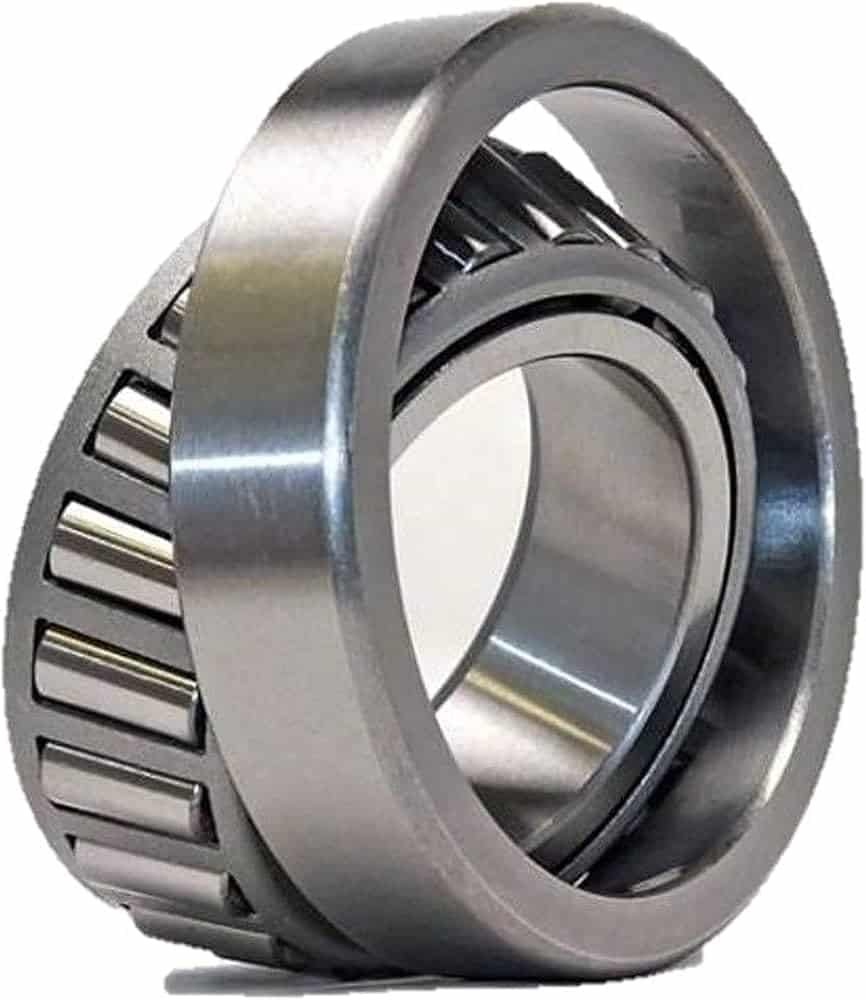
Tapered roller bearings feature conical rollers and raceways that converge at a single point, enabling them to support large combined radial and axial loads with exceptional rigidity and precision.
Spherical roller bearings utilize double‐row, barrel-shaped rollers and a spherical outer raceway, granting them self-aligning capability and the resilience to handle heavy radial loads even under shaft deflection or mounting errors.
This article dives into the engineering behind each bearing type, compares their strengths and limitations, and offers guidance on selecting the right bearing for your application.
Fundamentals of Roller Bearings
Roller bearings replace balls with cylinder-shaped or tapered rolling elements, creating line contact with the raceways. Compared to ball bearings, this larger contact area translates to higher radial load capacity and greater stiffness. However, roller bearings can exhibit higher friction and more complex mounting requirements. The principal roller bearing categories include:
Cylindrical roller bearings (straight rollers, high radial load capacity)
Needle roller bearings (slim profile, low radial clearance)
Tapered roller bearings (conical rollers, combined load handling)
Spherical roller bearings (barrel rollers, self-aligning)
Understanding the interplay between geometry, load direction, and alignment lays the foundation for selecting the optimal bearing type.
What is a tapered roller bearing?
Design and Construction
A tapered roller bearing comprises four main components:
Inner ring (cone) with a conical raceway
Outer ring (cup) featuring a matching conical raceway
Tapered rollers that run between the cone and cup
Cage to maintain roller spacing
All conical surfaces share a common apex when projected along the bearing axis, ensuring pure rolling contact along a line rather than point contact. The angle of the cones determines the balance between radial stiffness and axial load capacity.
Key Benefits
High Combined Load Capacity
The conical geometry generates a large contact area, enabling these bearings to support significant radial and thrust loads simultaneously.
Precision and Rigidity
Minimal deflection under load makes tapered bearings ideal for applications demanding tight shaft positioning, such as automotive wheel hubs and precision gearboxes.
Adjustable Preload and Clearance
During assembly, internal clearance (endplay) or preload can be fine-tuned to optimize stiffness, reduce vibration, and minimize deflection.
Thrust Resistance
With steeper cone angles, tapered bearings excel at resisting axial loads, making them the choice for steering knuckles, differentials, and heavy gear drives.
What are the disadvantages of tapered roller bearings?
Alignment Sensitivity
Even slight misalignment can cause uneven roller loading, increased wear, and reduced service life. Installation requires precise axial positioning and careful handling.
Speed Constraints
The sliding component inherent in line contact and axial load generates heat at high rpm, limiting maximum speed compared to deep-groove ball bearings or angular-contact designs.
Complex Mounting
Achieving the correct preload demands specialized tools and skilled technicians, adding time and cost to installation and maintenance.
Weight and Cost
The robust construction and precision machining incur higher material and manufacturing costs, as well as increased mass.
What is a Spherical Roller Bearings

Design and Construction
A spherical roller bearing features two rows of symmetrical barrel-shaped rollers running on a common spherical outer raceway. The inner ring carries two raceways inclined to the bearing axis, while the outer ring’s spherical raceway permits the inner assembly to pivot. This self-aligning feature accommodates shaft deflection and mounting errors.
Key Benefits
Self-Alignment
Up to several degrees of angular misalignment can be tolerated without edge loading or undue stress, making spherical bearings ideal for equipment subject to shaft bending or foundation settling.
High Radial Load Capacity
The barrel rollers distribute heavy radial loads evenly, delivering exceptional performance in mining, construction, and material-handling machinery.
Moderate Axial Load Support
While primarily designed for radial loads, these bearings can handle thrust in both directions due to the roller geometry.
Robustness and Shock Resistance
Heavy-duty cage and ring materials enable operation in contaminated, shock-prone, or vibration-intense environments, extending maintenance intervals.
What are the disadvantages of spherical roller bearing?
Speed Limitations
Increased sliding at the roller ends leads to higher friction and heat generation at elevated speeds, making spherical bearings less suitable for high-rpm applications.
Size and Weight
The two-row design and self-aligning capability result in larger dimensions and greater mass, which may be prohibitive in compact or weight-sensitive systems.
Higher Friction
Greater internal sliding action compared to tapered bearings can lead to energy losses in continuous operation.
Cost
Complex machining and more material contribute to higher purchase and replacement costs.
What is the difference between spherical roller bearing and taper roller bearing?
| Feature | Tapered Roller Bearing | Spherical Roller Bearing |
| Load Direction | Combined radial + axial (one direction) | Primarily radial; moderate axial (both directions) |
| Alignment Tolerance | Very low—requires precise alignment | High—self-aligning up to several degrees |
| Rigidity & Precision | Excellent rigidity, minimal deflection | Moderate rigidity, forgiving misalignment |
| Speed Capability | Moderate to high (limited by heat) | Moderate (limited by friction) |
| Friction & Heat Generation | Lower friction under proper preload | Higher friction, especially at ends of rollers |
| Installation Complexity | High—requires skilled setup | Moderate—easier to mount, self-aligning |
| Typical Applications | Automotive hubs, gearboxes, differentials | Crushers, conveyors, mixers, turbines |
| Cost & Weight | Higher precision cost; moderate weight | Higher material cost; heavier design |
Application Guide
When to Choose Tapered Roller Bearings
Automotive Wheel Hubs & Differentials
Precise handling of combined radial and thrust loads under high speed and variable conditions.
Gearboxes & Transmissions
Tight preload control reduces backlash and improves gear mesh precision.
Machine Tool Spindles
High rigidity and low deflection maintain tight tolerances.
Steering & Suspension Systems
Elevated axial load support ensures smooth steering response and stability.
When to Choose Spherical Roller Bearings
Mining & Quarry Equipment
Vibrating screens, jaw crushers, and conveyors benefit from misalignment tolerance and shock absorption.
Heavy-Duty Industrial Drives
Paper machines, steel mills, and large electric motors where shaft deflection occurs under load.
Wind Turbine Main Shafts
Variable wind loads cause bending and misalignment that spherical bearings can absorb.
Marine & Off-shore Applications
Hull flexing and mounting irregularities demand bearings that self-align without performance loss.
Maintenance and Lifecycle Considerations
Regardless of type, proper lubrication, contamination control, and periodic inspection are vital to maximize bearing life:
Lubrication: Use grease or oil with the manufacturer’s recommended viscosity and additives. Monitor for degradation, contamination, and sufficiency.
Sealing: Protect against dust, moisture, and ingress of abrasive particles. Replace seals that show wear or leakage.
Alignment Checks: For tapered bearings, verify axial endplay and preload during scheduled maintenance. For spherical bearings, ensure housing bores and mounting surfaces are free of burrs and damage.
Temperature Monitoring: Install temperature sensors or conduct thermal imaging scans. Excess heat may indicate misalignment, lubrication breakdown, or overload.
Vibration Analysis: Collect baseline vibration spectra. Trend changes over time to detect bearing defects, cage faults, or roller damage early.
Selecting the Right Bearing: A Step-by-Step Approach
Define Load Conditions
Identify radial vs. axial load ratios and magnitudes.
Determine if loads reverse direction frequently.
Assess Alignment and Deflection
Evaluate shaft straightness, housing rigidity, and foundation settling.
For tolerances beyond 0.05°, favor self-aligning designs.
Establish Speed Requirements
Compare operating rpm to bearing speed ratings.
Factor in cooling capacity and lubrication regime.
Consider Environmental Factors
Anticipate exposure to moisture, dust, chemicals, and shock loads.
Choose robust seals and materials accordingly.
Evaluate Maintenance Capabilities
Assess technician skill levels and available tooling.
Opt for simpler mounting where skilled labor is scarce.
Balance Cost vs. Lifecycle Value
Calculate total cost of ownership, including downtime, replacement frequency, and energy consumption.
Sometimes a higher initial investment yields longer service intervals and lower overall cost.
Conclusion
Tapered roller bearings and spherical roller bearings each offer unique benefits tailored to specific operational demands. Tapered bearings deliver precision, adjustable preload, and superior combined load capability—perfect for automotive, gearbox, and precision machinery applications. Spherical bearings shine in environments with heavy radial loading, shaft deflection, and misalignment—ideal for mining, materials processing, and heavy industrial drives.
By systematically evaluating load profiles, alignment tolerances, speed, environmental conditions, and maintenance capacity, you can confidently select the optimal BYWB bearing for your equipment. This strategic choice not only enhances performance but also extends service life, reduces downtime, and lowers total cost of ownership. For personalized guidance on bearing selection, installation best practices, or to explore BYWB bearing full range of tapered and spherical roller bearings, contact our technical support team today.
