
All About Single Row Angular Contact Ball Bearing
Bearings are tiny machine components that help handle axial or radial loads and reduce friction. The two most common types of bearings in the market are plain and rolling bearings, which include ball and rolling element bearings. An angular contact ball bearing is a type of rolling element bearing with small balls as rolling elements.
A single row angular contact ball bearing catering to both axial and radial loads of mechanical systems under high speed. It is commonly used in various industries, such as aerospace, manufacturing, and automotive. So, it’s important to learn how they work and what they are used for.
What is an Angular Contact Ball Bearing?
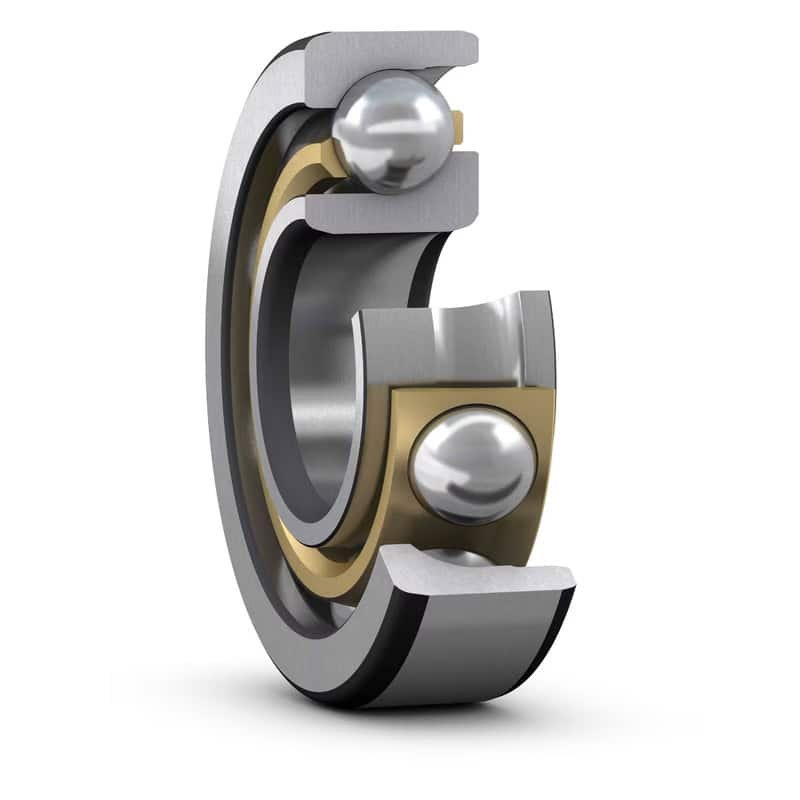
As mentioned, these bearings are manufactured to handle both radial (forces perpendicular to the shaft) and axial loads (forces applied parallel to the shaft). These bearings have a unique design that allows them to handle these loads very efficiently. Unlike other ball bearing types, it they have a contact angle that enables them to support loads in a unidirectional manner.
They have an efficient load-handling design that allows effective load handling management and making it highly versatile for various uses. Their materials are top quality, and manufacturing is precise, which contributes to a longer service life of these bearings. They are widely used in multiple applications in various industries like industrial equipment, daily machinery, and automotive components.
Important Features
- These have a special contact angle between the raceways and the balls for load support in one direction.
- Such bearing types are made with high precision in mind, so they perform accurately for applications that need seamless operation.
- These bearings perform exceptionally well under high speed applications as they have a unique design. Hence, they are perfect for rapid rotations.
What is a Single Row Ball Bearing Used for?

A single row contact ball bearing is a type of rolling element bearing with a single row of balls acting as rolling elements. They are designed to handle both radial and axial loads. However, they are particularly good for handling axial loads in one direction.
You can see their applications and uses in several industries because they have a contact angle for carrying axial loads in a single direction. Below are the common applications and uses of a single row contact angle bearing:
Automotive Industry
In the automotive industry, they are widely used in wheel hubs, car transmission systems, and clutches. Since such bearings are used for handling both radial and axial loads quite well, they offer smooth functionality and lasting durability in high speed applications. They can handle thrust loads as well, hence they are perfect for vehicle gear systems.
Machine Tools
These angular contact ball bearings are most frequently used in lathes, milling machines, and CNC machine spindles. Such machines are very precise and need high stability and precision to make sure that the cutting is accurate and that the materials are cut sharply. Single row angular contact ball bearings handle high speeds without compromising the rigidity. It helps get precise and smooth machining
Pumps and Compressors
As compressors and pumps need bearings that have the ability to tackle heavy loads and high speeds, single row angular contact bearings are widely used in them. They make sure the operation is smooth and efficient besides reducing the loss of energy due to friction.
Aerospace Industry
These bearings are used in landing gears and aircraft engines to tolerate heavy axial loads and high speeds. Their lightweightness and high performance increase the efficiency of aircraft components.
Electric Motors and Generators
Single row angular contact ball bearings support rotating shafts of electric motors making sure that the energy transfer is efficient and vibration is minimum. Because of their design and features, they help improve the service life of motors and reduce wear and tear.
Industrial Robotics
Robots only work if they are precisely manufactured and programmed. Single row angular bearings offer that precision and movement to robots. They enable their arms and joints to move freely and accurately, leading to efficient automated manufacturing process.
So, picking the right bearing for a particular application helps increase a machine’s efficiency, decrease upkeep costs, and extend the service life of mechanical systems.
What is the Difference Between a Single Row and a Double Row Ball Bearing?

Though both single and double row ball bearings can handle both radial and axial loads, they differ in load carrying capacity, applications, and structure. So, you have to select any one of them based on the load direction, performance requirements, and availability of space. The differences between the two are:
Difference Based on Structure
As the name clearly indicates, single row bearings have a single row of balls as rolling elements to carry axial load in one direction. You need to pair another bearing with them properly to make them work for both directions.
On the other hand, the double row bearings consist of two rows of balls as rolling elements to carry axial load in both directions. Hence, they eliminate the need of a second bearing.
Difference Based on Load Capacity
Single row angular contact ball bearings are capable of handling both radial and axial loads in one direction at a time only. Whereas, double row angular contact ball bearings are able to carry more load (high load capacity) because of the presence of two rows of balls. It means you can use them for heavier axial load applications in both directions.
Difference Based on Space Requirements
Since single row bearings have a single row of balls, they are smaller in size and perfect for compact designs and applications where axial load carrying capability in only one direction is needed.
Double row bearings take more space compared to single row bearings because of two rows of balls. However, they offer greater stability and their load-carrying capacity is also high.
Difference Based on Speed Performance
Single row angular contact ball bearings perform more perfectly at higher speeds as they are small in size and are lightweight. While double row angular contact ball bearings offer greater stability and support, they perform well at slightly lower speeds because the additional row of balls produces an additional friction.
Difference Based on Applications
The single row bearings are used in industrial robotics, automotive gearboxes, electric motors, and machine tools since they operate at high speed and precision.
Double row bearings are widely used in heavy machinery, compressors, pumps, and wheel hubs, as these applications demand greater load-carrying capacity
| Feature | Single Row | Double Row |
| Structure | Single row of balls | Double row of balls |
| Load capacity | Low | High |
| Space requirement | Best for compact spaces | Takes more space |
| Speed performance | High | Low |
| Applications | Motors, robotics, gearboxes, machine tools | Pumps, compressors, wheel hubs, heavy machinery |
Single Row Angular Contact Ball Bearing Arrangement Type
As mentioned earlier, single row bearings are used as pairs or with another bearing type to carry load in two directions. There are three types of arrangements that you can create to make them work effectively. Their arrangement determines the load capacity, suitability of applications, and performance.
Back-to-Back Arrangement (DB Type)
When the bearings are placed in a way that their wide ends face outward, forming a V. This way, their contact angle diverges, providing greater resistance against tilting and bending. This configuration is widely used in precision instruments, machine tool spindles, and automotive wheel hubs.
Face-to-Face Arrangement (DF Type )
When the bearings are placed in a way that their narrow ends face outward, forming an X shape. This arrangement makes them handle axial loads in both directions. However, they are less rigid compared to DB configuration. It works well for slight misalignment and offers moderate load-bearing capacity.
You can use this configuration in aerospace components, electric motors operating at medium speed, and compressors and pumps.
Type M
This arrangement comprises a single bearing having one-piece inner and outer rings, which acts as a universal bearing for specific applications. Type M offers a balance between performance and load-carrying capacity. It caters to handling axial loads in one direction in applications operating at a much higher speed. They are ideal for high-speed spindles, automotive components, and precision machinery.
Single Row Angular Contact Ball Bearing Size Chart
| Bearing No. | Boundary dimensions | Basic load ratings | Limiting speeds | Mass | ||||||
| KN | RPM | kg | ||||||||
| d | D | B | R | r | dynamic Cr | static Cor | Grease | Oil | ||
| 7000 | 10 | 26 | 8 | 0.3 | 0.15 | 4650 | 2070 | 28000 | 37000 | 0.023 |
| 7200 | 10 | 30 | 9 | 0.6 | 0.3 | 5000 | 2520 | 24000 | 32000 | 0.029 |
| 7300 | 10 | 35 | 11 | 0.6 | 0.3 | 9500 | 4600 | 22000 | 29000 | 0.04 |
| 7001 | 12 | 28 | 8 | 0.3 | 0.15 | 5050 | 2470 | 25000 | 33000 | 0.025 |
| 7201 | 12 | 32 | 10 | 0.6 | 0.3 | 6600 | 3350 | 21000 | 28000 | 0.035 |
| 7301 | 12 | 37 | 12 | 1 | 0.6 | 10500 | 4950 | 19000 | 26000 | 0.044 |
| 7002 | 15 | 32 | 9 | 0.3 | 0.15 | 5800 | 3150 | 22000 | 29000 | 0.035 |
| 7202 | 15 | 35 | 11 | 0.6 | 0.3 | 8350 | 4350 | 18000 | 25000 | 0.046 |
| 7302 | 15 | 42 | 13 | 1 | 0.6 | 12500 | 6650 | 17000 | 22000 | 0.055 |
| 7003 | 17 | 35 | 10 | 0.3 | 0.15 | 7150 | 3850 | 19000 | 26000 | 0.046 |
| 7203 | 17 | 40 | 12 | 0.6 | 0.3 | 11000 | 6100 | 17000 | 22000 | 0.064 |
| 7303 | 17 | 47 | 14 | 1 | 0.6 | 14800 | 8000 | 15000 | 20000 | 0.107 |
| 7004 | 20 | 42 | 12 | 0.6 | 0.3 | 9700 | 5600 | 17000 | 23000 | 0.08 |
| 7204 | 20 | 47 | 14 | 1 | 0.6 | 13300 | 7700 | 15000 | 20000 | 0.1 |
| 7304 | 20 | 52 | 15 | 1.1 | 0.6 | 17300 | 9650 | 13000 | 18000 | 0.138 |
| 7005 | 25 | 47 | 12 | 0.6 | 0.3 | 10700 | 6850 | 14000 | 19000 | 0.093 |
| 7205 | 25 | 52 | 15 | 1 | 0.6 | 14800 | 9400 | 12000 | 16000 | 0.125 |
| 7305 | 25 | 62 | 17 | 1.1 | 0.6 | 24400 | 14600 | 11000 | 15000 | 0.23 |
| 7006 | 30 | 55 | 13 | 1 | 0.6 | 13900 | 9450 | 12000 | 16000 | 0.135 |
| 7206 | 30 | 62 | 16 | 1 | 0.6 | 20500 | 13500 | 11000 | 14000 | 0.198 |
| 7306 | 30 | 72 | 19 | 1.1 | 0.6 | 31000 | 20500 | 9600 | 13000 | 0.345 |
| 7007 | 35 | 62 | 14 | 1 | 0.6 | 17500 | 12500 | 11000 | 14000 | 0.18 |
| 7207 | 35 | 72 | 17 | 1.1 | 0.6 | 27100 | 18400 | 9300 | 12000 | 0.281 |
| 7307 | 35 | 80 | 21 | 1.5 | 1 | 36500 | 24200 | 8400 | 11000 | 0.462 |
| 7008 | 40 | 68 | 15 | 1 | 0.6 | 18800 | 14500 | 9600 | 13000 | 0.222 |
| 7208 | 40 | 80 | 18 | 1.1 | 0.6 | 32000 | 23000 | 8300 | 11000 | 0.37 |
| 7308 | 40 | 90 | 23 | 1.5 | 1 | 45000 | 30500 | 7400 | 9900 | 0.625 |
| 7009 | 45 | 75 | 16 | 1 | 0.6 | 22300 | 17700 | 8700 | 12000 | 0.262 |
| 7209 | 45 | 85 | 19 | 1.1 | 0.6 | 36000 | 26200 | 7400 | 9900 | 0.42 |
| 7309 | 45 | 100 | 25 | 1.5 | 1 | 58500 | 40000 | 6600 | 8900 | 0.837 |
| 7010 | 50 | 80 | 16 | 1 | 0.6 | 23700 | 20100 | 7900 | 10000 | 0.305 |
| 7210 | 50 | 90 | 20 | 1.1 | 0.6 | 37500 | 28600 | 6700 | 9000 | 0.47 |
| 7310 | 50 | 110 | 27 | 2 | 1 | 68000 | 48000 | 6000 | 8100 | 1.09 |
| 7011 | 55 | 90 | 18 | 1.1 | 0.6 | 31000 | 23600 | 7100 | 9500 | 0.447 |
| 7211 | 55 | 100 | 21 | 1.5 | 1 | 46500 | 36000 | 6100 | 8200 | 0.6 |
| 7311 | 55 | 120 | 29 | 2 | 1 | 79000 | 56500 | 5500 | 7300 | 1.39 |
| 7012 | 60 | 95 | 18 | 1.1 | 0.6 | 32000 | 28100 | 6600 | 8800 | 0.478 |
| 7212 | 60 | 110 | 22 | 1.5 | 1 | 56000 | 44500 | 5700 | 7600 | 0.8 |
| 7312 | 60 | 130 | 31 | 2.1 | 1.1 | 90000 | 66000 | 5100 | 6800 | 1.74 |
| 7013 | 65 | 100 | 18 | 1.1 | 0.6 | 33500 | 31500 | 6100 | 8100 | 0.509 |
| 7213 | 65 | 120 | 23 | 1.5 | 1 | 63500 | 52500 | 5200 | 7000 | 1 |
| 7313 | 65 | 140 | 33 | 2.1 | 1.1 | 102000 | 75500 | 4700 | 6300 | 2.11 |
| 7014 | 70 | 110 | 20 | 1.1 | 0.6 | 42500 | 39500 | 5700 | 7600 | 0.705 |
| 7214 | 70 | 125 | 24 | 1.5 | 1 | 69000 | 58000 | 4900 | 6500 | 1.09 |
| 7314 | 70 | 150 | 35 | 2.1 | 1.1 | 114000 | 86000 | 4400 | 5800 | 2.56 |
| 7015 | 75 | 115 | 20 | 1.1 | 0.6 | 43500 | 41500 | 5300 | 7100 | 0.745 |
| 7215 | 75 | 130 | 25 | 1.5 | 1 | 71500 | 62000 | 4500 | 6000 | 1.2 |
| 7315 | 75 | 160 | 37 | 2.1 | 1.1 | 125000 | 97500 | 4100 | 5400 | 3.07 |
Conclusion
Single row angular contact ball bearings are small but important bearings with one row of balls that handle axial and radial loads in one direction. They reduce friction and provide stability and support to mechanical systems. They have three configurations, DB, DF, and M. You can use them in applications like pumps and compressors, machine tools, the automotive industry, the aerospace industry, electric motors and generators, and industrial robotics.
Contact BYWB Bearing Today!
At BYWB Bearing, we specialize in high-performance angular contact ball bearings with a commitment to innovation, quality, and custom solutions. Whether you’re designing machinery or upgrading your current equipment, our professional R&D team and skilled staff are here to support you.
