
Dental pieces are among the backbones of dentistry. They are basically advanced tools that operate at a high speed and are involved in the polishing, drilling, and cutting procedures. They have made dentists’ jobs so much easier, smoother, and efficient. However, you may wonder what keeps these tools running at high speed without overheating.
The answer is dental handpiece bearings. Yes, bearings are much more handy than you think. They are used in different industries, from automotive to dentistry. These small but sturdy components make sure the dental handpieces operate smoothly by minimizing the friction among moving parts of the machinery. If the bearings are not reliable, they will slow down the dental handpieces and produce excess heat, which leads to replacements.
So, it’s important to learn the basics of such bearings. We will tell you what they are, how they work, their types, and ways to keep them in top condition.
What are Dental Handpiece Bearings?
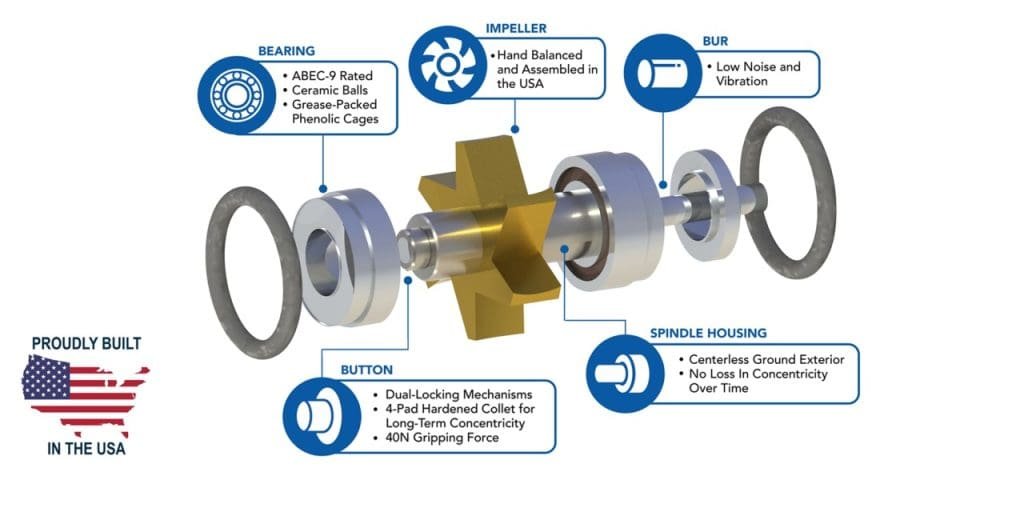
Dental handpiece bearings are very tiny components that enable the turbine of dental handpieces to spin at a very high speed. These high-precision bearings are involved in smooth and efficient operation of dental handpieces, making sure the friction is minimum without compromising durability even after continuous use.
These bearings are not single-unit structures but have two to three small elements, including a raceway and ceramic balls that rotate within the raceway. Their movement allows the turbines to move effortlessly, as the moving parts won’t have friction between them. Dental handpiece bearings cater to high speeds ranging from 300,000 to 400,000 RPM. They also tolerate high pressure and heat generation.
Importance of Dental Handpiece Bearings
- These bearings help reduce friction and decrease heat buildup, leading to wear and tear very early.
- They make sure the turbines are stable and accurate in cutting and drilling.
- Such bearings are essential to increase the service life of handpieces by reducing wear and friction.
- Lastly, they also ensure patients’ comfort by minimizing vibration and noise during dental treatments.
Durable dental handpiece bearings make a significant difference in longevity, efficiency, and performance. However, regular maintenance is vital to keep the dental handpieces running seamlessly and cutting expenses.
Types of Dental Bearings
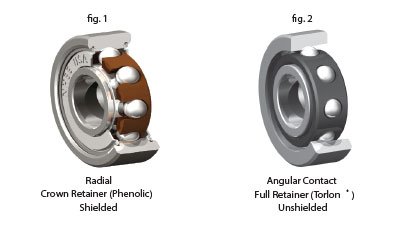
There are different types of dental bearings based on two things: design and material. Each of them has a different function and offers distinct benefits. We will discuss both the categories in detail below:
Types Based on Design
1. Radial Ball Bearings
These are the most frequently used bearings in dental handpieces. They basically support all the loads that are at 90 degrees to the axis of rotation. They primarily cater to the turbine’s spinning motion. Radial ball bearings have deep grooves with balls inside, reducing friction and guaranteeing smooth movement. Moreover, these bearings work ideally if there are some axial forces applied from sideways to the dental handpieces.
- Offers constant reduced friction movement
- Operates optimally in the presence of radial forces at high speeds
- Needs lubrication for smooth operation
However, if there is a lot of involvement of the sideway forces or the dental procedure needs to be done at different angles, radial ball bearings alone don’t provide efficiency and smoothness in motion. That’s where angular contact ball bearings come in handy.
2. Angular Contact Ball Bearings
Angular contact ball bearings not only handle radial load but also tolerate axial load. They are basically used in high-performance dental handpieces where there is a high demand for higher torque and precision cutting. Their internal design allows them to handle heavier loads and spread pressure evenly across the entire bearing surface.
- Gives reliable stability under high-pressure situations
- Handle high-speed movement without compromising on precision
- Improve dental piece control and minimize vibrations
Since these bearings can handle different types of loads, they are more durable than radial ball bearings. However, you need to install them with precision, and they also require more maintenance.
Types Based on Material
3. Steel Dental Bearings
Steel or stainless steel bearings are the most widely used bearings in dental handpieces. As these bearings are made of high-quality stainless steel, they provide reliability and wear resistance. Though they are extremely strong, they produce more friction compared to ceramic types.
- Affordable and easily accessible
- High strength and can be used repeatedly
- Handles higher-speed movements
However, you need to provide regular lubrication to keep these bearings running smoothly. Also, they have a shorter lifespan than ceramic bearings. These bearings are perfect for dentists who can provide regular lubrication and want a cost-effective solution.
4. Ceramic Dental Bearings
Unlike steel dental bearings, ceramic dental bearings have ceramic balls instead of steel. These ceramic balls make them very lightweight and reduce wear and tear considerably. This material is even stronger than steel, which means they last longer than stainless steel dental bearings.
- Less heat generation due to less friction
- Increased service life because of less wear and tear
- Reduced vibration and noise for patients’ comfort
Their downside is that ceramic dental bearings are expensive. However, if you are looking for bearings that are low maintenance and have a longer lifespan, ceramic dental bearings are a good choice.
5. Hybrid Dental Bearings
As the name indicates, these bearings are a mix of both stainless steel and ceramic bearings. Their raceway is made of steel, and the balls are made of ceramic. This blend gives hybrid bearings the benefits of ceramic dental bearings and the strength of stainless steel dental bearings. Hence, they are suitable for most professionals.
- Provides greater reliability
- Less heat generation because of reduced friction
- Smooth operation without noise
- Less lubrication required
These bearings provide benefits of two different bearings and are cost-effective, too. They are ideal for dentists wanting balanced dental handpieces.
How Long Should a Dental Handpiece be Lubricated?
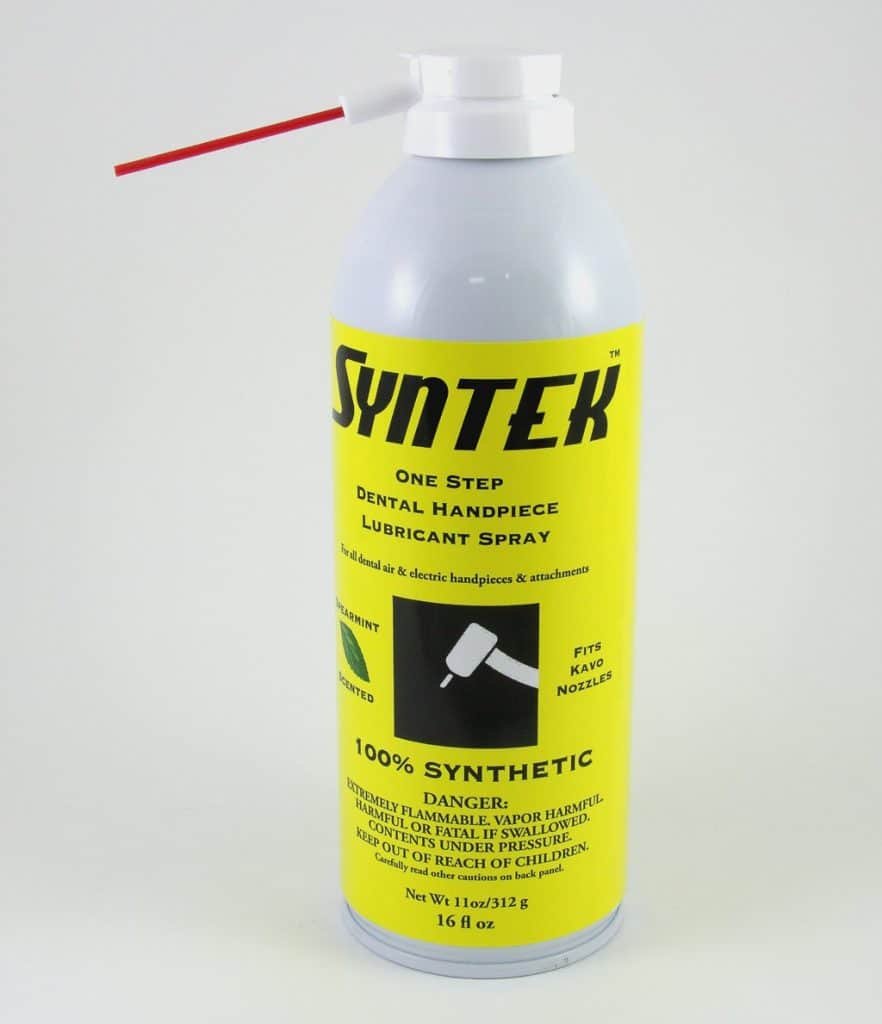
Lubrication is quite important to maintain the performance and increase the service life of dental handpieces and their bearings. Frequent lubrication can result in less friction, reduction in overheating, and a decrease in wear and tear, which ultimately improve the efficiency and durability of the dental tools.
Ideally, you can lubricate the handpieces before sterilization after every use. This routine upkeep will remove all dirt and debris and make sure that every part of the handpiece is safe while being sterilized.
It’s important to note that if you are using the dental handpiece for a longer period of time constantly, lubricate is after every 20 minutes. This practice will tone down the heat buildup and prevent the risk of damage because of constant friction.
If you don’t know how to lubricate the dental handpiece, don’t worry. It is very simple. Here’s how you can do it by following these steps:
- You just have to disconnect the dental handpiece from the air supply. If any bur is attached, remove that too. Now, clean it from inside to remove debris.
- Attach the nozzle to the canister of the recommended lubricant. Put the nozzle in the air intake port of the dental handpiece.
- Spray for 1-2 minutes or as recommended by the manufacturer.
- Reattach the dental handpiece to the air supply.
- Operate the handpiece for about 20 seconds to get rid of excess lubricant and disperse it evenly throughout the handpiece.
- Now, after lubrication is complete, put it inside the sterilization pouch. Sterilize it just like you usually do. That’s it!
Ceramic Vs Stainless Steel Dental Bearing: What Is Best For Dental Handpiece?
Selecting the right type of bearing is based on different factors like speed, cost, durability, and maintenance. Here’s a comparison table between ceramic and stainless steel dental bearings:
| Characteristics | Ceramic Dental Bearings | Steel Dental Bearings |
| Material | Ceramic balls with either ceramic or steel raceways | Entirely made of stainless less |
| Durability | Offers more wear resistance and lasts quite longer | Doesn’t last long due to wear |
| Heat and friction | Less heat production because of less friction | Can produce more heat because of friction |
| Speed capability | Operates perfectly at higher speeds | Operates better at standard speeds |
| lubrication | Less lubrication needs | Regular lubrication needs |
| Vibration and noise | Operates quietly with less vibrations | Might cause vibration and noise |
| Resistance against corrosion | Corrosion and wear-resistant | If exposed to moisture, it can corrode |
| Expense | Expensive because of expensive material | cost -effective |
| Ideal for | Those who want minimum upkeep and long life | Those wanting an affordable option |
Dental Bearing Size Chart
Conclusion
Dental handpieces are specialized tools that operate at a high speed and are involved in the polishing, drilling, and cutting procedures. Dental bearings are tiny components that handle axial and radial loads, reduce friction, and improve the durability of dental handpieces.
There are different types of dental bearings, including radial ball bearings, angular contact ball bearings, steel bearings, ceramic bearings, and hybrid bearings. Each has its own purpose: to fulfill and provide distinct benefits. Regular maintenance and lubrication are necessary no matter what bearing type you choose.
You can contact BYWB Bearings for all types of bearings, including dental handpiece bearings. We are leaders in the industry and ready to assist at all times. Contact us now!
