
Introduction
When it comes to vehicle suspension and drivetrain components, ball joints and universal joints (U-joints) are two critical elements that serve different purposes. Understanding their differences is essential for ensuring optimal vehicle performance and longevity. This guide will explore the differences between ball joints and universal joints, their roles, and how to maintain them for maximum efficiency.
Ball Joint vs Universal Joint

What is a Ball Joint?
A ball joint is a flexible pivot point in a vehicle’s suspension system that connects control arms to the steering knuckle. It allows for smooth movement in multiple directions, enabling the wheels to turn and respond effectively to road conditions. Ball joints are essential in maintaining proper wheel alignment and ensuring a smooth ride.
Structure of a Ball Joint
A spherical bearing enclosed in a socket
Housed in a lubricated casing
Attached to the control arm and steering knuckle
What is a Universal Joint?
A universal joint (U-joint) is a mechanical component used primarily in drive shafts to transmit rotary motion between shafts that are not in a straight line. It allows for flexibility in drivetrain movement, particularly in rear-wheel and four-wheel drive vehicles.
Structure of a Universal Joint
Cross-shaped yoke with four bearing caps
Needle bearings for smooth rotation
Secured using snap rings or circlips
Key Differences Between Ball Joints and Universal Joints
| Feature | Ball Joint | Universal Joint |
| Function | Suspension component | Drivetrain component |
| Movement | Multi-directional movement | Rotational motion between shafts |
| Location | Front suspension system | Drive shaft |
| Maintenance | Requires periodic lubrication | Grease-lubricated or sealed |
Ball Joint vs Tie Rod Ends

What is a Tie Rod End?
Tie rod ends are steering components that connect the steering rack to the wheels. They help maintain precise steering control and stability.
Differences Between Ball Joints and Tie Rod Ends
| Feature | Ball Joint | Tie Rod End |
| Function | Suspension movement | Steering control |
| Location | Between control arm and knuckle | Between steering rack and wheel |
| Movement | Vertical and horizontal | Primarily horizontal |
How to Choose the Right Universal Joint?
Selecting the correct U-joint for your vehicle or machinery depends on several factors, including size, application, and material. Here are some essential considerations:
1. Identify the Application
Automotive: Typically found in drive shafts and steering columns.
Industrial Machinery: Used in conveyor systems and mechanical linkages.
2. Measure the U-Joint Size
Measure the bearing cap diameter
Determine the yoke width
3. Consider Material and Durability
Steel U-Joints: Standard for automotive applications.
Aluminum U-Joints: Lightweight and corrosion-resistant.
Chromoly U-Joints: High-strength applications.
How Do I Know If My Universal Joint is Worn?
A failing universal joint can lead to drivetrain issues and should be replaced promptly. Here are common signs of a worn U-joint:
1. Clunking or Knocking Noise
A worn U-joint will produce a knocking sound, especially during acceleration or deceleration.
2. Vibration While Driving
If your vehicle vibrates excessively at high speeds, it may be due to an imbalanced or worn U-joint.
3. Difficulty in Turning
Stiff or seized U-joints can affect steering smoothness and responsiveness.
4. Visible Wear and Tear
Inspect for rust, corrosion, or missing needle bearings in the U-joint assembly.
How to Replace Universal Joints?
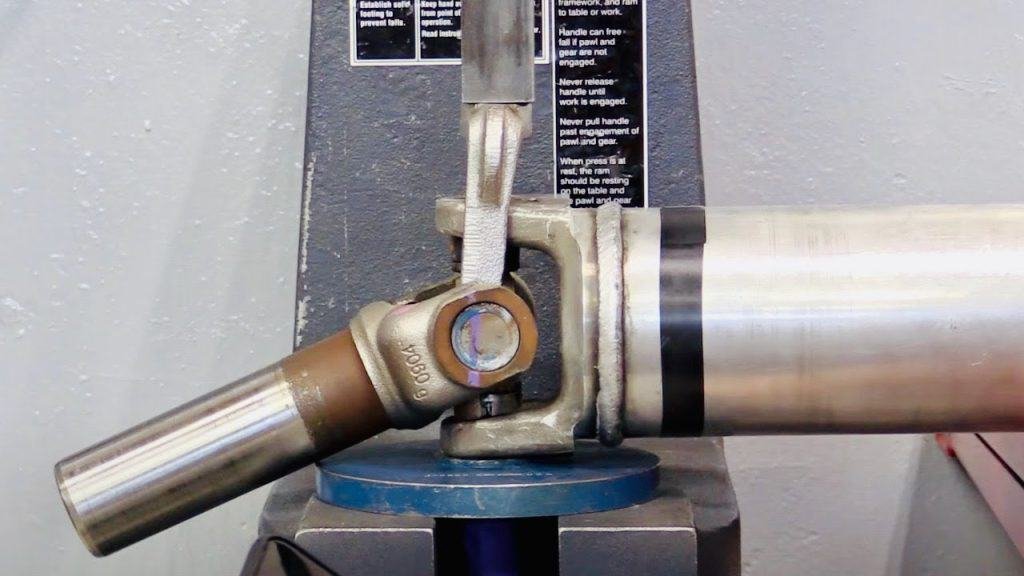
Replacing a universal joint can be done with some mechanical expertise and the right tools. Here’s a step-by-step guide:
Tools Needed:
Socket wrench set
Needle-nose pliers
Hammer
Bench vise or U-joint press tool
Snap ring pliers
Grease
Safety gloves and goggles
Step 1: Prepare the Vehicle
Park the vehicle on a flat surface.
Engage the parking brake.
Secure the vehicle with jack stands.
Step 2: Remove the Drive Shaft
Locate the universal joint on the drive shaft.
Remove the retaining bolts using a socket wrench.
Carefully slide the drive shaft out of the transmission or differential.
Step 3: Remove the Old U-Joint
Use snap ring pliers to remove the retaining clips.
Place the U-joint in a vise or use a press tool to push out the bearing caps.
Gently tap the joint with a hammer if necessary to loosen it.
Step 4: Install the New U-Joint
Align the new U-joint in the yoke.
Press the new bearing caps into place using a U-joint press.
Secure with snap rings.
Apply grease to ensure smooth operation.
Step 5: Reinstall the Drive Shaft
Carefully slide the drive shaft back into position.
Reattach the retaining bolts and tighten them securely.
Double-check alignment and torque specifications.
Step 6: Test the Installation
Start the vehicle and test for any abnormal noises or vibrations.
Ensure smooth rotation and flexibility of the U-joint.
Conclusion
Understanding the differences between ball joints and universal joints is crucial for maintaining vehicle performance. While ball joints facilitate suspension movement, universal joints ensure smooth power transmission in the drivetrain. Regular inspection and timely replacement of these components can prevent costly repairs and enhance driving safety.
For high-quality bearings and automotive components, visit BYWB Bearing and explore our premium range of products designed for durability and performance.
