
Introduction
When it comes to mechanical components, bushings and bearings are crucial for reducing friction, enabling smooth movement, and improving the overall performance of various machines. Although they serve similar functions, there are significant differences between the two. In this article, we will explore what bushings and bearings are, their functions, and the key distinctions between them to help you make an informed decision on which one to use for your applications.
1. What Are Bushings and Bearings?
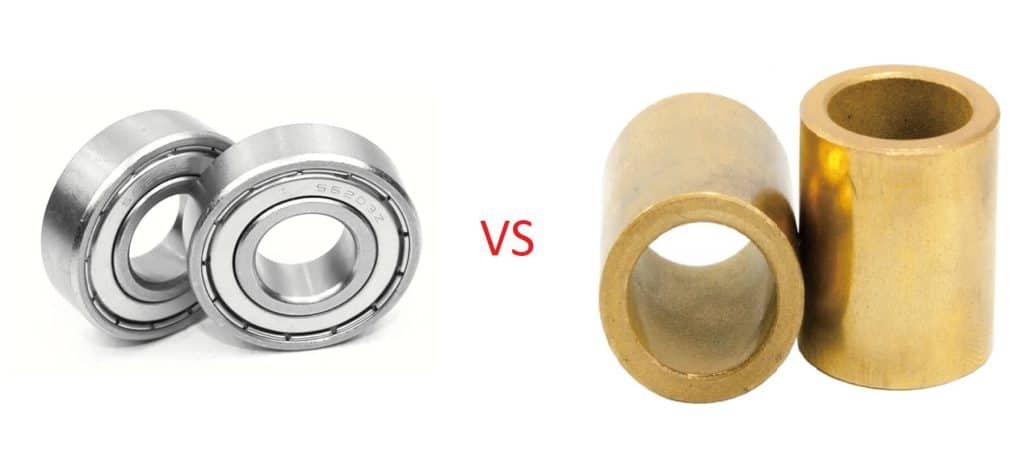
Bushings and bearings are both types of mechanical components designed to reduce friction between moving parts. While they share similar characteristics, each has unique features suited to different applications.
What Is a Bushing?
A bushing is a type of bearing that typically consists of a cylindrical liner or sleeve made of materials such as metal, rubber, plastic, or composite materials. Bushings are commonly used to reduce friction between moving parts and to prevent direct contact between two metal surfaces. The material of the bushing absorbs wear and tear, and the primary function of a bushing is to act as a bearing surface that limits motion or guides a moving part along a particular path.
Bushings are typically used in applications with low to moderate speeds, such as automotive suspension systems, machines, and industrial equipment.
What Is a Bearing?
A bearing, on the other hand, is a mechanical component that allows relative motion between two parts with minimal friction. Bearings are designed to support rotating shafts or axles and to ensure smooth motion with little wear. There are several types of bearings, including ball bearings, roller bearings, and thrust bearings, each with specific applications suited to varying loads, speeds, and environments. Bearings are commonly used in machines, automotive components, and other mechanical systems where precise movement is required.
Key Takeaway: While both bushings and bearings reduce friction, bearings allow for rotational or linear movement, while bushings are generally used to provide a smooth surface for linear motion and guide parts along a specific path.
2. Is a Bushing the Same as a Bearing?
At first glance, the terms bushing and bearing may seem interchangeable. However, they are not the same. Although both components reduce friction and wear, they perform different functions depending on the application.
What Bushings and Bearings Have in Common:
- Both bushings and bearings minimize friction between moving parts.
- They both serve as support elements that reduce wear and improve performance.
- Both are made from materials that have good wear resistance, such as metal, plastic, or composites.
Key Differences Between Bushings and Bearings:
Design and Structure:
- Bearings are typically made up of rolling elements like balls or rollers housed in an outer and inner ring.
- Bushings are generally simple sleeves that fit around the shaft or part they support.
Movement:
- Bearings allow for rotational or linear motion depending on the type.
- Bushings guide the part’s motion along a linear path, but they don’t necessarily facilitate rotating movement.
Load Capacity:
- Bearings typically have a higher load-bearing capacity due to the rolling elements, which distribute the load more effectively.
- Bushings handle lighter loads compared to bearings but can support moderate forces.
3. What Is the Difference Between Bearings and Bushings?

Now that we have a basic understanding of bushings and bearings, it’s time to delve deeper into the specific differences. The decision between choosing a bushing or a bearing depends on several factors such as the load, speed, precision, and type of motion required for the application. Below are some key distinctions that should guide your decision:
3.1. Construction and Design
Bearings feature moving parts like balls, rollers, or needles that reduce friction by rolling instead of sliding. This design makes them more complex and capable of handling higher loads and speeds. Bearings are typically made of steel or ceramic, and the inner and outer races hold the rolling elements in place.
Bushings are typically simpler in design, often taking the form of a solid or split sleeve that fits over the shaft or housing. They do not contain any rolling elements and are instead made from materials like bronze, brass, rubber, or plastic. They are often used where less precision is required compared to bearings.
3.2. Motion and Application
- Bearings are ideal for situations where rotational or oscillatory motion is involved. They are commonly used in high-speed applications like motors, turbines, and vehicles.
- Bushings are designed for applications where sliding or linear motion is the primary requirement. These include applications like suspension components, conveyor systems, and machinery with low-speed motion.
3.3. Load Handling and Durability
- Bearings are designed to handle high radial and axial loads. The rolling elements in bearings distribute the load, allowing them to bear heavier forces with less wear and tear.
- Bushings, in contrast, are best suited for applications with lower loads and speeds. They are simpler and typically have a lower load capacity than bearings.
3.4. Cost and Maintenance
- Bearings tend to be more expensive than bushings due to their more complex design and higher material costs. However, their higher performance and longer lifespan often justify the extra cost.
- Bushings are usually more affordable and are simpler to manufacture, making them an economical choice for lower-demand applications. However, they may require more frequent maintenance or replacement due to their wear.
3.5. Speed and Precision
- Bearings are suitable for high-speed applications and offer higher precision, which is critical in machinery like motors and industrial equipment.
- Bushings are typically used for lower-speed applications where high precision is not as critical.
3.6. Installation and Replacement
- Bearings often require a more precise installation process and might need special tools or procedures, especially when dealing with high-load bearings.
- Bushings are generally easier to install and replace, as they don’t require the same level of precision as bearings.
3.7 Material Differences
The materials used for bushings and bearings play a crucial role in determining their performance, durability, and suitability for specific applications. While both components aim to reduce friction and wear, their material choices vary significantly based on the type of motion, load, and environmental conditions they will face.
Materials for Bearings
Bearings are typically made from materials that can withstand high levels of stress, rotational forces, and harsh environments. The most common materials for bearings include:
Steel (Chrome Steel, Carbon Steel):
Chrome steel (AISI SAE 52100) is the most common material used for ball and roller bearings. It offers high wear resistance, good hardness, and can endure high loads and speeds. This makes it ideal for use in automotive, aerospace, and industrial machinery.
Carbon steel bearings are also used in certain applications, although they are generally more prone to corrosion and wear than chrome steel bearings.
Stainless Steel:
Stainless steel bearings are resistant to corrosion and offer high durability in hostile environments, including high humidity or exposure to chemicals. They are widely used in medical devices, food processing equipment, and marine applications where corrosion resistance is a priority.
Ceramic Materials:
Ceramic bearings (e.g., made from silicon nitride or zirconia) are commonly used in high-precision applications, such as robotics, aerospace, and high-speed machinery. Ceramics offer excellent corrosion resistance, low thermal expansion, and the ability to perform at higher speeds and temperatures compared to metal bearings. Ceramic bearings are also lightweight, which is an advantage in applications where reducing weight is critical.
Polymer Materials:
Some bearings are made from high-performance plastics or composites, such as PTFE (Teflon), PEEK, or polyamide. These materials are often used in low-speed, low-load applications where corrosion resistance, low friction, and noise reduction are more important than the ability to handle heavy loads. They are common in food-grade, pharmaceutical, and certain consumer electronics applications.
Materials for Bushings
Bushings, in contrast, are typically made from materials that can withstand wear and provide adequate lubrication in low to moderate-speed applications. They may be self-lubricating or require external lubrication. Common materials used for bushings include:
Bronze:
Bronze (particularly phosphor bronze) is one of the most common materials for bushings. It is strong, durable, and has excellent wear resistance. Bronze bushings are often used in applications like automotive suspension, machinery, and construction equipment. They perform well under moderate to heavy loads and are resistant to corrosion in harsh environments.
Brass:
Brass bushings are another popular choice, particularly in lower-load applications. Brass offers good resistance to corrosion and wear and is often used in applications where easy machinability is needed. It’s commonly used in electrical and plumbing systems, as well as in light-duty automotive applications.
Plastic and Composite Materials:
Nylon, PTFE (Teflon), and polyurethane are commonly used for plastic bushings. These materials offer excellent self-lubricating properties and can be ideal for applications where noise reduction and ease of installation are important. Plastic bushings are often used in automotive parts, household appliances, and certain industrial machinery.
Composite bushings, made from materials such as carbon or graphite-filled polymers, offer superior wear resistance and are used in more demanding applications that require low friction and high durability.
Rubber:
Rubber is used in some bushing applications where vibration and noise reduction are important. Rubber bushings are often found in suspension systems, as they can absorb shocks and reduce vibrations between moving parts. Rubber provides excellent elasticity, though it may not be as durable as metal or plastic bushings in harsh environments.
Self-Lubricating Materials:
Some bushings are made from self-lubricating materials, such as graphite or PTFE composites, which reduce the need for external lubrication. These bushings are commonly used in applications where maintaining consistent lubrication is difficult or impractical, such as in remote or harsh environments like mining or underwater equipment.
4. Advantage Bushings Over Bearings
Bushings are the ideal choice for applications where:
- Low-speed applications are involved, such as suspension systems and heavy-duty machinery.
- Simple design is preferred, and space is limited.
- Cost-efficiency is a priority, and the load and speed requirements are lower.
- Noise reduction is desired, as bushings (especially rubber ones) tend to absorb vibrations and noise better than bearings.
Common Applications of Bushings:
- Automotive suspension systems
- Industrial machinery
- Power transmission equipment
- Conveyor systems
5. Advantage Bearings Over Bushings
Bearings are the preferred choice when:
- High-speed motion is required, such as in motors and turbines.
- Higher load capacity is necessary for the application.
- Precision and performance are key factors.
- Longer service life and minimal maintenance are needed.
Common Applications of Bearings:
- Electric motors
- Pumps and compressors
- Wheels and axles in vehicles
- Aerospace and industrial machinery
6. BYWB A-arm Bushings size chart
| BYWB Part Number | All Balls Part Number | Fitment |
| 80-1046 | All balls 50-1046 | Polaris Sportsman 500 Tractor EFI 09-10, Sportsman 570 6×6 17-22, Sportsman 570 EFI 14-20, Sportsman 570 EFI EPS 14-15, Sportsman 570 EFI X2 EPS 15-20, Sportsman 570 SP 15-20, Sportsman 600 4×4 03-05 |
| 80-1048 | All balls 50-1048 | Polaris 300 2×4 94-95, 300 4×4 94-95, 350L 2×4 93, 350L 4×4 93, 400L 2×4 94-95, 400L 4×4 94, Big Boss 250 6×6 93, Big Boss 300 6×6 94, Big Boss 350L 6×6 93, Big Boss 400L 6×6 94-97 |
| 80-1049 | All balls 50-1049 | Polaris ACE 325 14-16, ACE 325 EU 15, ACE 500 17-19, ACE 570 15-17, ACE 570 EU 15, ACE 900 EFI EPS 16, ATP 330 4×4 04-05, ATP 500 4×4 04-05, Big Boss 250 4×6 92 |
| 80-1051 | All balls 50-1051 | Polaris Outlaw 450 08-10, Outlaw 500 06-07, Outlaw 525 IRS 07-11, Outlaw 525 S 08-10, Predator 500 03-07, Scrambler 850 HO/EPS 13, Sportsman 550 11-13, Sportsman 550 EPS 11-13, Sportsman 550 X2 11-13, Sportsman 550 XP 09-10 |
| 80-1060 | All balls 50-1060 | Arctic Cat 1000 H2 LTD 11, 1000 H2 Mudpro 10-11, 1000 H2 Thundercat 08-10, 1000 Mudpro LTD 12-17, 1000 TRV 09-10, 1000 TRV Cruiser 09-12, 1000 TRV GT 12 |
| 80-1061 | All balls 50-1061 | Arctic Cat 1000 H2 LTD 11, 1000 H2 Mudpro 10-11, 1000 H2 Thundercat 08-10, 1000 Mudpro LTD 12-17, 1000 TRV 09-10, 1000 TRV Cruiser 09-12, 1000 TRV GT 12, 1000 TRV LTD 13-15 |
| 80-1062 | All balls 50-1062 | Can-Am Commander 1000 LTD 13-15, Commander 1000 STD 11-15, Commander 1000 XT/DPS 13-15, Commander 1000 XT/LTD/DPS 11-12, Commander 1000 XTP 15, Commander 800 DPS 13-15 |
| 80-1064 | All balls 50-1064 | Arctic Cat 1000 H2 LTD 11, 1000 H2 Mudpro 10-11, 1000 H2 Thundercat 08-10, 1000 Mudpro LTD 12-17, 1000 TRV 09-10, 1000 TRV Cruiser 09-12, 1000 TRV GT 12, 1000 TRV LTD 13-15 |
| 80-1129 | All balls 50-1129 | Arctic Cat 1000 H2 LTD 11, 1000 H2 Mudpro 10-11, 1000 H2 Thundercat 08-10, 1000 Mudpro LTD 12-17, 1000 TRV 09-10, 1000 TRV Cruiser 09-12, 1000 TRV GT 12, 1000 TRV LTD 13-15 |
7. Conclusion
In conclusion, both bushings and bearings play critical roles in reducing friction and supporting moving parts in mechanical systems. While they may seem similar, the differences between them are significant and influence the choice of which one to use in a given application.
Understanding your requirements for load capacity, speed, precision, and durability will help you choose the right component for your needs. Whether you are designing a complex industrial machine or a simple automotive suspension system, selecting the correct type of bearing or bushing can make a significant impact on performance, reliability, and cost-effectiveness.
For your bearing needs, BYWB Bearing offers a range of high-quality bearings and bushings, designed to meet the demands of various industries. Contact us today to learn more about our products and how they can improve the performance of your machinery.
Call to Action: If you’re looking for high-quality bearings and bushings, visit BYWB Bearing today! Our team is ready to assist you with the best solutions for your mechanical applications.
