
The gearbox bearing is a vital component in any mechanical system for its smooth operation. It contributes to the major friction reduction between two movable parts, carriage, and alignment of gear load that ensures smooth power transmission. Gearbox bearings are built to bear stresses and motion with outstanding durability, be it high demand from industrial machinery or even precise applications in automotive systems. Neglect in maintenance or misunderstanding of their function can lead to serious performance issues or costly downtime.
So, let’s take a close look at how these bearings are, how they work, their replacement steps and cost.
What is a Gearbox Bearing? And How Does it Work?
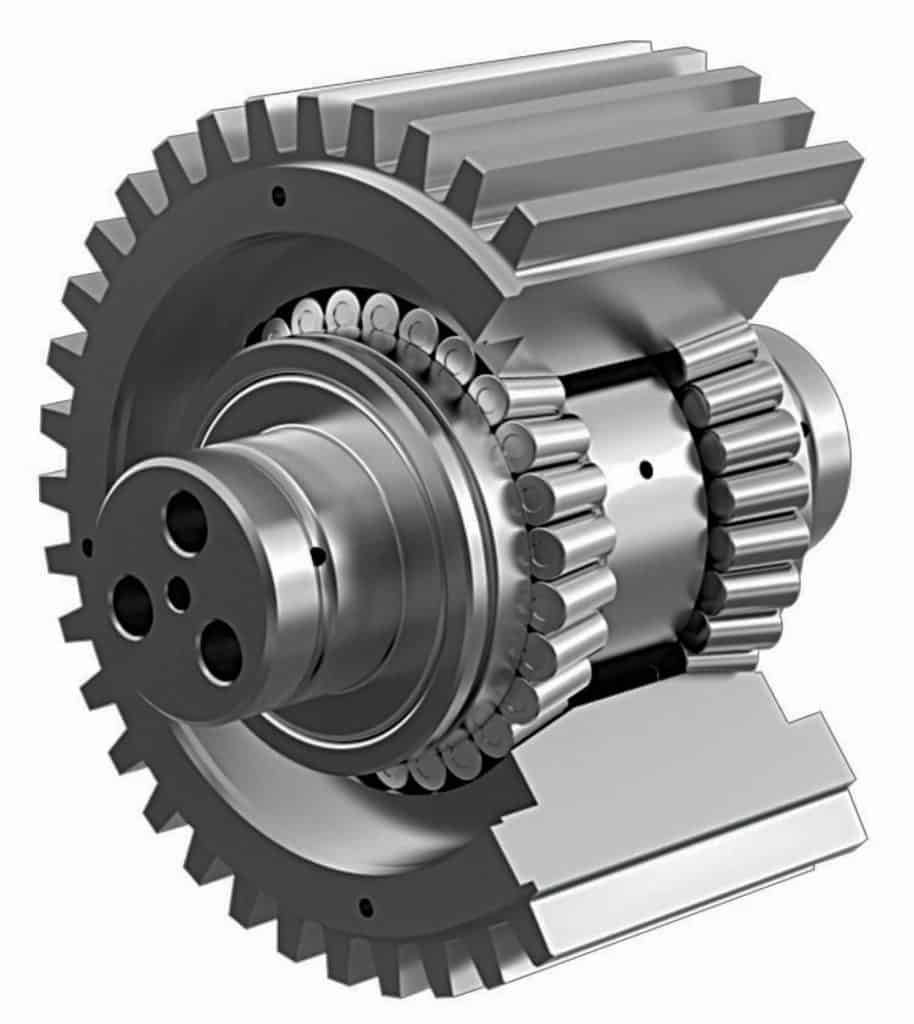
A gearbox bearing is a component used in supporting rotating shafts within machinery with the intention of power transmission by friction reduction between moving parts. It keeps the proper positioning of gears and shafts for good functionality.
How Does a Gearbox Bearing Work?
Gearbox bearings basically work by providing a low-friction interface between the rotating shaft and the stationary parts of the gearbox. They can support radial loads, meaning forces perpendicular to the shaft, and axial, meaning along the axis of the shaft, or both, depending on the design. Common types include:
- Ball Bearings – Spherical rolling elements are used to minimize friction and support moderate loads.
- Tapered Roller Bearings – Conical rollers are used to take up higher radial and axial loads.
- Needle Bearings – These contain long, thin rollers that are suitable for applications with limited space and high radial loads.
In gearboxes, the bearing needs lubrication to avoid wear and tear, which can also help to prevent overheating. With proper maintenance, the life of bearings and machinery is extended.
Gearbox Bearing Types

There are various gearbox bearings, each suited for the different load-carrying capabilities and other requirements during operation. Most of the common types include the following:
1. Ball Bearings
Some of the most commonly applied bearing types within gearboxes are ball bearings. The principle of reducing friction involves the use of spherical rolling elements, and they are also very well suited for a number of radial and axial loads. They are very adaptable to high speeds. Therefore, they can be employed for light to medium-duty applications.
2. Tapered Roller Bearings
Conical rollers in tapered roller bearings are designed to bear both radial and axial loads, which, in many applications, happen simultaneously. The taper of these bearings allows them to distribute the weight more evenly, hence finding applications in heavy machinery and industrial gearboxes.
3. Cylindrical Roller Bearings
The radial bearings with the cylindrical roller bear high radial load. Due to very small axial loads on both gears, most gearboxes operate with such bearings. Therefore, a considerable speed and higher capacity are achieved using these in the automobile and industrial sectors.
4. Needle Roller Bearings
Needle roller bearings are types of cylindrical roller bearings in which the rollers are thinner and longer. They, therefore can carry high radial loads and are particularly suited for applications with space constraints. Because they are designed to be more compact, they are commonly used for smaller-sized gearboxes or when design limitations specify a minimum amount of bearing space.
5. Spherical Roller Bearings
Spherical roller bearings are radial bearings that can handle both high radial loads and modest axial loads. Their geometrical features enable running capabilities under conditions of misalignment and shaft deflection. That is why they are useful in gearboxes with more dynamic operational conditions.
6. Thrust Bearings
Thrust bearings are designed for axial loads only. Common applications of thrust bearings in gearboxes, together with other bearing types, include supporting shafts subjected to axial forces. The most common types of thrust bearings are ball thrust bearings and cylindrical thrust bearings.
7. Magnetic Bearings
Although less common, magnetic bearings are designed to suspend and support the rotating shaft by electromagnetic forces. Frictionless by their nature, they can handle very high speeds. They find wide applications in high-performance devices, such as turbines or highly advanced industrial machinery.
What are the Symptoms of a Bad Gearbox Bearing?
Various problems may be exhibited by your vehicle due to a faulty gearbox bearing. If you identify the signs of a bad gear box early, it will reduce the risk of future damages.
So, what are the signs? Watch out for the following ones:
1. Weird Noises
If you hear weird grinding or clunking voices coming from your gear, it’s highly likely that the gearbox bearing is faulty. Clunk sound appears for manual transmissions whereas buzzing for automatic transmissions. A high-pitched whine from the engine that slows down with the speed is also an indicator of bearing damage due to wear and tear.
2. Labored Gear Shifting
If your gear shifting is not smooth or requires some effort due to resistance, it may be a sign to check for a faulty gearbox bearing. You may experience slipping out of gear during transmission because of gear misalignment probably because of bearing failure.
3. Vibrations
During acceleration, if you feel vibration via the gear shifter, it means there is some shaft bearing problem in the gearbox. Besides, if there is a lot of vibration you generally face could be a sign of a worn out gearbox bearing that imbalances the system.
4. Leaking Transmission Fluid
There is a high chance of bad bearing if a red or brownish liquid oozes out from under your vehicle. Such leakage leads to more issues like overheating followed by a burning smell.
5. Overheating Transmission
As mentioned above, overheating of the transmission bearings leads to overheating. It indicates the transmission temperature warning light. In such cases, you may also experience a burning scent, which means you should take quick action.
If you come across any of these bad bearing signs, call a professional mechanic for vehicle checkup. It will save you from expensive repairs in the future.
Gearbox Bearing Replacement and Cost

You can replace a gearbox bearing yourself, however, if you’re a beginner it’s better to call a professional. We have dissected the process step by step below:
Tools You’ll Need
- Socket set
- Screwdrivers
- Wrench set
- Pry bar
- Rubber mallet
- Bearing puller
- Hydraulic press for larger systems
- Alignment tools
- Retaining ring pliers
- Torque wrench
- Gasket sealant in case of need
- Protective gear like gloves and goggles
Replacement Steps
Now, let’s move to the steps of the replacing gearbox bearing!
Step 1 – Preparation and Inspection
Examine the gearbox for leakages or damages externally.
Clean the gearbox and remove dust.
Gather your tools for replacement.
Turn off the power of the machine or vehicle for safety purposes.
Step 2: Drain the Transmission Fluid
Pull out the drain plug so that the transmission fluid flows into a container.
Now, replace the drain plug.
It should not be very tight to avoid possible contamination.
Step 3: Remove the Gearbox
Carefully disconnect the gearbox from the machine or vehicle.
If you are working with large systems, take proper safety measurements.
Remember the arrangement of the bolts so that you can reassemble accordingly without wasting time.
Step 4: Opening of Gearbox
Now, open the gearbox housing.
Loosen the stubborn parts and remove retaining rings and covers to access bearings.
Step 5: Remove Bad Bearing
Remove the bad bearing with the help of an extraction tool.
If bearings are seized, heat them to expand the metal so they are easy to remove.
The process can be a bit difficult but be patient.
Step 6: Clean and Inspect Components
Take the gearbox housing and clean it including the surrounding parts.
Check for wear, cracks, or other damage.
Step 7: Placing New Bearing
Place the new bearing in.
Seat the bearing and torque it according to the manual to avoid misalignment.
Step 8: Gearbox Assembly
Put the gearbox back, maintaining additional care to the alignment of all components.
Apply a sealant wherever needed for leakage-free, tight assembly.
Step 9: Replenish Transmission Fluid
Fill up the gearbox with the recommended type of transmission fluid.
See if you still see any leakages around the seal or around gasket.
Step 10: Test the System
After reinstalling the gearbox, turn on the power to the system.
Operate the machine or your vehicle in and test for functionality.
Check for fishy sounds, jolts, or leaks.
Cost of Replacement
There is no fixed cost of replacement. It totally depends on machine or vehicle, type of bearing, and man-hours involved.
So, it’s best to figure this out through a professional mechanic or bearing manufacturer.
Conclusion
Gearbox bearings are crucial to any mechanical operation’s smooth running and long life. These small components ensure great service for gearboxes used across industries, from less friction to supporting loads and guiding the alignment. Regular maintenance, timely inspections, and familiarity with symptoms indicating that a bearing may be failing will save you money in costly repairs and lost production.
Contact BYWB Bearing for high-quality bearings and expert advice on gearbox maintenance and replacement. We are one of the leading players in the bearing sector, and therefore, we assure you that product quality and expert knowledge will definitely meet your expectations.
